
Last time we talked about the history of the periodic table and some of the reasons behind why it “works”. We also took a look at the first three periods (rows), the very short first period, with only two elements, and the two short periods with eight elements each in them. We also grouped these elements into families (columns) that show similar chemical properties.
Now we shall look at Periods 4 and 5, the two long periods. These periods (and later ones) contain the transition metals. In the first three periods, chemical properties change radically from one element to the next as atomic number increases. For example, fluorine, the most chemically reactive element sits next to neon, which forms no known ground state chemical compounds.
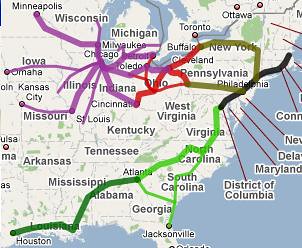
 Today, the focus is on one lovely rhetorical ploy used by anti-rail advocates to try to put one over on people with limited experience with trains. This relies on the false framing that “trains is trains”, and uses something that is true about a particular kind of local rail transport to mislead people about 110mph Emerging High Speed Rail in particular.
 The people’s choice award in the
  I should have spent yesterday afternoon grading Java programs, or perhaps preparing some files to show my Tuesday night class how to better use the animation capabilities of Director 11. But it was only Saturday and procrastination is what it is, so I decided to put that off until today. So I created a graphic. As I am wont to do, I saved often along the way, so I actually created a whole series of graphics.
 On Thursday,
  The increasingly