

There is a years long grisly struggle between ethnic groups in Darfur — with one government-backed militia brutalizing civilians with ethnic connections to the guerrilla rebels they fight. There is a refugee crisis, starvation, drought, and horrible violence.
The conflict in Darfur is complicated. It has several causes, and the people who fight sometimes do so for different reasons. Sudan is riddled with deep ethnic divides, fueled by the colonialism that favored one ethnic group over others. There is political posturing and finger pointing in Khartoum that might occupy a handful of doctoral theses on the subject before we understand it all. But at least two of the reasons this conflict persists are rooted in ecojustice: desertification and oil. And that oil doesn’t even lie under Darfur.
 We see images of Darfur on our computer screens, with people like Angelina Jolie, George Clooney, and Don Cheadle raising awareness about the mounting humanitarian crisis in that region of the Sudan and Chad. But to make the story clear, they tend to speak of Darfur as an isolated conflict inside Sudan; the greater context of the crisis does not change the dire need for aid and intervention.

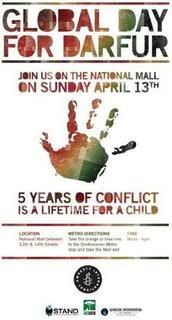 This Sunday, April 13, from 12 noon to 4 pm on the National Mall in Washington, DC, Americans will have the opportunity to learn first hand what the past 5 years have been like for the children of the Darfur region of Sudan.