Sep 08 2015
Cartnoon
Sep 08 2015
The Breakfast Club (Where No One Has Gone Before)
Welcome to The Breakfast Club! We’re a disorganized group of rebel lefties who hang out and chat if and when we’re not too hungover we’ve been bailed out we’re not too exhausted from last night’s (CENSORED) the caffeine kicks in. Join us every weekday morning at 9am (ET) and weekend morning at 10:30am (ET) to talk about current news and our boring lives and to make fun of LaEscapee! If we are ever running late, it’s PhilJD’s fault.
This Day in History
Galveston hurricane kills thousands; President Gerald Ford pardons Richard Nixon; Nazis begin Leningrad siege during World War II; Comedian Sid Caesar born; Original ‘Star Trek’ premieres on TV.
Breakfast Tunes
Something to Think about over Coffee Prozac
We won’t have a society if we destroy the environment.
Breakfast News
David Cameron faces scrutiny over drone strikes against Britons in Syria
David Cameron is facing questions over Britain’s decision to follow the US model of drone strikes after the prime minister confirmed that the government had authorised an unprecedented aerial strike in Syria that killed two Britons fighting alongside Islamic State (Isis).
Speaking to the Commons on its first day back after the summer break, Cameron justified the strikes on the grounds that Reyaad Khan, a 21-year-old from Cardiff, who had featured in a prominent Isis recruiting video last year, represented a “clear and present danger”.
Two other Isis fighters were killed in the attack on the Syrian city of Raqqa on 21 August, the first time that a UK prime minister has authorised the targeting of a UK citizen by an unmanned aerial drone outside a formal conflict. One of them, Ruhul Amin, 26, was also British. A third Briton, Junaid Hussain, 21, was killed by a separate US airstrike three days later as part of a joint operation.
We asked all 22 presidential candidates to define a US refugee policy. Few had clear answers
As Europe struggles to host the millions of refugees who have fled war-torn Syria in particular, the image of Kurdi has posed a fundamental question to America: should the US open its borders to more?
Last week, the Guardian contacted the campaigns of every candidate for the White House – 17 Republicans and five Democrats – to ask two questions. Should the US be accepting more refugees? And, as president, how would each candidate define US policy toward those seeking asylum from war-torn and impoverished countries?
But even as presidential candidates offer foreign policy pitches through a lens of moral leadership, just one of 22 contenders – former Maryland governor Martin O’Malley – said unequivocally that the US should take in more refugees and put forward a specific number. In a statement issued on Thursday, the Democrat called on the government to accept 65,000 refugees from Syria over the next year.
Europe plans to house additional 120,000 refugees
FRANCE’S President Francois Hollande has announced that his country will take in 24,000 refugees over the next two years, while it is understood Germany will take 31,000 additional people under a European plan which is strongly opposed by Hungary.
The figure revealed by the French leader yesterday represents France’s share of a European proposal to relocate 120,000 refugees. European Commission President, Jean-Claude Juncker, is due to unveil new proposals tomorrow.
European Union (EU) officials have said Juncker will propose adding 120,000 people to be relocated on top of a group of 40,000 the commission previously proposed relocating.
Students’ return to school is marred by renewed segregation across US
Millions of students around the US have started autumn with familiar rituals: waiting for absent teachers, flipping through outdated books and watching their peers fall behind in strained, segregated schools that experts warn represent a slow-burning crisis neglected by leaders.
Little has changed since a 2014 report concluded that 60 years after the supreme court declared segregation unconstitutional, major regions of the US have turned away from integration toward deeper inequality, said Gary Orfield, a UCLA professor and co-author of that paper.
The “substantial majority” of black and Latino students are in schools segregated by race and poverty, Orfield said. Such students are being primed by struggling schools for “a downward spiral” in a society that increasingly demands college diplomas.
Schools tighten grip on restrictive dress codes – and students are fed up
Across the United States, kids will return to school to see longer list of rules, yet it isn’t the codes that are most problematic – punishments don’t fit the complaints
It’s not just homework that has some young people dreading going back to school. As students file into their classes this month, there’s a whole new world of worry for young people: yoga pants. And shorts. And off-the-shoulder tops, midriff-bearing shirts, and skirts that don’t pass the “fingertip test”.
The list of banned clothing items in high schools seems to get longer every year – and the more restrictive dress codes get, the angrier students grow. This year, hundreds of young women at high schools across the United States are protesting the dress codes nearly as quickly as they are announced. [..]
But it’s not just the dress codes that are problematic; the punishment for transgressors has also become increasingly severe.
Stonehenge ‘on steroids’ found 2 miles away
Stonehenge, the world-renowned circle of stone columns in southern England, may have had a brother.
A much bigger, older brother.
University of Bradford researchers announced Monday that they had discovered a monument of about 100 stones covering several acres thought to have been built around 4,500 years ago.
The Stonehenge Hidden Landscapes Project used remote-sensing technologies to discover the monument, which is near Durrington Walls, also known as “superhenge.” Stonehenge, which is believed to have been completed 3,500 years ago, is about 2 miles away.
The farthest known galaxy is 13.2 billion years old
Scientists have long reckoned that the first galaxies came into being roughly 500 million to 1 billion years after the Big Bang, but finding these ancient celestial bodies is tricky when their light is so faint that even many specialized tools aren’t up to the job. However, researchers have managed to spot a galaxy so old that it’s making them question the established timeline for the universe. They’ve determined that the recently discovered EGS8p7 galaxy is a whopping 13.2 billion years old, making it both the farthest known galaxy to date and just 600 million years younger than the universe as we know it. Theoretically, it shouldn’t be possible to see the galaxy at all — in EGS8p7’s era, space was supposed to be full of neutral hydrogen clouds that absorbed radiation and made galaxies invisible to later observers.
Rise of the alternative funeral: beaches, buses and anything but black
The traditionally sombre funeral is being challenged by a surge in popularity for so-called destination funerals held in gardens, sports venues and beauty spots, research suggests.
Mourners are likely to dispense with the traditional hearse, choosing buses, motorbikes, horse-drawn carriages and even white vans instead, according to the research carried out among Co-operative Funeralcare’s 2,500 funeral directors, and a separate poll of 2,000 UK adults.
Nearly half (49%) of Co-op funeral directors said they had arranged a service in a location other than a church or a crematorium in the last 12 months. More than a third of adults (37%) said they would consider an alternative location for their own sendoff.
Locations mooted included a lake or river (25%), the countryside (20%), at home or in the garden (17%), at a beach or out at sea (20%).
The Co-op said the shift away from sombre tributes was also being reflected in the clothes being worn by funeral attendees. A quarter of respondents said they would like their funeral guests to wear anything but black, and nearly three-quarters (72%) of funeral directors said they had arranged services in the last year where this was the case.
—–
Must Read Blog Posts
Police Dogs’ Lives Don’t Matter? 12 Police Dogs Died Of Heat Exhaustion In 2015 Kit O’Connell, Community @ ShadowProof
Hillary Clinton Just Picked Sides With the Democrats’ Warren Wing Against the Rubin Wing David Dayen, The Intercept
Even Millionaire Workers Like Tom Brady Need Solidarity emptywheel aka Marcy Wheeler, emptywheel
Pope Francis’s hip new take on abortion is anything but Jon Green, AMERICAblog
I’m a leftist, and I’m not voting for Bernie Raghav Sharma, AMERICAblog
More Experts Realizing That The TPP Is A Horrible And Dangerous Deal On Copyright Mike Masnick, Techdirt
—–
Sep 08 2015
On This Day In History September 8
This is your morning Open Thread. Pour your favorite beverage and review the past and comment on the future.
Find the past “On This Day in History” here.
September 8 is the 251st day of the year (252nd in leap years) in the Gregorian calendar. There are 114 days remaining until the end of the year.
On this day in 1966, The TV series, “Star Trek“, debuted on NBC-TV, on its mission to “boldly go where no man has gone before” and despite ratings and only a three year run that gave us 79 episodes, the series did exactly that.
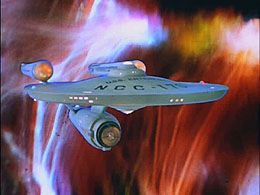
When Star Trek premiered on NBC-TV in 1966, it was not an immediate hit. Initially, its Nielsen ratings were rather low, and its advertising revenue was modest. Before the end of the first season of Star Trek, some executives at NBC wanted to cancel the series because of its rather low ratings. The chief of the Desilu Productions company, Lucille Ball, reportedly “single-handedly kept Star Trek from being dumped from the NBC-TV lineup.”
Toward the end of the second season, Star Trek was also in danger of cancellation. The lobbying by its fans gained it a third season, but NBC also moved its broadcast time to the Friday night “death slot”, at 10 p.m. Eastern Standard Time (9:00 p.m. Central Time). Star Trek was cancelled at the end of the third season, after 79 episodes were produced. However, this was enough for the show to be “stripped” in TV syndication, allowing it to become extremely popular and gather a large cult following during the 1970s. The success of the program was followed by five additional television series and eleven theatrical films. The Guinness World Records lists the original Star Trek as having the largest number of spin-offs among all TV series in history.
The series begat five televisions series and 11 movies with more to come. I knew I loved Lucille Ball for a reason.
70 – Roman forces under Titus sack Jerusalem.
1264 – The Statute of Kalisz, guaranteeing Jews safety and personal liberties and giving battei din jurisdiction over Jewish matters, is promulgated by Boleslaus the Pious, Duke of Greater Poland.
1380 – Battle of Kulikovo – Russian forces defeat a mixed army of Tatars and Mongols, stopping their advance.
1449 – Battle of Tumu Fortress – Mongolians capture the Chinese emperor.
1504 – Michelangelo’s David is unveiled in Florence.
1514 – Battle of Orsha – in one of the biggest battles of the century, Lithuanians and Poles defeat the Russian army.
1565 – Pedro Menendez de Aviles settles St. Augustine, Florida.
1565 – The Knights of Malta lift the Turkish siege of Malta that began on May 18.
1755 – French and Indian War: Battle of Lake George.
1756 – French and Indian War: Kittanning Expedition.
1761 – Marriage of King George III of the United Kingdom to Duchess Charlotte of Mecklenburg-Strelitz.
1793 – French Revolutionary Wars: Battle of Hondschoote.
1796 – French Revolutionary Wars: Battle of Bassano – French forces defeat Austrian troops at Bassano del Grappa.
1810 – The Tonquin sets sail from New York Harbor with 33 employees of John Jacob Astor’s newly created Pacific Fur Company on board. After a six-month journey around the tip of South America, the ship arrives at the mouth of the Columbia River and Astor’s men establish the fur-trading town of Astoria, Oregon.
1831 – William IV and Adelaide of Saxe-Meiningen are crowned King and Queen of the United Kingdom of Great Britain and Ireland.
1863 – American Civil War: Second Battle of Sabine Pass – on the Texas-Louisiana border at the mouth of the Sabine River, a small Confederate force thwarts a Union invasion of Texas.
1888 – In London, the body of Jack the Ripper’s second murder victim, Annie Chapman, is found.
1888 – In England the first six Football League matches are played.
1892 – The Pledge of Allegiance is first recited.
1900 – Galveston Hurricane of 1900: a powerful hurricane hits Galveston, Texas killing about 8,000 people.
1914 – World War I: Private Thomas Highgate becomes the first British soldier to be executed for desertion during the war.
1921 – 16-year-old Margaret Gorman wins the Atlantic City Pageant’s Golden Mermaid trophy; pageant officials later dubbed her the first Miss America.
1923 – Honda Point Disaster: nine US Navy destroyers run aground off the California coast. Seven are lost.
1926 – Germany is admitted to the League of Nations.
1930 – 3M begins marketing Scotch transparent tape.
1934 – Off the New Jersey coast, a fire aboard the passenger liner SS Morro Castle kills 135 people.
1935 – US Senator from Louisiana, Huey Long, nicknamed “Kingfish”, is fatally shot in the Louisiana capitol building.
1941 – World War II: Siege of Leningrad begins. German forces begin a siege against the Soviet Union’s second-largest city, Leningrad.
1943 – World War II: The O.B.S. (German General Headquarters for the Mediterranean zone) in Frascati is bombed by USAAF.
1943 – World War II: United States General Dwight D. Eisenhower publicly announces the Allied armistice with Italy.
1944 – World War II: London is hit by a V2 rocket for the first time.
1944 – World War II: Menton is liberated from Germany.
1945 – Cold War: United States troops arrive to partition the southern part of Korea in response to Soviet troops occupying the northern part of the peninsula a month earlier.
1951 – Treaty of San Francisco: In San Francisco, California, 48 nations sign a peace treaty with Japan in formal recognition of the end of the Pacific War.
1954 – The Southeast Asia Treaty Organization (SEATO) is established.
1960 – In Huntsville, Alabama, US President Dwight D. Eisenhower formally dedicates the Marshall Space Flight Center (NASA had already activated the facility on July 1).
1962 – Newly independent Algeria, by referendum, adopts a Constitution.
1962 – Last run of the famous Pines Express over the Somerset and Dorset Railway line (UK) fittingly using the last steam locomotive built by British Railways, 9F locomotive 92220 Evening Star.
1966 – The Severn Bridge is officially opened by Her Majesty Queen Elizabeth II.
1966 – The first Star Trek series premieres on NBC.
1967 – The formal end of steam traction in the North East of England by British Railways.
1968 – The Beatles perform their last live TV performance on the David Frost show. They perform their new hit “Hey Jude”.
1970 – Hijacking (and subsequent destruction) of three airliners to Jordan by Palestinians; the events to follow would later become known as Black September
1971 – In Washington, D.C., the John F. Kennedy Center for the Performing Arts is inaugurated, with the opening feature being the premiere of Leonard Bernstein’s Mass.
1974 – Watergate Scandal: US President Gerald Ford pardons former President Richard Nixon for any crimes Nixon may have committed while in office.
1975 – Gays in the military: US Air Force Tech Sergeant Leonard Matlovich, a decorated veteran of the Vietnam War, appears in his Air Force uniform on the cover of Time magazine with the headline “I Am A Homosexual”. He is later given a general discharge.
1991 – The Republic of Macedonia becomes independent.
1993 – Chinese athlete Wang Junxia sets a new women’s 10,000 m world record of 29:31.78, breaking the former record by 42 seconds.
1999 – United States Attorney General Janet Reno names former Senator John Danforth to head an independent investigation of the 1993 fire at the Branch Davidian church near Waco, Texas in response to revelations in the film Waco: The Rules of Engagement that contradicted the official government stories.
2004 – NASA’s unmanned spacecraft Genesis crash-lands when its parachute fails to open.
2005 – Two EMERCOM Il-76 aircraft land at a disaster aid staging area at Little Rock Air Force Base; the first time Russia has flown such a mission to North America.
2013 – 11 people are killed in a train collision in Iași County, Romania.
Sep 07 2015
Anti-Capitalist Meetup: What Jeremy Corbyn’s Campaign Means for Britain
By: NY Brit Expat
Can I begin by saying how much I have enjoyed the Labour party leadership elections? I was set not to when I saw the original candidates for the post. It was downright dispiriting. Then Jeremy Corbyn declares his candidacy, we have the nail-biting nominations process, he gets through, the Unions start coming on board, the Constituency Labour parties supporting him hands down, the purges by Labour of those that “do not share its aims and values”, now Corbyn as the frontrunner of an election which will be declared next week. This has not only been exciting, it has been a breath of fresh air and it is a conversation that Labour has needed to have for quite a while. I have enjoyed it thoroughly, now we just need to hope that the grandees of the Labour party do not pull a fast one and he is expected to win. Yes, win!
In many senses, Jeremy Corbyn’s campaign has shaken the political landscape in Britain. There are a number of things that have led us to this place (among these are the Scottish referendum and the collapse of Scottish Labour, and the general election result which the Tories won), but I think the straw that broke the camel’s back actually was the decision of Labour’s grandees to abstain on the Welfare Bill enabling a vicious attack on women, the disabled and the working class to pass with opposition coming from the Scottish National Party, the Greens and Plaid Cymru. It became evident that while Labour claimed to be the opposition in Parliament that they had proved themselves to be enablers of the Tories rather than an opposition. Jeremy Corbyn is set to win the Labour leadership election; by August 24th he had moved into the front of the pack with odds of 3/10 of winning.
For those that haven’t heard of Jeremy Corbyn, let me introduce you to a left Social Democrat who is one of the few remaining in the Parliamentary Labour Party (PLP). He is the Member of Parliament from the People’s Republic of Islington representing Islington North. He is a man of integrity and principles and has a long list of defying the Labour party whips more than 238 times at least according to The Sun. Normally, I would never quote The Sun, a right-wing Murdoch spread, but you do need to read this if only to get an idea of how Corbyn is being characterised.
Corbyn is a supporter of the Campaign for Nuclear Disarmament and the People’s Assembly, is a member of the Palestine Solidarity Campaign and Amnesty International. He opposed the Iraq War, supports LGBT rights, supports a united Ireland, opposes tuition fees at Universities, opposes the creation of Academies and Free Schools, supports the introduction of a living wage voted against the horrific Welfare Bill (that Labour MPs were supposed to abstain on), has spoken at demonstrations of the People’s Assembly, against the Iraq war, against austerity among many others. He is also a vegetarian, supports animal rights, wears old jumpers and often wears a black cap (yes, it is similar to Lenin’s).

His candidacy differs from Bernie Sanders (and this is not only because he is further to the left of Sanders) as he is not an outsider seeking to be leader; he is a long-term member of the Labour party and a member of the Socialist Campaign Group. He will probably win the Labour leadership contest despite opposition from the right, centre and centre-left of the Party and despite smears in the mainstream media from fellow party members and members and ideologues of the ruling class. Moreover, the momentum behind him does not come as much as from within in the party itself as from those who left or are outside of the Labour party due to its transformation into New Labour which lost them the base of the party.
The Labour Leadership Election
The Labour leadership election came about after Ed Miliband stepped down following the May general election defeat. The election was the Labour party’s to lose and lose it they did; this was a spectacular loss leaving the Tories with a slim majority and no need for a coalition which could hamper their plans for Britain.
On May 18th 2015 when the Labour Leadership election was called, Harriet Harman (deputy leader of the Labour party and now its acting head) said that voters could participate in the Labour leadership elections by paying £3 and declaring their support.
In a speech at Labour HQ in London, Harman said she wanted to “let the public in” to the contest, and said that people who were not party members or affiliated supporters through a union or Labour-linked organisation would be able to vote.
She said: “Anyone – providing they are on the electoral register – can become a registered supporter, pay £3 and have a vote to decide our next leader. This is the first time a political party in this country has opened up its leadership contest in this way and I think there will be a real appetite for it out there.”
Jeremy Corbyn declared for the Labour leadership contest later than the other candidates. I may be wrong, but I honestly do not think that Corbyn thought he would get this far. He was there to raise political points about what Labour should be doing rather than advocate austerity lite; he was there to represent the voice of the Labour left arguing an anti-austerity position. It was not clear until the last day (June 15th), and in fact, the last two minutes of the nominations process whether he would have sufficient nominations from Labour members of Parliament (aka the Parliamentary Labour Party) to actually be able to run in the leadership elections. In order to be able to run, a candidate needed 15% of Parliamentary Labour party support (35 members of Parliament).
In their arrogance, and despite their talk of democracy, those already running for the leadership that had sufficient nominations had called for members of Parliament to give him enough votes to run even if they did not plan on voting for him in the contest itself. At this point, Andy Burnham who describes himself as an “aspirational socialist” and who was positioning himself to the left of the race for leadership of the party was seen to be the future leader of the Labour party, as opposed to Liz Kendall (see here for her policies) representing the Blairites (they call themselves the “modernisers”) and Yvette Cooper (an economist as well as long-term Labour politician) who is closely linked to Gordon Brown’s position in the Labour party. This was an incredible miscalculation.

From left to right, the Labour Party leadership candidates: Yvette Cooper, Jeremy Corbyn, Liz Kendall and Andy Burnham
On August 1st, Jeremy Corbyn had already won the support of the largest number of Constituency Labour Parties. While not binding or having any say in the final result, this was an indication that the mainstream of the Labour party may have made a poor decision. Even more importantly, Corbyn had picked up the support of two main unions, Unite and Unison (both of whom Andy Burnham was hoping to obtain).
Voting in the Labour Leadership Election
In the past, decisions in Labour leadership elections were made by an electoral college split between the affiliated Trade Unions and societies, the Parliamentary Labour party, and members of the Labour party. Under the new system decided by the 2014 Collins review, put in place under Ed Miliband’s leadership in an attempt to weaken the trade union vote, they moved to a one member-one vote system. In this situation, Tony Blair’s vote counts as much as any other member’s.
More so, only 4000 people at the point that Harman had opened up the vote had registered and paid their £3 to become Labour party members and supporters. This situation changed rapidly.
By May 11th, there is an increase in 20,000 (to 221,247.). By August 12th (the last 24 hours of registration to join the Labour Party either as members or supporters), the electorate has increased to 610,000. Of these, 189,703 affiliated union members, 121,295 registered supporters and 299,755 members. 160,000+ are added in the last 24 hours of registration which crashed their computers forcing them to extend registration a few days.
On August 14th, Corbyn announced his 10 point policy plan:
The “Standing to Deliver”policies include:
• Growth not austerity – with a national investment bank to help create tomorrow’s jobs and reduce the deficit fairly. Fair taxes for all.
• A lower welfare bill through investment and growth
• Action on climate change
• Public ownership of railways and in the energy sector
• Decent homes for all in public and private sectors by 2025 through a big house-building programme and controlling rents.
• A foreign policy that prioritises justice and assistance.
• Fully-funded NHS, integrated with social care, with an end to privatisation in health.
• Protection at work including an end to zero hours contracts
• Equality for all
• A life-long national education service for decent skills and opportunities, universal childcare, the abolition of student fees, restoring grants, and funding adult skills training (http://www.itv.com/news/2015-08-14/jeremy-corbyn-promises-new-kind-of-politics-as-he-unveils-10-point-policy-plan/).”
The attack against Corbyn
As Jeremy Corbyn’s campaign picks up steam, his policies are declared extreme by the right of Labour and the old guard are brought in to tell people not to vote for him; these include Tony Blair who urged Labour not to wrap itself in a left flag (July 22nd), that Labour faces annihilation if Corbyn becomes leader ( August 13th) and accuses Corbyn of living in a fantasy-land like Alice in Wonderland (August 29th). My favourite, and which certainly got Corbyn a number of supporters was Blair’s comment is free piece in The Guardian which has the wonderfully evocative title of “Even if you hate me don’t take Labour over the cliff-edge” from which I quote below:
“So this is directed to longstanding members and those who have joined but without an agenda. They’re still a majority and they have to exercise leadership now to save the party. It doesn’t matter whether you’re on the left, right or centre of the party, whether you used to support me or hate me. But please understand the danger we are in.
The party is walking eyes shut, arms outstretched, over the cliff’s edge to the jagged rocks below. This is not a moment to refrain from disturbing the serenity of the walk on the basis it causes “disunity”. It is a moment for a rugby tackle if that were possible.”
Other Blairites take up the challenge including Alaistair Campbell and Peter Mandelson who also comes up with a ridiculous idea to get Burnham, Cooper and Kendall to quit so as to call an end to the election process in order to end Corbyn’s bid .
What these people do not realise is how much they are loathed and if they tell people not to do something, guess what, they will. There are so many other wonderful posts, including Gordon Brown telling someone how to win an election, Neil Kinnock talking about non-electability, but really the best laughs I got were from the Blairites.
Attempts to smear Corbyn wash over him; he is stronger than Teflon and quite honestly, he is a decent human being and that makes finding smears stick rather difficult.
These include a Jewish Labour MP and The Jewish Chronicle accusing him of associating with Holocaust deniers and calling him an anti-semite. This leads to a defence of Corbin in The Independent by Yasmin Alibhai Brown and a challenge by Jews against the charge of anti-semitism; since they are labelled as anti-Israel activists, you may have missed the fact that all the signatories are Jews.
The other contenders turn on each other, each fighting over who is best placed to defeat Corbyn who has by now clearly taken the lead. The Labour leadership calls for Cooper and Kendall to step aside as Burnham is seen as the one most able to win against Corbyn. Calls for the others to step down are heard as Burnham and Cooper exchange hostilities and Cooper says that it is sexist that she is asked to step aside. The hope is that one of them can pick up second preference votes to overcome Corbyn who is set to win the contest (the voting is in terms of a preference ordering and if Corbyn does not win in the first round by a clear majority, the second preference votes come into play).
Corbyn’s economic policies are essentially Keynesian; they are concentrated mostly on the consumption side (they could use a little bit more production in the discussion honestly). The accusation from mainstream politicians and economists that his economic policies are dangerous, extreme (this is a general meme, but here is an example) and not credible is countered by economists who come out in support of his policies arguing that his policies are mainstream rather than extreme and that the austerity measures are actually extreme. Economists of the right-wing respond (e.g., here opposing renationalisation and the people’s quantitative easing.
Another bizarre moment is the accusation that Corbyn supports (or will put into effect) separate carriages on trains and the tube for women due to the harassment that they face. The media accuses him of suggesting it, when he actually said that he will consider it after talking to women’s organisations. Google Jeremy Corbyn and women’s only carriages and you will see the distortion in the media which occurs on the television and throughout the press from right to left . As Common Spaces points out:
What the media reported: Corbyn was widely reported last week to be on the verge of introducing a policy to create women-only train carriages – cue uproar.
What he actually said: In reality, what Corbyn said is that harassment of women on public transport should be challenged, and that he would like to speak to women about their experiences and engage with them about possible ways of challenging it.
This is just one more distortion in reporting and one easily disproved; nevertheless it provokes a furore. What he said was completely correct and note that he says he wants to speak to women … that is the only correct answer to this question. I will repeat what he said more fully so that it is clear:
“It is unacceptable that many women and girls adapt their daily lives in order to avoid being harassed on the street, public transport, and in other public places from the park to the supermarket,” he said.
“This could include taking longer routes to work, having self-imposed curfews or avoiding certain means of transport.
“Some women have raised with me that a solution to the rise in assault and harassment on public transport could be to introduce women only carriages.
“My intention would be to make public transport safer for everyone from the train platform, to the bus stop to on the mode of transport itself. However, I would consult with women and open it up to hear their views on whether women-only carriages would be welcome – and also if piloting this at times and modes of transport where harassment is reported most frequently would be of interest (http://www.theguardian.com/politics/2015/aug/26/women-only-train-carriages-a-possibility-under-jeremy-corbyn).”
How this stands as an endorsement is beyond me, but this was impressive piece of news reporting and as subtle as an elephant.
My favourite accusation is that of “infiltrators” in the Labour Party leadership elections that are behind his success and that the 400,000 new members and supporters do not share the “aims and values” of the Labour party. It starts as worries over Tories signing up to support Corbyn as they think it will make Labour electorally non-viable and moves rapidly to concerns that it is members of the hard left and the Greens that have joined with menace in mind (cue the spectre of “Entryism”). Somehow they have forgotten how many people left the Labour party both before and during the Blair years.
The Purge
The Labour leadership begins a purge of those who have registered to vote either as affiliated supporters through Trade Unions, those that registered as supporters for £3 and those that joined as members. These include Mark Steel, Brian Eno (former member), Ken Loach (founder of Left Unity who tried to vote as a trade union affiliate member), Mark Serwotka (leader of the PCS trade union), current members of the Labour party and an undetermined number of less famous people who had joined the Greens and the National Health Action Party that were advocating an anti-austerity position, those who had left Labour and wanted to return to support Corbyn, and a tiny group of the hard left, because let’s face it, the hard left is tiny and there is no way that they could be responsible for the number of increased voters. The hashtag #Labour purge which attempts to collect the names of those rejected began trending.
With so many rejected, I am certain that I am not the only one who is wondering what the “aims and values” of the Labour party actually are. They have rejected long-term supporters, members (who can appeal), members of the Green party, and former members wanting to return to the fold. What are those aims and values which they don’t support? The other obvious issue is how are you supposed to build a party if you reject people leaving their old parties or new returnees to the Labour party? Don’t they have to win over members of the public to build the party and even win?!
The purge seems to have had differing impacts depending on which tendency in the party is running which constituency based Labour party. It seems far stronger in the south of London where there are more members of the Progress group than in the North where the labour left is stronger. Perhaps the most unsettling story appears in The Guardian by Tim Dowling whose son is asked to vet two of his classmates as to whether they are real supporters of the Labour party. Several people asked me if they thought this was satire, I didn’t think so. Yes, this gave me a rather creeping feeling as I am wondering whether children will be called on to denounce family members and their neighbours next.
So, what next?
Let’s assume that the bookmakers are right and Corbyn wins (heck, the Labour party has accepted that, so why can’t we?). What happens next? The mainstream (and right) of the Labour party has moved from trying to get rid of him in weeks and not serving in his cabinet to recentlycalling for unity . Even with the purge (which is making their claims of democracy look ridiculous), odds are on Corbyn winning.
However, he comes from a group/tendency in the Labour party that has few numbers in Parliament. He needs to create a shadow cabinet around him. He has far greater support outside the Parliamentary Labour Party than inside.
Those who are Labour Left are hoping that this will lead to major changes a shift in the party back to social democracy as opposed to the neoliberal position that they been taking since Blair, both hard and soft (hey, for this matter, the same could be said of all members of the left both within and outside of the Labour Party). Moreover, new people have joined who support an anti-austerity agenda and a return to Labour actually holding social democratic positions; many of them are young people. The power that newcomers or returnees have to influence things depends upon the nature of the Constituency Labour party in which they will be members; these differ across the country as they are tied to constituencies. Some are more left or right than others, some are completely non-democratic in practice and influence will not be easy or automatic. This will lead to struggles within the party which to me, as a non-member, will be great and long overdue. The neoliberal agenda was pushed down from the top of the party; it is way past time that the members of the party actually have a say in the future of the party. This is a struggle for the heart and future of the party.
The claims that the right in Labour would now serve in Corbyn’s shadow cabinet clearly are an attempt to try and shift him to the right for “Labour unity.” The question is whether he will be dependent upon their support and how much he would be willing to give up to gain their support. That is a danger.
The talk of a split in which the right-wing packs its bags and forms a new party are debatable; in a first-past-the-post system, the going would be rather difficult and quite honestly they would be to the right of the Liberal Democrats who have shifted left and would be redundant. If they actually join en masse to another party (Tory, Liberal Democrat) that would be held against them by Labour members and would confirm that they were not Labour in their hearts. Moreover, most of them would not be so happy to give up their careers in the Labour party (many of them are careerists after all).
So, it is probable that their plan is to continue to discredit him and drive him from office before the next general election in 2020. They have done this before to other leaders far further to the right than Jeremy Corbin. It starts (as it already has) with him being denounced in the media and this continues to undermine his popularity until they can move to replace him as leader.
The Labour party itself is an incredibly undemocratic organisation in which rank and file members have far too little power, Constituency Labour parties are often controlled by a specific group within the organisation, there have long been accusations of corruption, and are undemocratic in nature and the Parliamentary Labour Party has far too much power (look at the nominating process itself).
In order to democratise the party which Corbyn promises, he will have to get the support of people who are quite happy with the current structures that exist. As such, democratic changes can be blocked by Labour grandees and careerists in the party.
Let’s talk for a bit about the Left both within and outside of the Labour party. Should members of Left-wing electoral groups and the groups themselves (TUSC and Left Unity) pack it in and join Labour?
Not just yet …
There is no guarantee that Corbyn will be successful in shifting the Labour Party left and democratising it; it is a task that will be fought all the way by the centre and the right of the party. On the one-hand, the extra-parliamentary support of the Left and its mobilising to support his programme will be necessary to keep up the fight.
On the other hand, if the mainstream of Labour are successful and able to oust Corbyn from leadership (and I am expecting that), that will lead to new members leaving and being dispirited. The left parties need to exist to give these people an electoral home, so disbanding TUSC or Left Unity is not a great idea. The way forward will be harder but we need to keep fighting it. I do not think that long-term Left Labour party members will be quick to leave as they have stayed there and fought for quite a while already. Tony Benn never left, I doubt Corbyn will nor will members of the Labour Representation Committee and the Socialist Campaign Group … but hey, I may be wrong (it won’t be the first or the last time).
The question of whether an entryist tactic is the correct one at a certain time relates to whether a party is actually a mass party where we of the hard left can actually influence its direction and bring members to the hard left (see Entryism). It is questionable whether this is a correct tactic at this time due to the fact that Labour is not a mass party and whether it is possible to shift it irrespective of a Corbyn victory.
Even if Labour amazingly shifts itself to being a social democratic party and wins in elections (yes, that is a persistent dream of many), this is insufficient as this will be essentially reformist in nature and that will not provide the changes (like elimination of private property) that are needed to eliminate the capitalist system.
So, yes, I understand why members of the hard left have joined the Labour party (I do not know if these are tactical or strategic choices) and I respect their choices (although I do not agree with them) and hope that they win the fight to reform the party and to try and make it a social democratic party. But I am not yet ready to call it quits and join Labour. if it became a mass party … well, we may have to sit down and think about it.
Sep 07 2015
On This Day In History September 7
This is your morning Open Thread. Pour your favorite beverage and review the past and comment on the future.
Find the past “On This Day in History” here.
September 7 is the 250th day of the year (251st in leap years) in the Gregorian calendar. There are 115 days remaining until the end of the year.
On this day in 1813, the United States gets its nickname, Uncle Sam.
The name is linked to Samuel Wilson, a meat packer from Troy, New York, who supplied barrels of beef to the United States Army during the War of 1812. Wilson (1766-1854) stamped the barrels with “U.S.” for United States, but soldiers began referring to the grub as “Uncle Sam’s.” The local newspaper picked up on the story and Uncle Sam eventually gained widespread acceptance as the nickname for the U.S. federal government.
In the late 1860s and 1870s, political cartoonist Thomas Nast (1840-1902) began popularizing the image of Uncle Sam. Nast continued to evolve the image, eventually giving Sam the white beard and stars-and-stripes suit that are associated with the character today.
snip
On this day in 1813, the United States gets its nickname, Uncle Sam. The name is linked to Samuel Wilson, a meat packer from Troy, New York, who supplied barrels of beef to the United States Army during the War of 1812. Wilson (1766-1854) stamped the barrels with “U.S.” for United States, but soldiers began referring to the grub as “Uncle Sam’s.” The local newspaper picked up on the story and Uncle Sam eventually gained widespread acceptance as the nickname for the U.S. federal government.
In the late 1860s and 1870s, political cartoonist Thomas Nast (1840-1902) began popularizing the image of Uncle Sam. Nast continued to evolve the image, eventually giving Sam the white beard and stars-and-stripes suit that are associated with the character today.
70 – A Roman army under Titus occupies and plunders Jerusalem.
1191 – Third Crusade: Battle of Arsuf – Richard I of England defeats Saladin at Arsuf.
1652 – Around 15,000 Han farmers and militia rebells against Dutch rule on Taiwan.
1776 – World’s first submarine attack: the American submersible craft Turtle attempts to attach a time bomb to the hull of British Admiral Richard Howe’s flagship HMS Eagle in New York Harbor.
1812 – Napoleonic Wars: Battle of Borodino – Napoleon defeats the Russian army of Alexander I near the village of Borodino.
1818 – Carl III of Sweden-Norway is crowned king of Norway, in Trondheim.
1821 – The Republic of Gran Colombia (a federation covering much of present day Venezuela, Colombia, Panama, and Ecuador) is established, with Simon Bolivar as the founding President and Francisco de Paula Santander as vice president.
1822 – Dom Pedro I declares Brazil independent from Portugal on the shores of the Ipiranga creek in Sao Paulo.
1860 – Steamship Lady Elgin sinks on Lake Michigan, with the loss of around 400 lives.
1864 – American Civil War: Atlanta, Georgia, is evacuated on orders of Union General William Tecumseh Sherman.
1876 – In Northfield, Minnesota, Jesse James and the James-Younger Gang attempt to rob the town’s bank but are driven off by armed citizens.
1901 – The Boxer Rebellion in China officially ends with the signing of the Boxer Protocol.
1907 – Cunard Line’s RMS Lusitania sets sail on her maiden voyage from Liverpool, England to New York City.
1909 – Eugene Lefebvre (1878-1909), while test piloting a new French-built Wright biplane, crashes at Juvisy France when his controls jam. Lefebvre dies, becoming the first ‘pilot’ in the world to lose his life in a powered heavier-than-air craft.
1911 – French poet Guillaume Apollinaire is arrested and put in jail on suspicion of stealing the Mona Lisa from the Louvre museum.
1916 – Federal employees win the right to Workers’ compensation by(Federal Employers Liability Act (39 Stat. 742; 5 U.S.C. 751)
1921 – In Atlantic City, New Jersey, the first Miss America Pageant, a two-day event, is held.
1927 – The first fully electronic television system is achieved by Philo Taylor Farnsworth.
1936 – The last surviving member of the thylacine species, Benjamin, dies alone in her cage at the Hobart Zoo in Tasmania.
1940 – World War II: The Blitz – Nazi Germany begins to rain bombs on London. This will be the first of 57 consecutive nights of bombing.
1942 – Holocaust: 8,700 Jews of Kolomyia (western Ukraine) sent by German Gestapo to death camp in Belzec.
1942 – First flight of the Consolidated B-32 Dominator.
1943 – World War II: The German 17th Army begins its evacuation of the Kuban River bridgehead (Taman Peninsula) in southern Russia and moves across the Strait of Kerch to the Crimea.
1945 – Japanese forces on Wake Island, which they had held since December of 1941, surrender to U.S. Marines.
1953 – Nikita Khrushchev is elected first secretary of the Communist Party of the Soviet Union.
1963 – The Pro Football Hall of Fame opens in Canton, Ohio with 17 charter members.
1965 – China announces that it will reinforce its troops on the Indian border.
1965 – Vietnam War: In a follow-up to August’s Operation Starlight, United States Marines and South Vietnamese forces initiate Operation Piranha on the Batangan Peninsula.
1970 – An anti-war rally is held at Valley Forge, Pennsylvania, attended by John Kerry, Jane Fonda and Donald Sutherland.
1970 – Fighting between Arab guerillas and government forces in Amman, Jordan.
1970 – Bill Shoemaker sets record for most lifetime wins as a jockey (passing Johnny Longden).
1977 – The Torrijos-Carter Treaties between Panama and the United States on the status of the Panama Canal are signed. The United States agrees to transfer control of the canal to Panama at the end of the 20th century.
1978 – While walking across Waterloo Bridge in London, Bulgarian dissident Georgi Markov is assassinated by Bulgarian secret police agent Francesco Giullino by means of a ricin pellet fired from in a specially-designed umbrella.
1978 – British Prime Minister James Callaghan announces that he will not call a general election for October, considered to be a major political blunder (see Winter of Discontent, United Kingdom general election, 1979)
1979 – The Entertainment and Sports Programming Network, better known as ESPN, makes its debut.
1979 – The Chrysler Corporation asks the United States government for USD $1.5 billion to avoid bankruptcy.
1986 – Desmond Tutu becomes the first black man to lead the Anglican Church in South Africa.
1986 – Gen. Augusto Pinochet, president of Chile, escapes attempted assassination.
1988 – Abdul Ahad Mohmand, the first Afghan in space, returns aboard the Soviet spacecraft Soyuz TM-5 after 9 days on the Mir space station.
1996 – American Hip-Hop star Tupac Shakur is fatally shot four times on the Las Vegas strip after leaving the Tyson-Seldon boxing match. Doctors removed a failing lung and Tupac showed signs of progress in his recovery before passing away six days later due to hemorrhaging that the doctors were unable to stop.
1999 – A 5.9 magnitude earthquake rocks Athens, rupturing a previously unknown fault, killing 143, injuring more than 500, and leaving 50,000 people homeless.
2005 – First presidential election is held in Egypt.
2008 – The US Government takes control of the two largest mortgage financing companies in the US, Fannie Mae and Freddie Mac.
2010 – A Chinese fishing trawler collided with two Japanese Coast Guard patrol boats in disputed waters near the Senkaku Islands. The collisions occurred around 10am, after the Japanese Coast Guard ordered the trawler to leave the area. After the collisions, Japanese sailors boarded the Chinese vessel and arrested the captain, Zhan Qixiong.
2011 – A plane crash in Russia kills 43 people, including nearly the entire roster of the Lokomotiv Yaroslavl Kontinental Hockey League team.
2012 – A series of earthquakes in Yunnan, China, kills 89 people and injures 800 others.
2012 – Canada officially cuts diplomatic ties with Iran by closing its embassy in Tehran and ordered the expulsion of Iranian diplomats from Ottawa, over support for Syria, nuclear plans and alleged rights abuses.
2013 – The Liberal Party of Australia led by Tony Abbott win the Australian federal election, 2013.
Sep 06 2015
On This Day In History September 6
This is your morning Open Thread. Pour your favorite beverage and review the past and comment on the future.
September 6 is the 249th day of the year (250th in leap years) in the Gregorian calendar. There are 116 days remaining until the end of the year.
On this day in 1995, Cal Ripken Jr of the Baltimore Orioles plays in his 2,131st consecutive game, breaking a record that stood for 56 years.
Calvin Edwin “Cal” Ripken, Jr. (born August 24, 1960) is a former Major League Baseball shortstop and third baseman who played his entire career (1981-2001) for the Baltimore Orioles.
During his baseball career, he earned the nickname “Iron Man” for doggedly remaining in the lineup despite numerous minor injuries and for his reliability to “show up” to work every day. He is perhaps best known for breaking New York Yankees first baseman Lou Gehrig’s record for consecutive games played, a record many deemed unbreakable. Ripken surpassed the 56-year-old record when he played in his 2,131st consecutive game on September 6, 1995 between the Orioles and the California Angels in front of a sold-out crowd at Oriole Park at Camden Yards. To make the feat even more memorable, Ripken hit a home run in the previous night’s game that tied Gehrig’s record and another home run in his 2,131st game, which fans later voted as Major League Baseball’s “Most Memorable Moment” in MLB history. Ripken played in an additional 502 straight games over the next three years, and his streak ended at 2,632 games when he voluntarily removed his name from the lineup for the final Orioles home game of the 1998 season. His record 2,632 straight games spanned over seventeen seasons, from May 30, 1982 to September 20, 1998.
3114 BC – According to the proleptic Julian calendar the current era in the Maya Long Count Calendar started. (Non-standard interpretation)
394 – Battle of the Frigidus: The Christian Roman Emperor Theodosius I defeats and kills the pagan usurper Eugenius and his Frankish magister militum Arbogast.
1492 – Christopher Columbus sails from La Gomera in the Canary Islands, his final port of call before crossing the Atlantic for the first time.
1522 – The Victoria, the only surviving ship of Ferdinand Magellan’s expedition, returns to Sanlucar de Barrameda in Spain, becoming the first ship to circumnavigate the world.
1620 – The Pilgrims sail from Plymouth, England, on the Mayflower to settle in North America. (Old Style date; September 16 per New Style date.)
1628 – Puritans settle Salem, which will later become part of Massachusetts Bay Colony.
1634 – Thirty Years’ War: In the Battle of Nordlingen the Catholic Imperial army defeats Protestant armies of Sweden and Germany.
1669 – The siege of Candia ends with the Venetian fortress surrendering to the Ottomans.
1781 – The Battle of Groton Heights takes place, resulting a British victory.
1847 – Henry David Thoreau leaves Walden Pond and moves in with Ralph Waldo Emerson and his family in Concord, Massachusetts.
1861 – American Civil War: Forces under Union General Ulysses S. Grant bloodlessly capture Paducah, Kentucky, which gives the Union control of the mouth of the Tennessee River.
1863 – American Civil War: Confederates evacuate Battery Wagner and Morris Island in South Carolina.
1870 – Louisa Ann Swain of Laramie, Wyoming becomes the first woman in the United States to cast a vote legally after 1807.
1885 – Eastern Rumelia declares its union with Bulgaria. The Unification of Bulgaria is accomplished.
1901 – Anarchist Leon Czolgosz shoots and fatally wounds US President William McKinley at the Pan-American Exposition in Buffalo, New York.
1930 – Democratically elected Argentine president Hipolito Yrigoyen is deposed in a military coup.
1937 – Spanish Civil War: The start of the Battle of El Mazuco.
1939 – World War II: The Battle of Barking Creek.
1939 – World War II: South Africa declares war on Germany.
1940 – King Carol II of Romania abdicates and is succeeded by his son Michael.
1943 – The Monterrey Institute of Technology, one of the largest and most influential private universities in Latin America, is founded in Monterrey, Mexico.
1944 – World War II: The city of Ypres, Belgium is liberated by allied forces.
1948 – Juliana becomes Queen of the Netherlands.
1949 – Allied military authorities relinquish control of former Nazi Germany assets back to German control.
1952 – Canada’s first television station, CBFT-TV, opens in Montreal.
1955 – Istanbul Pogrom: Istanbul’s Greek and Armenian minority are the target of a government-sponsored pogrom.
1963 – The Centre for International Industrial Property Studies (CEIPI) is founded.
1965 – War of 1965: India retaliates
following Pakistan’s failed Operation Grand Slam which resulted in the Indo-Pakistani War of 1965 that is ended following the signing of the Tashkent Declaration.
* 1966 – In Cape Town, South Africa, the architect of Apartheid, Prime Minister Hendrik Verwoerd, is stabbed to death during a parliamentary meeting.
1968 – Swaziland becomes independent.
1970 – Two passenger jets bound from Europe to New York are simultaneously hijacked by Palestinian terrorist members of PFLP and taken to Dawson’s Field in Jordan.
1972 – Munich Massacre: 9 Israel athletes taken hostage at the Munich Olympic Games by the Palestinian “Black September” terrorist group died (as did a German policeman) at the hands of the kidnappers during a failed rescue attempt. 2 other Israeli athletes are slain in the initial attack the previous day.
1976 – Cold War: Soviet air force pilot Lt. Viktor Belenko lands a MiG-25 jet fighter at Hakodate on the island of Hokkaido in Japan and requests political asylum in the United States.
1983 – The Soviet Union admits to shooting down Korean Air Flight KAL-007, stating that the pilots did not know it was a civilian aircraft when it violated Soviet airspace.
1986 – In Istanbul, two terrorists from Abu Nidal’s organization kill 22 and wound six inside the Neve Shalom synagogue during Shabbat services.
1991 – The Soviet Union recognizes the independence of the Baltic states: Estonia, Latvia and Lithuania.
1991 – The name Saint Petersburg is restored to Russia’s second largest city, which had been renamed Leningrad in 1924.
1992 – Hunters discover the emaciated body of Christopher Johnson McCandless at his camp 20 miles (32 km) west of the town of Healy, Alaska.
1995 – Cal Ripken Jr of the Baltimore Orioles plays in his 2,131st consecutive game, breaking a record that stood for 56 years.
1997 – Diana, Princess of Wales is laid to rest in front of a television audience of more than 2.5 billion.
2008 – Turkish President Abdullah Gül attends an association football match in Armenia after an invitation by Armenian President Serzh Sarkisyan; he is the first Turkish head of state to visit the country.
2009 – The ro-ro ferry SuperFerry 9 sinks off the Zamboanga Peninsula in the Philippines with 971 persons aboard; all but ten are rescued.
2012 – Sixty-one people die and 48 others are injured after a fishing boat capsizes off the İzmir Province coast of Turkey, near the Greek Aegean islands.
Sep 06 2015
The Breakfast Club (Fearless)
Welcome to The Breakfast Club! We’re a disorganized group of rebel lefties who hang out and chat if and when we’re not too hungover we’ve been bailed out we’re not too exhausted from last night’s (CENSORED) the caffeine kicks in. Join us every weekday morning at 9am (ET) and weekend morning at 10:30am (ET) to talk about current news and our boring lives and to make fun of LaEscapee! If we are ever running late, it’s PhilJD’s fault.
Breakfast Tune: Fearless (Pink Floyd cover)
Today in History: September 6th
President William McKinley shot in Buffalo, N.Y.; Funeral held for Britain’s Princess Diana; Mother Teresa mourned in India; Movie director Akira Kurosawa dies; Roger Waters of Pink Floyd fame born. (Sept. 6)
Something to Think about, Breakfast News & Blogs Below
Europe set for bruising battle over sharing refugee burden
Ian Traynor, The Guardian
Eastern European leaders have rejected calls from Berlin, Paris, and Brussels for a concerted and binding policy of sharing refugees across the EU, setting the scene for a bruising 10 days of battles over how Europe responds to its worst post-war migration emergency.
The prime ministers of Poland, Hungary, the Czech Republic and Slovakia met in Prague on Friday and set themselves robustly against pressure, mainly from Berlin, for sharing the refugee burden on a mandatory basis.
Eastern European countries are expected to offer to take in more people from those arriving in Greece, Italy and Hungary, but they rejected proposals that would make the distribution of refugees compulsory and permanent. …
Japan lifts evacuation order for town near Fukushima
The Associated Press
Japan’s government on Saturday lifted a 4 1/2-year-old evacuation order for the northeastern town of Naraha that had sent all of the town’s 7,400 residents away following the disaster at the nearby Fukushima nuclear plant.
Naraha became the first to get the order lifted among seven municipalities forced to empty entirely due to radiation contamination following the massive earthquake and tsunami that sent the plant’s reactors into triple meltdowns in March 2011.
The central government has said radiation levels in Naraha have fallen to levels deemed safe following decontamination efforts. …
In Guatemala, a justice experiment gone right
Kate Newman & Rodrigo Fuentes, Al Jazeera
GUATEMALA CITY – Many Guatemalans felt vindicated to see the country’s former president, Otto Pérez Molina, in court Friday for heading a major corruption scheme. Following several months of massive protests – more than 100,000 people gathered in Guatemala City on August 27, the country’s largest protest of all time – Congress voted to remove the President’s immunity so that he could be tried for his crimes. In the late hours of Sept. 2, President Otto Pérez Molina resigned.
This newly emboldened citizenry is thanks in great part to the work of Thelma Aldana, the country’s Public Prosecutor, and Iván Velásquez, head of the International Commission Against Impunity in Guatemala. Known by its Spanish acronym CICIG, the commission works to eradicate criminal networks in Guatemala. It operates under a U.N. mandate alongside the country’s Office of the Public Prosecutor and other state institutions.
CICIG has functioned under three commissioners: Spaniard Carlos Castresana, Costa Rican Francisco Dall’Anese and Colombian Iván Velásquez, who has been in office since 2013. …
- A rates hike may hurt the US economy – so why don’t the 2016 candidates seem to care?
Dean Baker - In ‘Win for Public Schools,’ Wash. Supreme Court Rules Charter Schools Unconstitutional
Andrea Germanos - A Summer Tale of a Very Big Bank
Christopher Brauchli
Something to Think about over Coffee Prozac:
Texas teen fatally shoots himself while taking selfie
AUSTIN, Texas (Reuters) – A 19-year-old Texas man who was posing with a gun for a social media selfie photo accidentally shot himself and died from the wounds, Houston police said on Wednesday.
“A witness told police he was taking a selfie with a gun and the gun accidentally discharged,” Houston police spokeswoman Jodi Silva said.
The identity of the man killed in the Tuesday incident in Houston has been withheld pending an investigation by the coroner. …
Breakfast Quote:
I found that the loudest fans in the world are in Istanbul.
Roger Waters
Sep 05 2015
On This Day In History September 5
This is your morning Open Thread. Pour your favorite beverage and review the past and comment on the future.
Find the past “On This Day in History” here.
September 5 is the 248th day of the year (249th in leap years) in the Gregorian calendar. There are 117 days remaining until the end of the year..
On this day in 1882, the first Labor Day was celebrated in NYC with a parade of 10,000 workers. The Parade started at City Hall, winding past the reviewing stands at Union Square and then uptown where it ended at 42nd St where the marcher’s and their families celebrated with a picnic, concert and speeches. The march was organized by New York’s Central Labor Union and while there has been debate as to who originated the idea, credit is given to Peter McGuire, general secretary of the Brotherhood of Carpenters and Joiners and a co-founder of the American Federation of Labor.
It became a federal holiday in 1894, when, following the deaths of a number of workers at the hands of the U.S. military and U.S. Marshals during the Pullman Strike, President Grover Cleveland put reconciliation with the labor movement as a top political priority. Fearing further conflict, legislation making Labor Day a national holiday was rushed through Congress unanimously and signed into law a mere six days after the end of the strike. The September date was chosen as Cleveland was concerned that aligning an American labor holiday with existing international May Day celebrations would stir up negative emotions linked to the Haymarket Affair. All 50 U.S. states have made Labor Day a state holiday.
`
917 – Liu Yan declares himself emperor, establishing the Southern Han state in southern China, at his capital of Panyu.
1590 – Alexander Farnese’s army forces Henry IV of France to raise the siege of Paris.
1661 – Fall of Nicolas Fouquet: Louis XIV Superintendent of Finances is arrested in Nantes by D’Artagnan, captain of the king’s musketeers.
1666 – Great Fire of London ends: 10,000 buildings including St. Paul’s Cathedral are destroyed, but only 16 people are known to have died.
1698 – In an effort to Westernize his nobility, Tsar Peter I of Russia imposes a tax on beards for all men except the clergy and peasantry.
1725 – Wedding of Louis XV and Maria Leszczynska.
1774 – First Continental Congress assembles in Philadelphia, Pennsylvania.
1781 – Battle of the Chesapeake in the American Revolutionary War.
1793 – French Revolution the French National Convention initiates the Reign of Terror.
1798 – Conscription is made mandatory in France by the Jourdan law.
1800 – Napoleon surrenders Malta to Great Britain.
1812 – War of 1812: The Siege of Fort Wayne begins when Chief Winamac’s forces attack two soldiers returning from the fort’s outhouses.
1816 – Louis XVIII has to dissolve the Chambre introuvable (“Unobtainable Chamber”).
1836 – Sam Houston is elected as the first president of the Republic of Texas.
1839 – The First Opium War begins in China.
1840 – Premiere of Giuseppe Verdi’s Un giorno di regno at La Scala of Milan.
1862 – American Civil War: the Potomac River is crossed at White’s Ford in the Maryland Campaign.
1862 – James Glaisher, pioneering meteorologist and Henry Tracey Coxwell break world record for altitude whilst collecting data in their balloon.
1864 – Achille Francois Bazaine becomes Marshall of France.
1877 – Indian Wars: Oglala Sioux chief Crazy Horse is bayoneted by a United States soldier after resisting confinement in a guardhouse at Fort Robinson in Nebraska.
1882 – The first United States Labor Day parade is held in New York City.
1905 – Russo-Japanese War: In New Hampshire, USA, the Treaty of Portsmouth, mediated by US President Theodore Roosevelt, ends the war.
1906 – The first legal forward pass in American football is thrown by Bradbury Robinson of St. Louis University to teammate Jack Schneider in a 22-0 victory over Carroll College (Wisconsin).
1914 – World War I: First Battle of the Marne begins. Northeast of Paris, the French attack and defeat German forces who are advancing on the capital.
1915 – The pacifist Zimmerwald Conference begins.
1918 – Decree “On Red Terror” is published in Russia
1927 – The first Oswald the Lucky Rabbit cartoon, Trolley Troubles, produced by Walt Disney, is released by Universal Pictures.
1932 – The French Upper Volta is broken apart between Ivory Coast, French Sudan, and Niger.
1937 – Spanish Civil War: Llanes falls.
1938 – Chile: A group of youths affiliated with the fascist National Socialist Movement of Chile are assassinated in the Seguro Obrero massacre.
1942 – World War II: Japanese high command orders withdrawal at Milne Bay, first Japanese defeat in the Pacific War.
1943 – World War II: The 503d Parachute Infantry Regiment lands and occupies Nazdab, near Lae in the Salamaua-Lae campaign.
1944 – Belgium, Netherlands and Luxembourg constitute Benelux.
1945 – Cold War: Igor Gouzenko, a Soviet Union embassy clerk, defects to Canada, exposing Soviet espionage in North America, signalling the beginning of the Cold War.
1945 – Iva Toguri D’Aquino, a Japanese-American suspected of being wartime radio propagandist Tokyo Rose, is arrested in Yokohama.
1948 – In France, Robert Schuman becomes President of the Council while being Foreign minister, As such, he is the negotiator of the major treaties of the end of World War II.
1957 – Cuba: Fulgencio Batista bombs the revolt in Cienfuegos.
1969 – My Lai Massacre: U.S. Army Lt. William Calley is charged with six specifications of premeditated murder for the death of 109 Vietnamese civilians in My Lai.
1970 – Vietnam War: Operation Jefferson Glenn begins: the United States 101st Airborne Division and the South Vietnamese 1st Infantry Division initiate a new operation in Thua Thien-Hue Province.
1972 – Munich Massacre: A Palestinian terrorist group called “Black September” attack and take hostage 11 Israel athletes at the Munich Olympic Games. 2 die in the attack and 9 die the following day.
1975 – Sacramento, California: Lynette Fromme attempts to assassinate U.S. President Gerald Ford.
1977 – Hanns Martin Schleyer, is kidnapped in Cologne, West Germany by the Red Army Faction and is later murdered.
1977 – Voyager program: Voyager 1 is launched after a brief delay.
1978 – Camp David Accords: Menachem Begin and Anwar Sadat begin peace process at Camp David, Maryland.
1980 – The St. Gotthard Tunnel opens in Switzerland as the world’s longest highway tunnel at 10.14 miles (16.224 km) stretching from Goschenen to Airolo.
1984 – STS-41-D: The Space Shuttle Discovery lands after its maiden voyage.
1984 – Western Australia becomes the last Australian state to abolish capital punishment.
1991 – The current international treaty defending indigenous peoples, Indigenous and Tribal Peoples Convention, 1989, came into force.
2000 – The Haverstraw-Ossining Ferry makes its maiden voyage.
2000 – Tuvalu joins the United Nations.
2007 – Three terrorists suspected to be a part of Al-Qaeda are arrested in Germany after allegedly planning attacks on both the Frankfurt International airport and US military installations.
2012 – A firecracker factory explodes near Sivakasi, Tamil Nadu, killing 40 and injuring 50 others.
2012 – An accidental explosion at a Turkish Army ammunition store in Afyon, western Turkey kills 25 soldiers and wounds four others.
Sep 05 2015
Health and Fitness News
 Welcome to the Health and Fitness NewsWelcome to the Stars Hollow Health and Fitness News weekly diary. It will publish on Saturday afternoon and be open for discussion about health related issues including diet, exercise, health and health care issues, as well as, tips on what you can do when there is a medical emergency. Also an opportunity to share and exchange your favorite healthy recipes.
Questions are encouraged and I will answer to the best of my ability. If I can’t, I will try to steer you in the right direction. Naturally, I cannot give individual medical advice for personal health issues. I can give you information about medical conditions and the current treatments available.
You can now find past Health and Fitness News diaries here and on the right hand side of the Front Page.
This week’s digest is abbreviated since I am, once again, traveling this week.
Follow us on Twitter @StarsHollowGzt
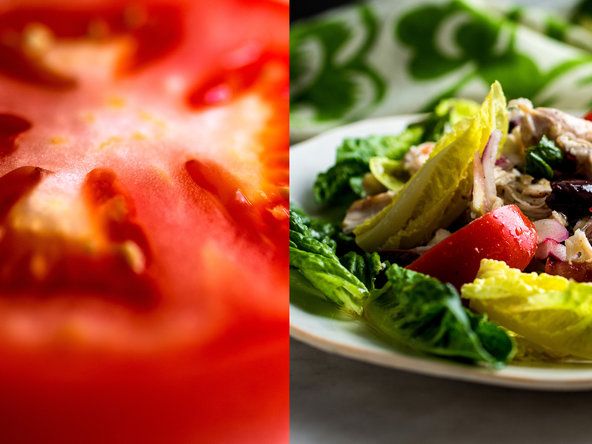
There is little room in my repertoire at this time of year for dishes that don’t include tomatoes, but this week I kept it pretty simple.
I tried a new recipe for roasting tomatoes. I roasted them for 2 hours at a low temperature (300 degrees), which didn’t dry them out completely but intensified everything about them. I snacked on them all week, and also put them through a food mill for sauce. They will definitely become a habit, along with the fresh tomato sandwiches I’ve been eating for lunch every day. This won’t stop until September.
An irresistible way to use the freshest tomatoes.
Tomatoes make a great base for a luxurious summer risotto.
Soft Tacos With Roasted or Grilled Tomatoes and Summer Squash
Tomatoes and summer squash make for delicious taco fillings.
Greek Chicken and Tomato Salad
A tomato-centric Greek salad that is substantial enough for lunch or a light supper.
Amazingly Sweet Slow-Roasted Tomatoes
This method of roasting won’t dry out the tomatoes completely but will intensify everything about them.
Sep 05 2015
Health and Fitness News
Welcome to the Health and Fitness NewsWelcome to the Stars Hollow Health and Fitness News weekly diary. It will publish on Saturday afternoon and be open for discussion about health related issues including diet, exercise, health and health care issues, as well as, tips on what you can do when there is a medical emergency. Also an opportunity to share and exchange your favorite healthy recipes.
Questions are encouraged and I will answer to the best of my ability. If I can’t, I will try to steer you in the right direction. Naturally, I cannot give individual medical advice for personal health issues. I can give you information about medical conditions and the current treatments available.
You can now find past Health and Fitness News diaries here and on the right hand side of the Front Page.
This week’s digest is abbreviated since I am, once again, traveling this week.
Follow us on Twitter @StarsHollowGzt
There is little room in my repertoire at this time of year for dishes that don’t include tomatoes, but this week I kept it pretty simple.
I tried a new recipe for roasting tomatoes. I roasted them for 2 hours at a low temperature (300 degrees), which didn’t dry them out completely but intensified everything about them. I snacked on them all week, and also put them through a food mill for sauce. They will definitely become a habit, along with the fresh tomato sandwiches I’ve been eating for lunch every day. This won’t stop until September.
An irresistible way to use the freshest tomatoes.
Tomatoes make a great base for a luxurious summer risotto.
Soft Tacos With Roasted or Grilled Tomatoes and Summer Squash
Tomatoes and summer squash make for delicious taco fillings.
Greek Chicken and Tomato Salad
A tomato-centric Greek salad that is substantial enough for lunch or a light supper.
Amazingly Sweet Slow-Roasted Tomatoes
This method of roasting won’t dry out the tomatoes completely but will intensify everything about them.