It’s worse than that. He’s dead Jim!

As TPP Grinds To A Halt, Asian Countries Start Focusing On Rival Trade Agreement RCE

by Glyn Moody, Tech Dirt

Tue, Sep 1st 2015 3:28am

Techdirt has written dozens of stories about the Trans-Pacific Partnership agreement (TPP). That’s largely because it seemed to be coming to a conclusion, after many years of negotiations, and so it was important to capture the last-minute twists and turns — and the dirty deals — as they happened. But as we reported a few weeks ago, that final breakthrough and completion never happened. Instead, we had the “Maui meltdown”, when a whole bunch of old and new problems raised their heads, with the result that TPP may have missed a key deadline that means it won’t be happening soon, if ever. That may have seemed an extravagant claim, but it is a sentiment that is gradually beginning to spread among commentators in Asia.

…

Techdirt introduced the Regional Comprehensive Economic Partnership (RCEP) back in June, pointing out that it could end up even worse than TPP. But while TPP is at a standstill, RCEP seems to be moving forwards

…

The biggest difference between TPP and RCEP is that China is part of the latter, but not of the former, while for the US, it’s the other way around. China therefore has a big incentive to make RCEP happen quickly, and seems to be grasping the opportunity opened up by TPP’s latest problems.

…

RCEP has a big advantage in that it is not trying to define an ambitious set of new trading rules, as TPP is, but instead is merely attempting to harmonize existing trade agreements among RCEP’s 16 nations, which also include another major economy absent from TPP — India.

Clio

You are responsible for this material.  It will be on the test.

Told you.

The new SATs everyone’s kids will be preparing for next spring

Rachel Nuwer, Scientific American

Tuesday, Sep 1, 2015 04:30 AM EST

“Fortune favors the prepared mind,” as Louis Pasteur once said. So as school revs up this month, so do SAT prep classes. Students might be surprised, however, at the amount of time dedicated to visual literacy skills. The increased focus on graphics is designed to prepare an estimated 1.6 million college-bound pupils for the first redesign of the standardized college admissions test in more than a decade. Along with other updates, test takers of the March 2016 exam will encounter graphics not only in the math section as in past years but also in the reading and writing and language portions. Students will be asked to interpret information presented in tables, charts and graphs and to correct text so it accurately describes data found in accompanying figures.

Mounting evidence indicates that such literacy is a key skill for success in college, careers and daily life in general. In an increasingly data-rich world, graphics now pop up routinely in formats ranging from political campaign literature to household bills. “Being a literate consumer of that information is valuable regardless of your career,” says Jim Patterson, an executive director at the College Board, the nonprofit corporation that owns and publishes the SAT.

Education experts agree that students in many developed nations, including the U.S., lack experience with visual data. “Apart from basic x- and y- axis graphs, educators [around the world] don’t sufficiently teach students how to represent information graphically,” says Emmanuel Manalo, a professor of education psychology at Kyoto University in Japan. The SAT’s new focus most likely will nudge educators to shift their lesson plans accordingly. Students, in other words, won’t be the only ones with bubble charts or scatter plots on the mind this fall-teachers will, too.

The intellectual work required to interpret a graph taxes our brain more than the effort involved in reading the same information presented as text, according to a new study by Manalo and two researchers at the University of Twente in the Netherlands.

So why do we do info-graphics again?  Oh, that’s right.  It makes it easier to lie and obfuscate.

The Case for Higher Inflation

First of all, “money” is not a store of value.  Your baked mud Ur cow tokens are in fact less useful than Confederate dollars because those at least can be used to start fires or as wallpaper, cat box liners, and fish wrap.  Ur is no more, the cows are dead, and the market has been closed for thousands of years.

What does have value are income producing properties and enterprises.  These throw off a net positive revenue stream in whatever the current medium of exchange is from Yap stones to electrons.  By ‘medium of exchange’ we mean anything that can be used to arbitrarily facilitate the transfer of assets from one person to another and then reused to obtain goods or services from another party that was not initially involved.

Most people think of ‘money’ in terms of a pile of commodities or potential pile that can be measured against other piles.  If your pile is bigger, you win!  The problem with actual piles is that their economic utility can change.

Say for instance that you controlled 98% of the world’s supply of oil.  Surely that must be worth something.  Well, it depends.  Before the advent of the Industrial Revolution (and a good time after that) the economic utility of oil was primarily as a lubricant.  Handy if you had a lot of ox cart axels to grease, a smelly puddle of goo otherwise.

Nor does scarcity dictate value.  Your Orange Toaster that belonged to one of the developers of Exec (complete with manuals and beta code) may well be unique, but it should be in a museum next to the cow tokens because you’d probably have to pay to have it hauled away.

In fact cow tokens look better and better because in addition to the milk and meat and little cows, there’s also the fertilizer.  People pay you to haul it away.

Forty-six years ago, I started lending money in Larry Bingham’s back room. My first customer was a drover named Penny. He wanted two dollars on a Brindle cow at six percent interest. He said she gave six quarts of milk a day. You know what I made him do? I made him move that cow into my back yard for a whole week. And I watched him milk her every day. Sure enough, she gave an average of six and a half quarts a day, so I gave him the money at six and half percent interest. Not only that, I kept the 60 pounds of manure she left behind. When you show me collateral, madam, you better make sure it’s good collateral. For forty-six years, I’ve been lending money on good, old-fashioned principles. I stand here now to tell you one and all that I’ve never been offered a better piece of collateral that I hold in my hand now!

The big scary negative about inflation is that it takes your ‘money’ which is not invested in income producing properties and enterprises (like cows) and erodes its ‘store of value’ relative to its ability to be exchanged for assets.

This is actually a good thing because it encourages money to be put to productive use instead of being hoarded in the expectation that assets will become cheaper over time.  You can buy a heck of a computer today for what that Poly-88 cost in 1977 but you would have been without one for 40 years.

When is inflation not good?  Why, when prices are rising faster than wages and productivity,  This creates an incentive to consume instead of saving and accumulating capital.

So the important factor is net inflation.  If GDP (to the extent that it’s a valid measure of total economic activity which is questionable at best) is rising at 10% annually you can sustain annual inflation of 10% indefinitely with no problem at all except for the math challenged people who have a hard time dealing with zeros.  The same is true for any other point of equilibrium be it 2 or 200%.

When you hear about a Weimar or a Zimbabwe you are looking at exceptional cases that prove the rule.  Because of foolish adherence to the Gold Standard in which their War Reparations were denominated, Weimar was not a sovereign currency that could seek relative international trading value through devaluation, except domestically- thus hyperinflation.  In Zimbabwe 90% of the nation’s wealth was held by corrupt plutocrats who promptly converted it at a fixed rate into foreign currencies so there was domestic devaluation and- hyperinflation.

In a post-Bretton Woods system global devaluation of sovereign currencies results in national competitive advantages that increase trade and promote GDP growth until inflation reaches an equilibrium state.

What makes this relevant is that the Federal Reserve is looking to raise interest rates, making it more attractive to hoard money as opposed to investing it in productive enterprise despite the fact that there is virtually no inflation at all and the economy has not yet recovered from the productivity lost during the Lesser Depression.

The Federal Reserve is about to make a terrible mistake

by David Dayen, Salon

Tuesday, Sep 1, 2015 05:58 AM EST

(T)he Fed is experiencing a fallacy of schedule momentum. They want like to raise rates in September, by God, and a little stumble won’t stand in their way. Aside from stocks, however, the bigger problem is that the Fed’s rush to tighten is absent any conditions necessitating it – and is mostly being done out of concern with being “serious,” which has created nothing but pain this millennium.

The stubbornness was on display last weekend at Jackson Hole, Wyo., site of the Fed’s annual policy conference. Fed vice chair Stan Fischer made the case that inflation will soon move upwards, a key indicator that the central bank will soon raise interest rates. The idea is that falling unemployment will create tightening in the labor market, leading to increased wages and eventually rising prices. To stop prices from running out of control, the Fed needs to slow the economy by increasing interest rates.

There are a few problems with this reasoning. First of all, who exactly thinks the economy is running too hot right now? While unemployment has dropped, wages have been stagnant for the vast majority of workers for 35 years. Somewhat faster wage growth may be on the way, but it’s not here yet, and the idea that the moment when workers get a bit more in their paychecks, the Fed has to take away the punch bowl and make their lives worse doesn’t make much sense.

Because wages have been so low for so long, it would take up to 14 years of above-trend wage growth to rebalance the economy so that workers get their proper share. Rebalancing would transfer money to those who would spend it and have a significant economic impact.

Translation: We shouldn’t fear faster wage growth, we should embrace it.

…

This brings us to higher inflation, which Fischer and several other major central bankers assure us is just around the corner. In reality, the economy has been running below the Fed’s 2 percent inflation target for over three years. And it’s been missing by wider margins as the year has progressed. That’s partially due to low oil prices, which have a powerful effect on inflation because they lower the cost of shipping goods. And we should expect oil to either stay at the current level or drop even more over the next year.

In fact, Since the economic recovery hasn’t surged under the current policy framework, there’s a case for a higher inflation target. But for too long, 2 percent has not been a target but a ceiling; even if we’ve run below it for three years, the thinking goes, we must never go above it.

It’s even worse than that, actually. As Kevin Drum noticed, Fischer said this over the weekend: “Because monetary policy influences real activity with a substantial lag, we should not wait until inflation is back to 2 percent to begin tightening.” So just the threat of getting to 2 percent is a ceiling. This attitude ensures inflation will remain well below target forever.

All this adds up to the fact that there’s no urgency to raise rates. The Fed is reaching for a reason to do so, and it’s puzzling to understand why. Some have charged that a pervasive low-rate environment could trigger a “reach for yield” by investors, and create financial bubbles. That’s a concern, but harming the economy isn’t the Fed’s only tool to ameliorate that; they could actually monitor financial institutions to ensure stability.

Others have claimed that the Fed must hike rates because what if they get caught with near-zero rates during a recession, and have no tools to spur a recovery? This is a funny idea, that the Fed must raise rates now so they can lower them later. If we had a functioning Congress willing to use fiscal policy to counteract recessions, this wouldn’t even be a question. But even still, the Fed has additional steps they could take in a downturn, and should probably confine themselves to addressing the policy of today, not hypotheticals some years down the road.

The real reason for increasing rates appears to be coming from outside groups, whether members of Congress or international colleagues, who just want the Fed to “get on with it.” There’s too much drama in thinking about the proper policy, and the central bankers should just rip off the Band-Aid and “return to normalcy.” According to this take, we’re in an “abnormal” rate environment, and central bankers are responsible, sober, normal people. Rates should be higher because rates should be higher. Current economic conditions have nothing to do with it.

…

These important questions shouldn’t be driven by some elite sense of what is “normal.” If the data were allowed to dictate decision-making, there’s no way we’d be talking about a rate hike. The Fed’s biases, only talking to other very serious people and not those affected by its policies, really show here. Workers need the Fed’s help, and central bankers should listen to them.

Cartnoon

The Breakfast Club (Rhythm)

Welcome to The Breakfast Club! We’re a disorganized group of rebel lefties who hang out and chat if and when we’re not too hungover  we’ve been bailed out we’re not too exhausted from last night’s (CENSORED) the caffeine kicks in. Join us every weekday morning at 9am (ET) and weekend morning at 10:30am (ET) to talk about current news and our boring lives and to make fun of LaEscapee! If we are ever running late, it’s PhilJD’s fault.

 photo 807561379_e6771a7c8e_zps7668d00e.jpg

This Day in History

Nazi Germany invades Poland, start of World War II; Beslan hostage crisis begins in Russia; Bobby Fischer beats Boris Spassky for world chess crown; Boxer Rocky Marciano and singer Gloria Estefan born.

Breakfast Tunes

Something to Think about over Coffee Prozac

It is not fair to ask of others what you are not willing to do yourself.

Eleanor Roosevelt

Breakfast News

Satellite images reveal Isis destruction of Palmyra’s Temple of Bel

Satellite images have confirmed that Islamic State (Isis) has largely destroyed another ancient temple in the Syrian city of Palmyra, the United Nations said on Monday.

Germany urges other EU countries to take in more refugees

Germany’s chancellor, Angela Merkel, has pressed other EU countries to do more to share the burden of refugees arriving in Europe, and said “it wasn’t right” that some nations were refusing to accept them.

Merkel said the current situation, which has seen chaotic scenes in the western Balkans as tens of thousands of refugees and migrants head north towards Austria and Germany, was “not satisfactory”. She said that Europe as a whole had to deal with the problem.

US stock markets finish down to close out worst August in three years

US stock markets all fell on Monday, ending the worst August in three years as investors worldwide continued to fret over China’s economy and the timing of the first increase in US interest rates in a decade. [..]

The falls came as investors reacted to similar dips in Asia and comments from the Federal Reserve vice-chairman, Stanley Fischer, over the weekend that suggested a rate increase could come sooner than some expected.

Firefighters partly contain wildfires in western US as rain and cool weather hits

Rain and cooler temperatures Monday helped firefighters battling a series of big blazes in north-central Washington and other states in the west.

In Washington, the North Star complex of wildfires stood at 313 square miles and was about 22% contained.

A small amount of rain that fell Sunday didn’t even reach the floor of the burning forests, but raised humidity levels, which helped firefighters, fire spokesman Donnie Davis said.

Singapore lifts ban on HIV-positive visitors

Singapore has lifted its two-decade-long ban on HIV-infected people entering the country, but will limit their stay to a maximum of three months.

The health ministry said on Monday that the ban was lifted on 1 April, “given the current context with more than 5,000 Singapore residents living with HIV and the availability of effective treatment for the disease”.

The three-month restriction is apparently aimed at preventing long-term residence by foreigners, such as those looking to work in the island-nation or to accompany a child studying here.

—–

Must Read Blog Posts

As With Civil Rights Movement, Democrats Seek to Co-Opt Black Lives Matter Ahead of Election Kevin Gosztola, The Dissenter @ ShadowProof

We Need to Talk About the Democratic National Committee Chairperson Charles Pierce, Esquire Politics

oh dear DCblogger, Corrente

FBI: Hurricane Katrina Made It Clear We Just Don’t Have Enough Stingray Devices Tim Cushing, Techdirt

Why the Koch Brothers Will Pour All Their Money Into Making Bernie Sanders President Jon Schwarz, The Intercept

—–

Your Moment of Zen

—–

On This Day In History September 1

This is your morning Open Thread. Pour a cup of your favorite morning beverage and review the past and comment on the future.

Find the past “On This Day in History” here.

September 1 is the 244th day of the year (245th in leap years) in the Gregorian calendar. There are 121 days remaining until the end of the year.

On this day in 1897, the Boston subways opens, becoming the first underground rapid transit system in North America. It was the inspiration for this song by the Kingston Trio.

 462 – Possible start of first Byzantine indiction cycle.

1532 – Lady Anne Boleyn is made Marchioness of Pembroke by her fiance, King Henry VIII of England.

1644 – Battle of Tippermuir: Montrose defeats Elcho’s Covenanters, reviving the Royalist cause.

1715 – King Louis XIV of France dies after a reign of 72 years-the longest of any major European monarch.

1763 – Catherine II of Russia endorses Ivan Betskoy’s plans for a Foundling Home in Moscow

1772 – Mission San Luis Obispo de Tolosa founded in San Luis Obispo, California.

1804 – Juno, one of the largest main belt asteroids, is discovered by German astronomer Karl Ludwig Harding.

1836 – Narcissa Whitman, one of the first English-speaking white women to settle west of the Rocky Mountains, arrives at Walla Walla, Washington.

1862 – American Civil War: Battle of Chantilly – Confederate forces attack retreating Union troops in Chantilly, Virginia.

1864 – American Civil War: Confederate General John Bell Hood evacuates Atlanta, Georgia after a four-month siege by General Sherman.

1870 – Franco-Prussian War: Battle of Sedan is fought, resulting in a decisive Prussian victory.

1878 – Emma Nutt becomes the world’s first female telephone operator when she was recruited by Alexander Graham Bell to the Boston Telephone Dispatch Company.

1897 – The Boston subway opens, becoming the first underground rapid transit system in North America.

1902 – A Trip to the Moon, considered one of the first science fiction films, is released in France.

1905 – Alberta and Saskatchewan join the Canadian confederation

1906 – The International Federation of Intellectual Property Attorneys is established.

1911 – The armored cruiser Georgios Averof is commissioned into the Greek Navy. It now serves as a museum ship.

1914 – St. Petersburg, Russia, changes its name to Petrograd.

1914 – The last passenger pigeon, a female named Martha, dies in captivity in the Cincinnati Zoo.

1920 – The Fountain of Time opens as a tribute to the 100 years of peace between the United States and Great Britain following the Treaty of Ghent.

1923 – The Great Kanto earthquake devastates Tokyo and Yokohama, killing about 105,000 people.

1928 – Ahmet Zogu declares Albania to be a monarchy and proclaims himself king.

1939 – World War II: Nazi Germany invades Poland, beginning the war in Europe.

1939 – George C. Marshall becomes Chief of Staff of the United States Army.

1939 – The Wound Badge for Wehrmacht, SS, Kriegsmarine, and Luftwaffe soldiers is instituted. The final version of the Iron Cross is also instituted on this date.

1939 – Switzerland mobilizes its forces and the Swiss Parliament elects Henri Guisan to head the Swiss Army (an event that can happen only during war or mobilization).

1951 – The United States, Australia and New Zealand sign a mutual defense pact, called the ANZUS Treaty.

1961 – The Eritrean War of Independence officially begins with the shooting of the Ethiopian police by Hamid Idris Awate.

1964 – The Indian Oil Corporation forms after the merger of the Indian Oil Refineries and the Indian Oil Company.

1969 – A revolution in Libya brings Muammar al-Gaddafi to power, which is later transferred to the People’s Committees.

1969 – Tran Thien Khiem became Prime Minister of South Vietnam under President Nguyen Van Thieu.

1970 – Attempted assassination of King Hussein of Jordan by Palestinian guerrillas, who attacked his motorcade.


1972
– In Reykjavík, Iceland, American Bobby Fischer beats Russian Boris Spassky and becomes the world chess champion.

1974 – The SR-71 Blackbird sets (and holds) the record for flying from New York to London in the time of 1 hour, 54 minutes and 56.4 seconds.

1979 – The American space probe Pioneer 11 becomes the first spacecraft to visit Saturn when it passes the planet at a distance of 21,000 km.

1980 – Major General Chun Doo-hwan becomes president of South Korea, following the resignation of Choi Kyu-hah.

1982 – Canada adopts the Canadian Charter of Rights and Freedoms as part of its Constitution.

1982 – The United States Air Force Space Command is founded.

1983 – Cold War: Korean Air Flight 007 is shot down by a Soviet Union jet fighter when the commercial aircraft enters Soviet airspace. All 269 on board die, including Congressman Lawrence McDonald.

1985 – A joint American-French expedition locates the wreckage of the RMS Titanic.

1990 – The Communist Labour Party of Turkey/Leninist is founded, following a split from the Communist Labour Party of Turkey.

1991 – Uzbekistan declares independence from the Soviet Union

2004 – Beslan school hostage crisis commences when armed terrorists take children and adults hostage in Beslan in North Ossetia, Russia.

2006 – Luxembourg becomes the first country to complete the move to all digital television broadcasting. 462 – Possible start of first Byzantine indiction cycle.

1532 – Lady Anne Boleyn is made Marchioness of Pembroke by her fiance, King Henry VIII of England.

1644 – Battle of Tippermuir: Montrose defeats Elcho’s Covenanters, reviving the Royalist cause.

1715 – King Louis XIV of France dies after a reign of 72 years-the longest of any major European monarch.

1763 – Catherine II of Russia endorses Ivan Betskoy’s plans for a Foundling Home in Moscow

1772 – Mission San Luis Obispo de Tolosa founded in San Luis Obispo, California.

1804 – Juno, one of the largest main belt asteroids, is discovered by German astronomer Karl Ludwig Harding.

1836 – Narcissa Whitman, one of the first English-speaking white women to settle west of the Rocky Mountains, arrives at Walla Walla, Washington.

1862 – American Civil War: Battle of Chantilly – Confederate forces attack retreating Union troops in Chantilly, Virginia.

1864 – American Civil War: Confederate General John Bell Hood evacuates Atlanta, Georgia after a four-month siege by General Sherman.

1870 – Franco-Prussian War: Battle of Sedan is fought, resulting in a decisive Prussian victory.

1878 – Emma Nutt becomes the world’s first female telephone operator when she was recruited by Alexander Graham Bell to the Boston Telephone Dispatch Company.

1897 – The Boston subway opens, becoming the first underground rapid transit system in North America.

1902 – A Trip to the Moon, considered one of the first science fiction films, is released in France.

1905 – Alberta and Saskatchewan join the Canadian confederation

1906 – The International Federation of Intellectual Property Attorneys is established.

1911 – The armored cruiser Georgios Averof is commissioned into the Greek Navy. It now serves as a museum ship.

1914 – St. Petersburg, Russia, changes its name to Petrograd.

1914 – The last passenger pigeon, a female named Martha, dies in captivity in the Cincinnati Zoo.

1920 – The Fountain of Time opens as a tribute to the 100 years of peace between the United States and Great Britain following the Treaty of Ghent.

1923 – The Great Kanto earthquake devastates Tokyo and Yokohama, killing about 105,000 people.

1928 – Ahmet Zogu declares Albania to be a monarchy and proclaims himself king.

1939 – World War II: Nazi Germany invades Poland, beginning the war in Europe.

1939 – George C. Marshall becomes Chief of Staff of the United States Army.

1939 – The Wound Badge for Wehrmacht, SS, Kriegsmarine, and Luftwaffe soldiers is instituted. The final version of the Iron Cross is also instituted on this date.

1939 – Switzerland mobilizes its forces and the Swiss Parliament elects Henri Guisan to head the Swiss Army (an event that can happen only during war or mobilization).

1951 – The United States, Australia and New Zealand sign a mutual defense pact, called the ANZUS Treaty.

1961 – The Eritrean War of Independence officially begins with the shooting of the Ethiopian police by Hamid Idris Awate.

1964 – The Indian Oil Corporation forms after the merger of the Indian Oil Refineries and the Indian Oil Company.

1969 – A revolution in Libya brings Muammar al-Gaddafi to power, which is later transferred to the People’s Committees.

1969 – Tran Thien Khiem became Prime Minister of South Vietnam under President Nguyen Van Thieu.

1970 – Attempted assassination of King Hussein of Jordan by Palestinian guerrillas, who attacked his motorcade.


1972
– In Reykjavík, Iceland, American Bobby Fischer beats Russian Boris Spassky and becomes the world chess champion.

1974 – The SR-71 Blackbird sets (and holds) the record for flying from New York to London in the time of 1 hour, 54 minutes and 56.4 seconds.

1979 – The American space probe Pioneer 11 becomes the first spacecraft to visit Saturn when it passes the planet at a distance of 21,000 km.

1980 – Major General Chun Doo-hwan becomes president of South Korea, following the resignation of Choi Kyu-hah.

1982 – Canada adopts the Canadian Charter of Rights and Freedoms as part of its Constitution.

1982 – The United States Air Force Space Command is founded.

1983 – Cold War: Korean Air Flight 007 is shot down by a Soviet Union jet fighter when the commercial aircraft enters Soviet airspace. All 269 on board die, including Congressman Lawrence McDonald.

1985 – A joint American-French expedition locates the wreckage of the RMS Titanic.

1990 – The Communist Labour Party of Turkey/Leninist is founded, following a split from the Communist Labour Party of Turkey.

1991 – Uzbekistan declares independence from the Soviet Union

2004 – Beslan school hostage crisis commences when armed terrorists take children and adults hostage in Beslan in North Ossetia, Russia.

2006 – Luxembourg becomes the first country to complete the move to all digital television broadcasting.

Anti-Capitalist Meetup: Oil as a social lubricant

By Annieli

Quest for Oil Gamers hunt for the best oil fields in deep water off Qatar and in the North Sea.

And to master the challenge players need to learn and test analytic skills looking for oil on a seismic map.

Once a likely location is assessed, accurate drilling techniques are needed to avert disaster as players test their wits against “an artificially intelligent digital opponent” that is dedicated to making players lose.


Imagine if seismic analysis was not applied to the oceans, a more open frontier despite the Law of the Sea but to the task of fracking, what kind of multi-player online role playing game (MMORPG) could be hypothesized – sim occupants fleeing their devalued homes and with real-time strategy you could predict the earthquake or poisoned water using your smartphone apps. The first step has been taken with the maritime giant Maersk with a recent MMORPG. Rather than bullying feminists, now the misogynist Canadian gamergaters could help terrify thousands with digital tar sands CGI simulations, and maybe even add a Call of Duty patch to kill digital inhabitants of oil producing countries.


Quest for Oil is a multiplayer online game to help supply globalization not unlike America’s Army in the propaganda battle to continue to resource the shock doctrine and hence maintain global armed conflict.

It raises new questions about what gets to be culturally appreciated as though resource accumulation could be a projectable commodity with few renewable substitutes and oil exploration was somehow something like “boldly going where no one has gone before”. OTOH budding geologists could be enticed to see that their work has no apparent social costs or externalities.


Quest for Oil

https://pbs.twimg.com/media/CJBusKBWhttps://agenda.weforum.org/2015/06/how-oil-flows-in-and-out-of-every-major-region-around-the-world/?utm_content=bufferf794e&utm_medium=social&utm_source=twitter.com&utm_campaign=bufferEAAefmv.jpg:large

The Middle East leads the board in crude exports with 850.1 million tonnes shipped out in 2014. It’s followed by Russia (294.8), West Africa (213.9), and Canada (148.6).

In terms of product exports, like gasoline and diesel, the US is No. 1 with 179.9 million tonnes, closely trailed by, again, Russia and the Middle East.

On the flip side, Europe is the biggest importer of both crude (446.9) and product imports (173.5). The US, China, India, Japan, and Australasia are also major consumers of both crude and refined product.

This map also serves as a pretty good tool for seeing who benefitted from the lower oil prices, and who suffered from them.

….the reappearance of structural scarcity in the realm of energy enabled the OPEC countries to multiply the price of oil by ten in the 1970s, i.e. to have it determined by the oilfields where production costs are the highest, thereby assuring the owners of the cheapest oil wells in Arabia, Iran, Libya, etc. huge differential minerals rents.

Marx’s theory of land and mineral rent can be easily extended into a general theory of rent, applicable to all fields of production where formidable difficulties of entry limit mobility of capital for extended periods of time. It thereby becomes the basis of a marxist theory of monopoly and monopoly surplus profits, i.e. in the form of cartel rents (Hilferding, 1910) or of technological rent (Mandel, 1972). Lenin’s and Bukharin’s theories of surplus profit are based upon analogous but not identical reasoning (Bukharin, 1914, 1926; Lenin, 1917).

some links:

http://climateandcapitalism.co…

http://www.jstor.org/stable/12…

https://books.google.com/books…

https://books.google.com/books…

Cartnoon

The Breakfast Club (Plans)

breakfast beers photo breakfastbeers.jpgThey change.

I find myself suddenly having to cram 2 weeks into one so blogging will be much suckier than usual.

Entertainment

Sport

The aim of art is to represent not the outward appearance of things, but their inward significance.

–Aristotle

Obligatories, News and Blogs below.

Obligatories

Welcome to The Breakfast Club! We’re a disorganized group of rebel lefties who hang out and chat if and when we’re not too hungover we’ve been bailed out we’re not too exhausted from last night’s (CENSORED) the caffeine kicks in. Join us every weekday morning at 9am (ET) and weekend morning at 10:30am (ET) to talk about current news and our boring lives and to make fun of LaEscapee! If we are ever running late, it’s PhilJD’s fault.

I would never make fun of LaEscapee or blame PhilJD.  And I am highly organized.

This Day in History

News

Blogs

On This Day In History August 31

This is your morning Open Thread. Pour a cup of your favorite morning beverage and review the past and comment on the future.

Find the past “On This Day in History” here.

August 31 is the 243rd day of the year (244th in leap years) in the Gregorian calendar. There are 122 days remaining until the end of the year.

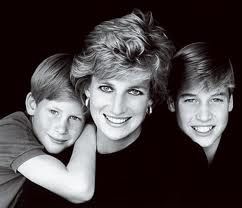
I am very hesitant to make the death of Princess Diana the prominent story of the day but her death was a tragedy on so many levels that it is not surprising that the world nearly stood still for 6 days until her funeral. There are many things that we remember exactly where we were and what we were doing when they happened, like 9/11 and, for those of us old enough, JFK’s assassination.

I was living in Paris then not far from the site of the accident. I had been out to dinner that evening with my then ex-husband, Dr. TMC, when we heard the crash, it was that loud, and shortly after the sirens of emergency vehicles. Not unusual in Paris, so, we continued on to our destinations. It wasn’t until very early that I heard that the Princess had died and where. Paris was stunned. The site became a instant memorial.

We all sat glued to the TV for days waiting for the Queen to say something. The Queen badly underestimated the admiration that was held her former daughter-in-law.  The day of her funeral Paris froze, the only time I have ever seen the city this quiet was on 9/11.

After being criticized for failing to satisfactorily match the grief of the British people, the royal family arranged for a state funeral to be held for Diana at Westminster Abbey on September 6. Diana’s coffin was taken from Kensington Palace to the Abbey on a horse-drawn gun carriage, and an estimated one million mourners lined the route. Diana’s sons, William, 15, and Harry, 12, joined their father, Prince Charles; grandfather Prince Philip; and uncle Charles, the Earl of Spencer, to walk the final stretch of the procession with the casket. The only sound was the clatter of the horses’ hooves and the peal of a church bell.

The service, watched by an estimated two billion people worldwide, sacrificed royal pomp for a more human touch. Workers associated with Diana’s various charities represented 500 of the 2,000 people invited to attend the funeral. Elton John, a friend of Diana, lent a popular touch to the ceremony when he sang “Candle in the Wind,” accompanying himself on piano. After the service, Diana’s body was taken by hearse to her family’s ancestral estate near Althorp, north of London. In a private ceremony, she was laid to rest on a tree-shaded island in a small lake, securely beyond the reach of the camera lens.

Since the death of Princess Diana, Althorp, which has been in the Spencer family for over 500 years, is now a popular tourist attraction that offers tours to the general public.

I still light a candle in her memory on this day.

Blessed Be.

 1056 – Byzantine Empress Theodora becomes ill, dying suddenly a few days later, without children to succeed the throne, ending the Macedonian dynasty.

1218 – Al-Kamil becomes Sultan of Egypt, Syria and northern Mesopotamia on the death of his father Al-Adil.

1314 – King Hakon V Magnusson moves the capital of Norway from Bergen to Oslo.

1422 – Henry VI becomes King of England at the age of 9 months.

1803 – Lewis and Clark start their expedition to the west by leaving Pittsburgh, Pennsylvania at 11 o clock in the morning.

1813 – At the final stage of the Peninsular War British-Portuguese troops capture the town of Donostia-San Sebastian, resulting in a rampage and eventual destruction of the town.

1864 – During the American Civil War, Union forces led by General William T. Sherman launch an assault on Atlanta, Georgia.

1876 – Ottoman sultan Murat V is deposed and succeeded by his brother Abd-ul-Hamid II.

1886 – An earthquake kills 100 in Charleston, South Carolina.

1888 – Mary Ann Nichols is murdered. She is the first of Jack the Ripper’s known victims.

1897 – Thomas Edison patents the Kinetoscope, the first movie projector.

1907 – Count Alexander Izvolsky and Sir Arthur Nicolson sign the St. Petersburg Convention, which results in the Triple Entente alliance.

1914 – Ecuador becomes a signatory to the Buenos Aires copyright treaty.

1915 – Brazil becomes a signatory to the Buenos Aires copyright treaty.

1920 – First radio news program broadcast by station 8MK in Detroit, Michigan.

1939 – Nazi Germany mounts a staged attack on Gleiwitz radio station, creating an excuse to attack Poland the following day, starting World War II in Europe.

1940 – Pennsylvania Central Airlines Trip 19 crashes near Lovettsville, Virginia. The CAB investigation of the accident was the first investigation to be conducted under the Bureau of Air Commerce act of 1938.

1943 – The USS Harmon, the first U.S. Navy ship to be named after a black person, is commissioned.

1945 – The Liberal Party of Australia is founded by Robert Menzies.

1948 – Actor Robert Mitchum is arrested in a Hollywood drug raid. He would later be found guilty of criminal conspiracy to possess marijuana and sentenced to 60 days in prison.

1949 – The retreat of the Greek Democratic Army in Albania after its defeat in mountain Grammos marks the end of the Greek Civil War.

1957 – The Federation of Malaya (now Malaysia) gains its independence from the United Kingdom.

1958 – A parcel bomb sent by Ngo Dinh Nhu, younger brother and chief adviser of South Vietnamese President Ngo Dinh Diem, failed to kill Sihanouk of Cambodia.

1962 – Trinidad and Tobago becomes independent.

1965 – The Aero Spacelines Super Guppy aircraft makes its first flight.

1978 – William and Emily Harris, founders of the Symbionese Liberation Army, plead guilty to the 1974 kidnapping of newspaper heiress Patricia Hearst.

1991 – Kyrgyzstan declares its independence from the Soviet Union.

1992 – Pascal Lissouba is inaugurated as the President of the Republic of the Congo .

1993 – HMS Mercury closes after 52 years in commission.

1994 – The Provisional Irish Republican Army declares a ceasefire.

1997 – Diana, Princess of Wales, her companion Dodi Al-Fayed and driver Henri Paul die in a car crash in Paris.

1998 – North Korea reportedly launches Kwangmyongsong, its first satellite.

1999 – The first of a series of bombings in Moscow, killing one person and wounding 40 others.

1999 – A LAPA Boeing 737-200 crashes during takeoff from Jorge Newbury Airport in Buenos Aires, killing 65, including 2 on the ground.

2005 – A stampede on Al-Aaimmah bridge in Baghdad kills 1,199 people.

2006 – Stolen on August 22, 2004, Edvard Munch’s famous painting The Scream is recovered in a raid by Norwegian police.

Six In The Morning

On Sunday

Bangkok bomb: Thai police charge man ‘linked to Erawan blast’


BBC

Police in Bangkok have charged a man in connection with the bomb attack that killed 20 people in the Thai capital nearly two weeks ago.

Officers say the suspect, who was charged with illegal possession of weapons, was involved in the attack.

However, they say he is not the man seen on CCTV footage leaving a bag at the Erawan Shrine before the explosion.

The bomb tore through the crowded shrine on 17 August, injuring more than 100, mostly tourists.

The man, who was described as a 28-year-old foreigner by police, was arrested in Nong Jok on the outskirts of Bangkok on Saturday.


Sunday’s Headlines:

Rx for Prosperity: German Companies See Refugees as Opportunity

Fact or fiction: Adolf Hitler won an election in 1932

Thousands rally in Kuala Lumpur to put pressure on Malaysian Prime Minister Najib Razak

Chinese WWII pilot: From war hero, to outcast, to hero again

Red Sea jellyfish ‘invading’ Mediterranean through Suez Canal

  Rx for Prosperity: German Companies See Refugees as Opportunity

 The German business community views the recent influx of refugees as an opportunity to help companies grow and ensure long-term prosperity. Many are calling for bureaucratic red tape to be lifted so that new arrivals can enter the labor market faster.

 By Markus Dettmer, Carolin Katschak and Georg Ruppert

Said Hashimi is sweating. He has already spent two hours reorganizing the storage room next to the office, assembling metal cabinets and moving boxes in an out of the room.

The 18-year-old from Afghanistan has been in an apprenticeship program for about a year now to become a plumbing and heating installer with Heizung-Obermeier, a heating installation company located in Munich’s historic city center. The work is never boring, he says. “I like my coworkers, and I often work on construction sites.”

He completed a long journey to arrive where he is today.

 Fact or fiction: Adolf Hitler won an election in 1932

 Did US presidential candidate Bernie Sanders fail history when he said, “Adolf Hitler won an election in 1932?” The Washington Post thinks so, but historian Mark Roseman told DW that Sanders does have a point.  

DW-DE

Senator Bernie Sanders was asked about his religion. How does it inform his politics? The US presidential candidate and self-proclaimed democratic socialist is Jewish. He responded by discussing the cautionary tale of Nazi Germany and Adolf Hitler’s rise to power.

“A guy named Adolf Hitler won an election in 1932,” Sanders said during an event organized by the Christian Science Monitor in June. “He won an election, and 50 million people died as a result of that election in World War II, including 6 million Jews. So what I learned as a little kid is that politics is, in fact, very important.”

  Thousands rally in Kuala Lumpur to put pressure on Malaysian Prime Minister Najib Razak

August 30, 2015 – 12:12PM

  Lindsay Murdoch

South-East Asia correspondent for Fairfax Media


Malaysian prime minister Najib Razak’s hold on to power has been weakened further after tens of thousands of protesters took to Kuala Lumpur’s streets at the weekend to demand his resignation.

Former prime minister Mahathir Mohamad made a surprise appearance among the protesters who defied police warnings that the protests were illegal.

Frail-looking 91 year-old Dr Mahathir, who has been relentlessly leading calls for Mr Najib’s resignation, told protesters their action was necessary because legitimate avenues for people to air their grievances had been shut down by the government.

Chinese WWII pilot: From war hero, to outcast, to hero again


Proficient in English, admitted to U.S. Army Air Forces training program in 1942

Long Qiming stayed in China after the war, and his family suffered

He may have been the last of the ‘Flying Tigers’


 By Stuart Leavenworth

By all accounts, Long Qiming was a Chinese hero during World War II. He piloted cargo planes over the Himalayas, helping to resupply China after Japan’s military had cut off land routes into the country’s interior.

Yet after WWII and the founding of the People’s Republic of China, Long paid a harsh price for his decision to stay in his adopted homeland, mainland China. Long was born in Hong Kong, so he held a British passport. He also had flown planes for the 14th Air Force Chinese-American Composite Wing, an arm of China’s nationalist government.

 Red Sea jellyfish ‘invading’ Mediterranean through Suez Canal


By Oren Liebermann

Updated 0618 GMT (1318 HKT) August 30, 2015


Swarms of stinging jellyfish have invaded the beaches of Israel and the eastern Mediterranean, wrapping their painful tentacles around the limbs of unsuspecting bathers who ventured too far into the water.

The unwelcome visitors, who arrived in early summer, were gone within a few weeks, but these nomad jellyfish — Rhopilema nomadica — are a symptom of a much bigger problem.

They’re not supposed to be here — or anywhere along the Levantine basin or the eastern Mediterranean Sea for that matter. In fact, they are native

Rant of the Weeek: Jon Stewart – Wack Flag

Jon Stewart – Wack Flag

As timely as ever.

Load more