
August 2012 archive

U.S.S. Constitution

Today they’re taking the oldest commissioned warship in the U.S. Navy out for a little sail and turn around.

Navy’s oldest commissioned warship to sail again

By JAY LINDSAY, Associated Press

Fri, Aug 17, 2012

The USS Constitution, which was first launched in 1797, will be tugged from its berth in Boston Harbor on Sunday to the main deepwater pathway into the harbor. It will then set out to open seas for a 10-minute cruise.

The short trip marks the day two centuries ago when the Constitution bested the British frigate HMS Guerriere in a fierce battle during the War of 1812. It follows a three-year restoration project and is the first time the Constitution has been to sea on its own since its 200th birthday in 1997.

Now the truth is they turn it around every few years anyway for preservation and maintenance, but it’s usually shoved along by tugs.  This is a big deal for the Sailors who get to participate either as workers (who’ve been preparing for a couple of years with the rigging which is not trivial even for 4 sails) and the ‘honorary’ crew who are mostly senior enlisted personnel (NCOs).

Not to disparage the Constitution‘s victory, but as with most such it was hardly a fair fight.

The English had been fighting continuously at sea against one nation or another (Netherlands, Spain, France) for over 2 hundred years using refinements of the same technology and tactics and got quite highly organized about it.  They divided ships into various types based on firepower mostly.  Fifth raters were never used in a battle line, but instead in patrols and as messengers.  In colonial waters they’d often pursue pirates or act as commerce raiders (there’s a HUGE difference).  The captured French frigate, Guerriere was armed to suit the English practice of running right alongside close up and blasting your hull with heavy carronades (30 x 18pdr guns, 16 x 32pdr carronades, 2 x 12pdr guns, 1 x 18pdr carronade).

The United States Navy was nothing like that.

What we called a frigate was actually a Fourth Rate Ship of the Line.  The Constitution never sailed with less than 50 guns (thirty 24-pounders on the main deck, twenty-four 32-pounders and two bored out 18-pounders on the upper deck on this occasion).  It also had the advantage of a 2 x 6″ bias ply hull over a diagonally stiffened frame that improved the sailing performance.

The Battle against the Guerriere is actually kind of instructive of why you just couldn’t expect a Fifth Rate to stand up actually.

Because of it’s heavier build the English long range guns had limited effect (thus Old Ironsides) while Hull put on more sail (unknown why Dacres did not respond) and soon got in range.  They exchanged fire for about 15 minutes with the Guerriere sustaining tremendous damage, including losing the Mizzen Mast.  Dacres had been maneuvering for a clear shot and tangled with the Constitution’s rigging.  Both Captains sent boarding parties forward to the contact point but were unable to board.

During this time the ships basically continued blowing each other apart until the Guerriere’s Fore Mast fell too and the Constitution disengaged and made ready for another pass.  During this time Hull dispatched a boat to ask if Dacres wanted to strike his colors.

Well, Sir, I don’t know. Our mizzen mast is gone, our fore and main masts are gone – I think on the whole you might say we have struck our flag.

That and the Battle of New Orleans are the notable victories and we forget about Detroit and the Burning of Washington.

Today on The Stars Hollow Gazette

Our regular featured content-

These featured articles-

Our weekly features-

Follow us on Twitter @StarsHollowGzt

This is an Open Thread

The Stars Hollow Gazette

Cartnoon

(T)he greatest comedy ever made, the greatest Civil War film ever made, and perhaps the greatest film ever made.

Orson Welles

Buster KeatonThe General (1926) (1:44)

On This Day In History August 19

Cross posted from The Stars Hollow Gazette

This is your morning Open Thread. Pour your favorite beverage and review the past and comment on the future.

Find the past “On This Day in History” here.

August 19 is the 231st day of the year (232nd in leap years) in the Gregorian calendar. There are 134 days remaining until the end of the year.

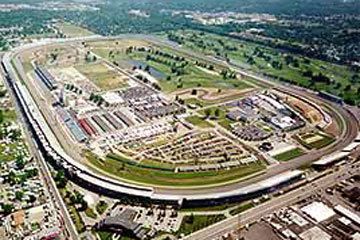
On this day in 1909, the first race is held at the Indianapolis Motor Speedway, now the home of the world’s most famous motor racing competition, the Indianapolis 500.

The rectangular two-and-a-half-mile track linked four turns, each exactly 440 yards from start to finish, by two long and two short straight sections. In that first five-mile race on August 19, 1909, 12,000 spectators watched Austrian engineer Louis Schwitzer win with an average speed of 57.4 miles per hour. The track’s surface of crushed rock and tar proved a disaster, breaking up in a number of places and causing the deaths of two drivers, two mechanics and two spectators.
The surface was soon replaced with 3.2 million paving bricks, laid in a bed of sand and fixed with mortar. Dubbed “The Brickyard,” the speedway reopened in December 1909. In 1911, low attendance led the track’s owners to make a crucial decision: Instead of shorter races, they resolved to focus on a single, longer event each year, for a much larger prize. That May 30 marked the debut of the Indy 500–a grueling 500-mile race that was an immediate hit with audiences and drew press attention from all over the country. Driver Ray Haroun won the purse of $14,250, with an average speed of 74.59 mph and a total time of 6 hours and 42 minutes.

Six In The Morning

On Sunday

Support Grows in Germany for Vote on Giving Up Power to European Bloc


By MELISSA EDDY

It has become the buzzword of the summer in Berlin: referendum. The foreign and finance ministers as well as opposition leaders have all come out in favor of allowing Germans to have a direct say in whether to give up more power to European Union institutions.

Although the idea of a referendum is for the moment more notional than concrete, it is gaining currency in Germany’s political debate. Approving it would amount to the exceptional step of a national vote to change the Constitution to allow Germans to relinquish some executive authority to Brussels.

Proponents say that if such a referendum were approved, it would send a strong signal of Germany’s commitment to the euro. It would also streamline the steps needed to save the common European currency, they argue, and appease mounting complaints by Germans that even as they are being asked to pay more to bolster or bail out their troubled euro zone partners, they have no say in where their taxes are flowing or how they are being spent.


Sunday’s Headlines:

Japanese activists land on disputed islands

How £11bn pledged for water sanitation aid never arrived

Are drones any more immoral than other weapons of war?

Terrorism trumps military taboos in Germany

CNN inside Syria: Nobody imagined it would turn into this

I Am You and You Are Me

It’s hard to say where it went wrong,

Decades before me and this song,

Through the banksters and the wars,

I just can’t take it anymore . . .

Creativity

What We Now Know

Chris Hayes, the host of  MSNBC’s Up with Chris Hayes, share week’s news with guests: Richard Belzer (@MRBelzer), comedian, actor, talk show host and author; Michael Hastings (@mmhastings), BuzzFeed correspondent, Rolling Stone contributing editor, and author of “The Operators: The Wild and Terrifying Inside Story of America’s War in Afghanistan“; Heather McGhee (@hmcghee), vice president of policy and research at the progressive think tank Demos; Josh Barro (@jbarro), writes “The Ticker” for Bloomberg View; and Michelle Goldberg (@michelleinbklyn), senior contributing writer for Newsweek/Daily Beast, author of “Kingdom Coming: The rise of Christian Nationalism.

34 South African miners killed in clash with police

Some miners vowed to fight to the death yesterday  as police announced a shocking casualty toll from the previous day’s shooting by officers of striking miners with 34 dead and 78 wounded.

Wives of miners at the Lonmin Platinum Mine, northwest of Johannesburg took the place of dead and wounded husbands yesterday  in staging a protest. But this time, instead of asking for higher wages as the miners had done, the women demanded to know why police had opened fire Thursday with automatic rifles, pistols and shotguns on the strikers, many of whom had been armed with spears, machetes and clubs, as they rushed toward the officers.

Russia Sentences Pussy Riot Members to Two Years in Jail

A Russian court jailed three female punk performers for two years for inciting religious hatred and hooliganism, prompting international condemnation of the case that’s become a symbol of President Vladimir Putin’s intolerance for dissent.

Prosecutors had sought three-year prison terms for the Pussy Riot band members, who performed a “punk prayer” in the country’s main Christian Orthodox place of worship in February urging Putin’s removal.

Rage Against the Machine Isn’t Returning Ryan’s Love

Representative Paul D. Ryan may love Rage Against the Machine, but the feeling isn’t mutual.

“Paul Ryan’s love of Rage Against the Machine is amusing, because he is the embodiment of the machine that our music has been raging against for two decades,” Mr. Morello said.

Share with us what you now know.

Today on The Stars Hollow Gazette

Photobucket Pictures, Images and Photos

Our regular featured content-

And these featured articles-

Follow us on Twitter @StarsHollowGzt

Write more and often.  This is an Open Thread.

The Stars Hollow Gazette

Cartnoon

Buster KeatonSherlock Jr., 1924 (44:01)

One of AFI’s 100 Funniest.

On This Day In History August 18

Cross posted from The Stars Hollow Gazette

This is your morning Open Thread. Pour your favorite beverage and review the past and comment on the future.

Find the past “On This Day in History” here.

August 18 is the 230th day of the year (231st in leap years) in the Gregorian calendar. There are 135 days remaining until the end of the year.

On this day in 1920, the 19th Amendment to the Constitution is ratified when the Tennessee General Assembly, by a one-vote margin became the thirty-sixth state legislature to ratify the proposed amendment. On August 26, 1920, Secretary of State Bainbridge Colby certified the amendment’s adoption.

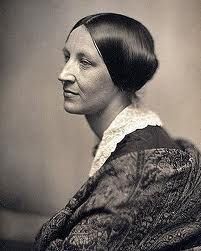
It took 70 years of struggle by women of the Suffrage Movement headed by Susan B. Anthony to get this amendment passed. Gail Collins’ NYT Op-Ed recount of the story puts it in great perspective:

That great suffragist and excellent counter, Carrie Chapman Catt, estimated that the struggle had involved 56 referendum campaigns directed at male voters, plus “480 campaigns to get Legislatures to submit suffrage amendments to voters, 47 campaigns to get constitutional conventions to write woman suffrage into state constitutions; 277 campaigns to get State party conventions to include woman suffrage planks, 30 campaigns to get presidential party campaigns to include woman suffrage planks in party platforms and 19 campaigns with 19 successive Congresses.”

As Ms. Catt tells it and to no one’s surprise the Senate was the biggest obstacle, so the Suffragettes decided to take it to the states and amend all the state constitutions, one by one.

The constitutional amendment that finally did pass Congress bore Anthony’s name. It came up before the House of Representatives in 1918 with the two-thirds votes needed for passage barely within reach. One congressman who had been in the hospital for six months had himself carted to the floor so he could support suffrage. Another, who had just broken his shoulder, refused to have it set for fear he’d be too late to be counted. Representative Frederick Hicks of New York had been at the bedside of his dying wife but left at her urging to support the cause. He provided the final, crucial vote, and then returned home for her funeral.

The ratification stalled short of one state when it came to a vote in the Tennessee Legislature on August 18, 1920 and was short one vote to ratify when a young state legislator got a note from his mother:

Ninety years ago this month, all eyes turned to Tennessee, the only state yet to ratify with its Legislature still in session. The resolution sailed through the Tennessee Senate. As it moved on to the House, the most vigorous opposition came from the liquor industry, which was pretty sure that if women got the vote, they’d use it to pass Prohibition. Distillery lobbyists came to fight, bearing samples.

“Both suffrage and anti-suffrage men were reeling through the hall in an advanced state of intoxication,” Carrie Catt reported.

The women and their allies knew they had a one-vote margin of support in the House. Then the speaker, whom they had counted on as a “yes,” changed his mind.

(I love this moment. Women’s suffrage is tied to the railroad track and the train is bearing down fast when suddenly. …)

Suddenly, Harry Burn, the youngest member of the House, a 24-year-old “no” vote from East Tennessee, got up and announced that he had received a letter from his mother telling him to “be a good boy and help Mrs. Catt.”

“I know that a mother’s advice is always the safest for a boy to follow,” Burn said, switching sides.

We celebrate Women’s Suffrage Day on Aug. 26, which is when the amendment officially became part of the Constitution. But I like Aug. 18, which is the day that Harry Burn jumped up in the Tennessee Legislature, waving his mom’s note from home. I told the story once in Atlanta, and a woman in the audience said that when she was visiting her relatives in East Tennessee, she had gone to put a yellow rose on Harry Burn’s grave.

I got a little teary.

“Well, actually,” she added, “it was because I couldn’t find his mother.”

The War Over Wikileaks

Cross posted from The Stars Hollow Gazette

As most know by now Ecuador has granted Wikileaks founder Julian Assange asylum from extradition to Sweden for questioning in alleged sexual abuse. The asylum was granted based on the fear that if Mr. Assange was extradited to Sweden there was no guarantee that the Swedish government would not then turn extradite him to the US where he would face serious charges and possibly execution.

Mr. Assange had exhausted his appeals through British courts in June then fled to the Ecuadoran Embassy requesting asylum. Yesterday that request was granted setting up a diplomatic stand off that could lead to a violation of international law with the British threatening to strip Ecuador of its diplomatic status and storm the embassy to arrest Mr. Assange. The British are claiming that they have the right to do so under a law passed in 1987 and do not recognize the right of asylum, which is, to put it politely, a load of bull pucks. In 1999, the British refused to extradite former Chilean dictator Augusto Pinochet to Spain where he was wanted under an international warrant for crimes against humanity. Ian Welsh noted that Pinochet had women raped by dogs so Britain’s concern about the importance of extradition and rape allegations are just untrue. Besides, Mr. Assange has not been charged and his fears about extradition to the US are legitimate.

As Kevin Gosztola at FDL points out that there is a “grand jury empaneled in Alexandria, Virginia in the Eastern District that is investigating anyone who can be connected to the WikiLeaks organization”:

Now, The Saturday Age, based in Australia, has published a report that features some critical details on the United States government’s plans for Assange. It describes Australian Foreign Aaffairs Department documents that were obtained under freedom of information laws and show the Australian diplomatic service “takes seriously the likelihood that Assange will eventually be extradited to the US on charges arising from WikiLeaks obtaining leaked US military and diplomatic documents.” Australia’s ambassador to the US, Kim Beazley, sought “high-level US advice on ‘the direction and likely outcome of the investigation’ and “reiterated’ an Australian government request for “early advice of any decision to indict or seek extradition” of Assange.

The diplomatic cables identify “a wide range of criminal charges the US could bring against Assange, including espionage, conspiracy, unlawful access to classified information and computer fraud.” They indicate, “Australian diplomats expect that any charges against Assange would be carefully drawn in an effort to avoid conflict with the First Amendment free speech provisions of the US constitution.”

Additionally, Australian diplomats have apparently been informed of “several connections between Manning and WikiLeaks,” which prosecutors have uncovered that would form the “basis of a conspiracy charge.” The diplomats have found any investigation would “target” the “founders, owners or managers of WikiLeaks” for espionage.

At emptywheel, Marcy Wheeler pointed out that the cause this current overreaction stems from the embarrassment Mr. Assange caused the US by releasing diplomatic cables revealing details on the targeted assassination of Anwar al-Awlaki and some breaches of diplomatic guidelines by Secretary of State Hillary Clinton:

If the Brits enter the embassy it will only expose publicly what has become true but remains largely unacknowledged: the US and its allies find international law and protocols to be quaint. That was obviously true under Bush, with the illegal Iraq war and his disdain for the Geneva Conventions. But Obama, too, continues to do things legally authorized only by the most acrobatic of legal interpretations.

Which is why I consider it so apt that one of the most embarrassing-albeit frankly rather minor-details that WikiLeaks published about the Obama Administration is that Hillary ordered her staff to help intelligence officers collect intelligence on their counterparts, including credit card data and biometrics. [..]

While other cables exposed the Obama Administration to far more legal trouble-such as the one apparently showing that we were targeting Anwar al-Awlaki before we believed him to be operational-it was the exposure of diplomatic spying that seemed to piss the Obama Administration off. Exposure as cynical power brokers, not idealistic world citizens.

The Young Turks Cenk Uygur summed up this tempest in a teapot with this rant:

Not a single person has been hurt by Wikileaks, zero, but the US would like to prosecute and possibly execute a man because he embarrassed the government by revealing violations of human rights and international law.  

Load more