August 2012 archive

Letting It All Hang Out

Cross posted from The Stars Hollow Gazette

One of the latest MSM fixations has been an incident that occurred last year during a Republican junket to Israel. A nighttime swim in the Sea of Galilee by some members of the delegations turned embarrassing when the FBI found the Rep. Kevin Yoder (R-Kan.) took his dip in the sea sans his suit. Oh my! A coed swim with one naked man is now national news. But the question by the press should have been, why was the FBI investigating this trip. Surely, they weren’t interested in who was taking off their clothed and skinny dipping. It turns out that the FBI was only interested in one member of that group and the investigation had nothing to do with that representative’s participation in that incident, clothed or otherwise.

The focus of the FBI is Staten Island’s freshman Tea Party backed House Representative Michael Grimm. The 42 year old former FBI agent who bears a striking resemblance to Rep. Paul Ryan and the other Tea Party clones has been under investigation by the FBI and a federal grand jury investigation into his 2010 campaign finances. The FBI was looking into Mr. Grimm’s side trip to Cyprus that was sponsored by the Cyprus Federation of America.

But FBI agents were actually interested in Grimm’s failure to file paperwork related to his trip to Cyprus following his Israeli junket, which had been paid for by the Cyprus Federation of America. The president of that company was arrested on federal corruption charges in June. Grimm had reported the Israel trip in his initial filing in May but did not list the trip to Cyprus until he amended it in June, one day after Cyprus Federation of America’s president was arrested.

FBI agents may have asked questions about “who went into the water that night, and whether there was any impropriety,” as Politico reported, but sources indicated the dip in the water certainly wasn’t the FBI’s central focus. [.]

Grimm, a former FBI agent, has been the subject of plenty of attention from federal authorities over the past year. On Friday, one of Grimm’s top fundraisers was arrested for allegedly lying about the source of a loan on immigration documents. That man, an Israeli named Ofer Biton, traveled around the New York area with Grimm in 2010 to raise money for his congressional campaign. At least four of Grimm’s 2010 campaign workers have been questioned by the FBI. Federal prosecutors have also interviewed several donors, according to the New York Times.

But heck, what’s more interesting, an skinny dipping congressman or an investigation into possible corruption by a congressman? I think we all know the answer to that.

Health and Fitness News

Welcome to the Health and Fitness News, a weekly diary which is cross-posted from The Stars Hollow Gazette. It is open for discussion about health related issues including diet, exercise, health and health care issues, as well as, tips on what you can do when there is a medical emergency. Also an opportunity to share and exchange your favorite healthy recipes.

Questions are encouraged and I will answer to the best of my ability. If I can’t, I will try to steer you in the right direction. Naturally, I cannot give individual medical advice for personal health issues. I can give you information about medical conditions and the current treatments available.

You can now find past Health and Fitness News diaries here and on the right hand side of the Front Page.

Tomatoes à la Provence

Photobucket

This is the first summer in a long time that I haven’t had a tomato garden. My garden needed a rest, and my plan was to work on my annual tomato piece for Recipes for Health during the two weeks I spent in Provence, where my love affair with Mediterranean cuisine began. It was an easy assignment. Summer cooking here revolves around tomatoes, squash and eggplant, and these ingredients pretty much dominated my market baskets.

When I started going to Provence more than 30 years ago, the tomatoes were superior to anything I could find in the States. Now that’s not the case, thanks to our wonderful farmers’ markets, which offer a wider variety of these nutrient-dense vegetables than any French market I visited this summer. An added benefit is that in American markets you are much more likely

~Martha Rose Shulman~

Pain Catalan With Extra Tomatoes and Goat Cheese

This dish is inspired by the Catalan signature dish, but mustard takes the place of the traditional raw garlic.

Provençal Tomato and Squash Gratin

Tomatoes do double duty here, forming a sauce and decorating the top of the dish.

Rainbow Trout Baked in Foil With Tomatoes, Garlic and Thyme

Cooked in packets, this savory fish dish can be assembled well ahead of time and baked at the last minute.

Tomato, Squash and Eggplant Tian

A tian takes a little time to assemble, but you’ll be rewarded with a beautiful presentation of summer’s bounty.

Tomato and Goat Cheese Tart

Dijon mustard spread on the pastry dough before baking adds even more French flavor to this dish.

My Little Town 20120822: Dad and The Lawn

I took a week off from blogging last week for a number of reasons.  One was that I was having trouble getting my mind around topics.  Another was being in sort of a strange set of moods that have made concentration rather difficult.  Yet again, and probably the root cause of the other two is either spending large amounts of time with someone (no time to write) or no time at all (no motivation to write).  In any event, I think that I have some balance back.

Those of you that read this regular series know that I am from Hackett, Arkansas, just a mile or so from the Oklahoma border, and just about 10 miles south of the Arkansas River.  It was a rural sort of place that did not particularly appreciate education, and just zoom onto my previous posts to understand a bit about it.

Dad was sort of obsessive about the lawn.  We had a big yard, the front being the largest and the back second, with the sides being somewhat smaller but still large by most standards.  The problem was that we had lots of large trees.  In the front were two post oaks, a hackberry (that was hollow at the bottom), a mockernut hickory (one with really sweet nuts, unlike many mockernuts), and a papershell pecan.

The side on the south had a walnut tree that I planted, and the back had two large walnut trees.  The side on the north had a very tall pine and a redbud tree.  All of that shade made it sort of hard to grow grass.

Allergic to Courtrooms

Matt Taibbi, Eliot Spitzer Discuss Eric Holder’s Failure

Matt Taibbi, Rolling Stone

POSTED: August 22, 11:40 AM ET

A good prosecutor should look down the barrel of a bunch of millionaire lawyers at Davis Polk or White and Case and feel turned on by the challenge of combat. Making a deal with any devil should burn him at the core, keep him awake at night.

But that’s exactly who Eric Holder and Lanny Breuer haven’t been, exactly who Bob Khuzami at the SEC hasn’t been. Instead of being fighters, they’ve been dealmakers and plea-bargainers. They’ve dealt out every major financial scandal, from Abacus to the Muni-bid-rigging cases (they prosecuted a few low-level guys at GE but let the big players at the big banks skate) to the Citigroup fraud settlement that was so bad a judge threw it back at the govenment’s face. In that latter case, amazingly, the govenment is now fighting not for its constituents, but for its right to give out crappy deals to repeat-offender banks without judicial review.

Today on The Stars Hollow Gazette

Our regular featured content-

These featured articles-

Follow us on Twitter @StarsHollowGzt

This is an Open Thread

The Stars Hollow Gazette

On This Day In History August 22

Cross posted from The Stars Hollow Gazette

This is your morning Open Thread. Pour your favorite beverage and review the past and comment on the future.

Find the past “On This Day in History” here.

August 22 is the 234th day of the year (235th in leap years) in the Gregorian calendar. There are 131 days remaining until the end of the year.

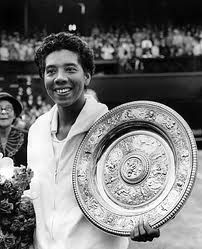
On this day in 1950, Althea Gibson became the first African American on the US Tennis Tour.

On this day in 1950, officials of the United States Lawn Tennis Association (USLTA) accept Althea Gibson into their annual championship at Forest Hills, New York, making her the first African-American player to compete in a U.S. national tennis competition.

Growing up in Harlem, the young Gibson was a natural athlete. She started playing tennis at the age of 14 and the very next year won her first tournament, the New York State girls’ championship, sponsored by the American Tennis Association (ATA), which was organized in 1916 by black players as an alternative to the exclusively white USLTA. After prominent doctors and tennis enthusiasts Hubert Eaton and R. Walter Johnson took Gibson under their wing, she won her first of what would be 10 straight ATA championships in 1947.

In 1949, Gibson attempted to gain entry into the USLTA’s National Grass Court Championships at Forest Hills, the precursor of the U.S. Open. When the USLTA failed to invite her to any qualifying tournaments, Alice Marble–a four-time winner at Forest Hills–wrote a letter on Gibson’s behalf to the editor of American Lawn Tennis magazine. Marble criticized the “bigotry” of her fellow USLTA members, suggesting that if Gibson posed a challenge to current tour players, “it’s only fair that they meet this challenge on the courts.” Gibson was subsequently invited to participate in a New Jersey qualifying event, where she earned a berth at Forest Hills.

snip

Though she once brushed off comparisons to Jackie Robinson, the trailblazing black baseball player, Gibson has been credited with paving the way for African-American tennis champions such as Arthur Ashe and, more recently, Venus and Serena Williams. After a long illness, she died in 2003 at the age of 76.

Ms. Gibson became the first African American woman to join the Ladies Professional Golf Association  tour, in 1963, retiring in 1978.

Cartnoon

Another goner now replaced.  Originally appeared May 2, 2011.

Bowery Bugs

Late Night Karaoke

“Foaming the Runway for the Banks”

Cross posted from The Stars Hollow Gazette

Disregard all cheery news you hear from the MSM that the housing crisis is over and housing prices are stable and on the rise. It’s not over. We are still bailing out the banks over the troubled homeowner.

“The evidence is overwhelming: home prices are anything but stable.”

Michael Olenick: Still Looking for a Housing Bottom

Two trends are apparent. One is that banks are delaying foreclosures, or not foreclosing at all despite long-term delinquencies. The other is that private equity firms – flush with cash thanks to Tim Geithner’s religious devotion to trickle-down economics and the resulting cascade of corporate welfare – have been bidding up and holding foreclosed houses off the market. These two factors have artificially limited supply and, combined with cheap mortgages rates, driven up prices. While we can debate whether these strategies represent the best public policy, these policies are obviously not long-term sustainable. [..]

Holding back inventory means that the houses that are put on offer sell faster and at higher prices. That creates an incentive to delay foreclosures or not foreclose at all even when a home is delinquent. Though this seems obvious, the mainstream housing finance community – aided by a freelance “housing analyst,” – uses the faster figures to somehow prove banks are not holding houses. [..]

Besides lower foreclosure activity, the government is going all out to give away houses to private equity firms. Recently Fannie Mae sold 275 properties across metro Phoenix in one sale to a mystery buyer, according to a report by Catherine Reagor of the Arizon Republic. [..]

Anybody who has been a landlord seems to quickly tire of it so, assuming there isn’t a pending planned mass immigration to Phoenix, these investors will eventually want to cash out by selling these houses. Further, they will want to minimize maintenance expenses while they are renting out these houses, so the eventual sale of these houses will increase supply and prolong the housing crisis. Geithner’s policy of shaking down Main Street to help Wall Street continues to hurt your street. [..]

Taking account of the delayed foreclosures and the beginning of mass purchases of houses would mean there should be a surge in home prices, but we’re still seeing little movement in many areas. This is especially puzzling given how inexpensive mortgage are. [..]

Of course, this assumes that people can get mortgages for these houses, though many can’t. Young people especially are hopelessly in debt thanks to out-of-control tuition hikes predictably caused by equally out-of-control student loan policies. [..]

Thanks to low lower foreclosures, real-estate speculators buying in bulk, and low interest rates there is enough direct and anecdotal evidence to suggest that we may be seeing a real-estate recovery on paper. Further, these policies are clearly calibrated to bring about a bubble, despite that bubbles are difficult to control and are not, by definition, sustainable: they always eventually pop. Let’s at least hope that when this bubble bursts the new Wall Street bulk buyers are treated with the same ruthless “free market” vigor that the prior owners of these houses were treated with after the last bubble burst. However, I doubt the mystery Asian money buyer, that Fannie sold Phoenix to, will ever be subject to something like the rocket docket.

Washington’s Blog goes down the list of evidence that “the government’s “Homeowner Relief” Programs are disguised bank bailouts … not even AIMED at helping homeowners. It’s a fascinating piece with all the links to this sham.

Former special inspector general overseeing TARP Neil Barofsky (@neilbarofsky) joined Up w/ Chris Hayes to talk about his book “Bailout: An Inside Account of How Washington Abandoned Main Street While Rescuing Wall Street.” Along with panel guests Heather McGhee (@hmcghee), vice president of policy and research at the progressive think tank Demos; Josh Barro (@jbarro), who writes “The Ticker” for Bloomberg View; Michelle Goldberg (@michelleinbklyn), senior contributing writer for Newsweek/Daily Beast; and Up host Chris Hayes (@chrislhayes), Barofsky shares his thoughts on the failure of TARP and the housing crisis.

The Tangled Web That Nations Weave: Part 2

Cross posted from The Stars Hollow Gazette

Oh what a tangled web we weave,

When first we practise to deceive!

   Sir Walter Scott, Marmion, Canto vi. Stanza 17.

   Scottish author & novelist (1771 – 1832)

BuzzFeed correspondent and Rolling Stone contributing editor Michael Hastings (@mmhastings) joins the Up w/ Chris Hayes discussion on Julian Assange, the leader behind WikiLeaks, who caused a diplomatic standoff this week in part for challenging extradition to Sweden for alleged sexual misconduct. Along with comedian, actor, talk show host and author, Richard Belzer (@MRBelzer); Josh Barro (@jbarro) who writes “The Ticker” for Bloomberg View; Michelle Goldberg (@michelleinbklyn), senior contributing writer for Newsweek/Daily Beast; and Up host Chris Hayes ([@chris hayes]) attempt to unravel the tangles web of international intrigues that surrounds Julian Assange, Wikileaks and the latest diplomatic imbroglio that has our attention.

There was a lot left out but it would most likely take more than the two hours of the show to even come close to trying to wend through the maze of information and sort out the the innuendo from the facts. But here is some of what we do know about the actors in this multi-act play so far:

Theses are some of the details about charges and how the case was handled by the Swedish police and prosecutors:

  • 1)  Julian Assange is not charged with anything in Sweden or any other country. (Source: @wikileaks)
  • 2)  Julian Assange did not flee Sweden to avoid questioning. He was given permission to leave the country on the 15th September 2010, after remaining 5 weeks in Sweden for the purpose of answering the allegations made against him. {Source: Undue delay for Julian Assange’s interrogation)
  • 3)  The case against Julian Assange was initially dropped, and deemed so weak it could not warrant investigation. After the intervention of a Swedish politician close to American diplomats, it was revived by a different prosecutor. (Source: Why is Julian Assange in jail?)
  • 4)  In all instances, the 2 plaintiffs consented to sexual intercourse, which they did not take the initiative to stop: they never expressed non-consent and afterwards declared to not have felt threatened by Julian Assange. (Sources: Swedish Police Report and The offences described in the EAW are not extradition offences)
  • 5)  A condom submitted as evidence by complainant AA, who claimed it had been deliberately torn by Julian Assange during sexual intercourse, contains no chromosomal DNA from either the complainant or Julian. (Source: Overlooked evidence in the Assange trial)
  • (6)  Text messages exchanged between complainants and their friends contradict the factual allegations in the European Arrest Warrant (EAW) issued for Julian Assange and cast doubt on the allegations. (Source: Brief to Canberra Meeting of MPs)
  • 7)  After the date of the alleged sexual misconduct: a) Complainant AA created then deleted evidence (tweets) indicating she was enjoying Julian Assange’s company; b) AA went as far as suggesting one of her friends (Witness C) should be intimate with Julian as well. (Sources: AA: The Twitter Trail, Göran Rudling Witness Statement and Police Statement of Witness C (pdf))
  • 8)  The law firm hired in the Assange investigation is ran by Claes Borgström (politician and legal representative for both plaintiffs) and by former minister Thomas Bodström. Both are members of the Social Democrat Party in Sweden. Bodström is a friend of police interrogator Irmeli Krans, who interrogated complainant SW.  (Source: Irmeli Krans: The Facebook Trail)
  • 9) Police interrogator Irmeli Krans is, in turn, friends with the other plaintiff, complainant AA, with whom she has political ties (Social Democrat Party). Krans also breached protocol by commenting negatively about Julian Assange on social media. (Source: Irmeli Krans: The Facebook Trail)
  • 10)  Swedish prosecutor, Marianne Ny, refused to provide Julian Assange or his lawyers with information on the allegations against him in writing. This violates the Swedish Code of Procedure (RB 23:18) and the European Convention of Human Rights (article 5), and the EU Fundamental Charter on Human Rights.

    Prosecution also refused all voluntary offers for cooperation that fit under Mutual Legal Assistance protocol, such as making use of alternative methods to interview Julian Assange. (Sources: Fair Trial for Julian Assange? and Abuse of Process: Disproportionate use of EAW and INTERPOL Red Notice)

  • 11)  Both the EAW and the Interpol red notice were issued for Julian by Sweden just before WikiLeaks began to publish Cablegate. (Source: Brief to Canberra Meeting of MPs)
  • 12)  The allegations against Julian Assange do not constitute an offense in Australia or in the UK. (Source: The offences described in the EAW are not extradition offences)
  • h/t Notes on Wikileaks

    We also know that one of Mr. Assange’s accusers has close ties to the CIA.

    We know that former Stockholm chief district prosecutor Sven-Erik Alhem said that the Swedish government had no legitimate reason to seek Assange’s extradition when he testified that the decision of the Swedish government to extradite Assange is “unreasonable and unprofessional, as well as unfair and disproportionate“, because he could be easily questioned in the UK.

    We know that there is strong evidence that the United States is seeking to indict Mr. Assange and prosecute him under the Espionage Act.

    We also know that Ecuador’s president Rafael Correa may have been motivated by geopolitical factors in Latin America:

    Any policy of isolating Assange may have failed now, as the conflict becomes one in which Ecuador-and a newly independent Latin America-stand off against the US and UK. Ecuador’s president Rafael Correa represents the wave of new nationalist leaders on the continent who have challenged the traditional US dominance over trade, security and regional decision-making. Correa joined the Venezuelan-founded Bolivarian Alternative for the Americas in June 2009, and closed the US military base in Ecuador in September 2009. His government fined Chevron for $8.6 billion for damages to the Amazon rainforest, in a case which Correa called “the most important in the history of the country.” He survived a coup attempt in 2010.

    It is very unlikely that Correa would make his asylum decision without consulting other governments in Latin America. An aggressive reaction by the British, carrying echoes of the colonial past, is likely to solidify Latin American ranks behind Quito, making Assange another irritant in relations with the United States.

    Earlier this year, many Central and Latin American leaders rebuked the Obama administration for its drug war policies and vowed not to participate in another Organization of American States meeting that excluded Cuba. Shortly after, President Obama acted to remove his Latin American policy chief, Dan Restrepo, according to a source with close ties to the Obama administration. Now the Assange affair threatens more turmoil between the United States and the region.

    Oh, what a tangled web.

    Today on The Stars Hollow Gazette

    Our regular featured content-

    These featured articles-

    Follow us on Twitter @StarsHollowGzt

    This is an Open Thread

    The Stars Hollow Gazette

    The Best and the Brightest

    Career Risk Panic: Only 11% Of Hedge Funds Are Outperforming The S&P In 2012

    Tyler Durden, Zero Hedge

    08/20/2012 19:10

    The S&P500 may be soaring to new 2012 highs, and has its all time highs within short squeeze distance, yet paradoxically this is arguably the worst possible news to the cadre of US hedge fund managers used to beating the market year after year, thus justifying their (increasingly more unsustainable) 2 and 20 fees. The reason: according to just a released report quantifying hedge fund performance so far in 2012, with an average return of 4.6% as of August 3 compared to a 12% return for the S&P, a pathetic 11% of all hedge funds are beating S&P year to date. This is the worst yearly aggregate S&P 500 underperformance by the hedge fund industry in history, and also explains why the smooth sailing in the S&P500 belies the fact that nearly every single hedge fund manager (and at least 89% of all) is currently panicking like never before knowing very well there are only 4 more months left to beat the S&P or face terminal redemption requests. And with $1.2 trillion in gross equity positions, the day of redemption reckoning at the end of the year (and just after September 30 for that matter as well) could be the most painful yet.

    More Evidence Wall Street is Overpaid

    Matt Taibbi, Rolling Stone

    August 21, 9:11 AM ET

    (O)ne of the most frequently-overlooked problems of the financialization age is that a lot of our brilliant financial engineers are actually pretty damned average, when it comes to playing the market.

    There’s a great little piece at Zero Hedge about how hedge funds are having a terrible year (for the second straight year), with only 11% of all funds outperforming the Standard and Poor’s 500, the basic stock index.


    Translating that into English, all those super-rich people who turned to hedge funds with their millions in the hopes that bunches of Whiz-Kids from Wharton and Harvard and Yale would find unseen and wildly creative investment ideas to fatten their fortunes — all those rich clients are actually finding out now that those same Whiz Kids are buying Apple just like the rest of us. Hey, it has to be a good stock, right? Everyone has an iPhone now.


    As is apparently also the case with Mitt Romney’s PE business, which analysts have found often don’t do much better than average if at all, the data shows more and more that we’d all be better off, and there’d be a lot less mischief, if the world’s biggest and more powerful investment specialists just dumped money into humdrum baskets of stocks instead of racking their enormous brains to come up with exotic new trades.

    Someday we’ll get back to the time when the really smart guys from the best schools went to work for companies that built actual products, engineered more efficient cars, cured diseases, etc. Because it seems like our best minds kind of suck at investing.

    Uncle Sam Needs YOU for a Bailout: 6 Reasons Another Big Banking Crisis Is Coming Our Way

    By Alexander Arapoglou and Jerri-Lynn Scofield, Alternet

    August 17, 2012

    (R)egulators decided that sophisticated investors, including the wealthy, pension funds and charities, had enough financial savvy to be allowed to invest in shadow banks that were either lightly regulated, or not at all. Such alternative investment vehicles, including hedge funds and private equity funds, were exempt from investment restrictions.

    In the last two decades, there’s been an explosive growth in shadow banks. The size of this unregulated system has increased fivefold and today is larger than the regulated financial system.

    The rationale? Sophisticated investors, it’s claimed, can look after themselves, and therefore the largely unregulated funds that cater to them don’t pose any risks to the rest of us. But that’s not proven to be the case.


    (A) decade before this bailout, U.S. financial regulators were involved in a rescue of a shadow bank, which helped set the stage for TARP.  In 1998, the Long-Term Capital Management (LTCM) hedge fund got into trouble by placing heavily-leveraged derivatives bets during the Asian financial crisis. Hedge funds are allowed to operate with scant regulatory supervision on the rationale that they cater only to sophisticated investors who could bear the risk.

    The Federal Reserve changed its mind when it realized that LTCM’s failure was a threat to the global economy. So the Fed corralled major banks in a room, and told them to fix the problem. They dismembered LTCM and took its underperforming assets onto their books.

    The Fed’s role in this rescue sent the wrong message: that the government would be there to fix problems, and that banks and shadow banks alike didn’t have to work too hard to manage risk and to protect themselves from contagion.


    Banks need to be seized, or at minimum assessed by a neutral observer, and their balance sheets cleaned up. Investors, too, must pay a price for making foolish investment choices. Typically, existing shareholders are wiped out, while bondholders see their promises of guaranteed debt payments converted to more speculative shares of stock.


    (T)he lack of a streamlined regulatory system means banks play regulatory arbitrage. Recently we saw this dynamic unfold-unsuccessfully in this case- as Standard Chartered Bank used its press cronies to pressure Benjamin Lawsky, New York’s Superintendent of Financial Services, to go easy on the bank for laundering money for Iranian clients and cooperate with other regulators – the Fed, Justice and Treasury- that favored a softer stance. Lawsky threatened to cancel the bank’s license to operate in New York-a death sentence for any international bank. When he didn’t back down, the bank agreed to a $340 million settlement. Lawsky’s firm stance improves the prospects for the pending federal probes.


    And so we come back to where we started-the decision not to go after Goldman Sachs. Normally, the Justice Department doesn’t  comment on its pending investigations. But for Goldman, the rules are different. Justice issued an unusual statement saying the firm wouldn’t be criminally charged, as prosecutors didn’t believe they could meet the burden of proof necessary to win a trial. Earlier last week, Goldman disclosed that the SEC wouldn’t be pursuing criminal charges against the firm, despite having issued Goldman a “Wells notice” of its investigation. Dropping an investigation after issuing such a notice is not altogether unprecedented– but is also rare.


    The current failure to prosecute means that banks will continue to pursue risky policies. Bankers continue to get paid based on results, and there’s so much to gain from a successful risky bet, and so little to lose from a bet gone bad, particularly if the taxpayer is there to pick up the tab.

    In America, if you misuse food stamps, and you get caught, there’s a good chance you’ll lose your benefits, and you might even go to jail.  If you rip off the Medicare system, commit tax fraud or perpetrate identity theft, federal prosecutors will throw the book at you. But if you’re part of a multi-billion dollar enterprise that misleads investors and lies to Congress, you’re like the trophy fish that’s caught and released.  You’re off the hook.

    (h/t Naked Capitalism)

    I see in fight club the strongest and smartest men who’ve ever lived. I see all this potential, and I see squandering. God damn it, an entire generation pumping gas, waiting tables; slaves with white collars. Advertising has us chasing cars and clothes, working jobs we hate so we can buy shit we don’t need. We’re the middle children of history, man. No purpose or place. We have no Great War. No Great Depression. Our Great War’s a spiritual war… our Great Depression is our lives. We’ve all been raised on television to believe that one day we’d all be millionaires, and movie gods, and rock stars. But we won’t. And we’re slowly learning that fact. And we’re very, very pissed off.

    Load more