Indeed, if Martin Luther King, Jr., had a favorite opening act, it was Mahalia Jackson, who performed by his side many times. On August 28, 1963, as she took to the podium before an audience of 250,000 to give the last musical performance before Dr. King’s speech, Dr. King himself requested that she sing the gospel classic “I’ve Been ‘Buked, and I’ve Been Scorned.” Jackson was just as familiar with Dr. King’s repertoire as he was with hers, and just as King felt comfortable telling her what to sing as the lead-in to what would prove to be the most famous speech of his life, Jackson felt comfortable telling him in what direction to take that speech.
The story that has been told since that day has Mahalia Jackson intervening at a critical junction when she decided King’s speech needed a course-correction. Recalling a theme she had heard him use in earlier speeches, Jackson said out loud to Martin Luther King, Jr., from behind the podium on the steps of the Lincoln Memorial, “Tell them about the dream, Martin.” And at that moment, as can be seen in films of the speech, Dr. King leaves his prepared notes behind to improvise the entire next section of his speech-the historic section that famously begins “And so even though we face the difficulties of today and tomorrow, I still have a dream. It is a dream deeply rooted in the American dream….”
There is no embeddable video of Ms Jackson from that day but here is the inspirational song she performed that day.
475 – The Roman general Orestes forces western Roman Emperor Julius Nepos to flee his capital city, Ravenna.
489 – Theodoric, king of the Ostrogoths defeats Odoacer at the Battle of Isonzo, forcing his way into Italy.
1189 – Third Crusade: the Crusaders begin the Siege of Acre under Guy of Lusignan
1349 – 6,000 Jews are killed in Mainz, accused of being the cause of the plague.
1511 – The Portuguese conquer Malacca.
1521 – The Ottoman Turks occupy Belgrade.
1542 – Turkish-Portuguese War (1538-1557) – Battle of Wofla: the Portuguese are scattered, their leader Christovao da Gama is captured and later executed.
1609 – Henry Hudson discovers Delaware Bay.
1619 – Ferdinand II is elected emperor of the Holy Roman Empire.
1640 – Second Bishop’s War: King Charles I’s English army loses to a Scottish Covenanter force at the Battle of Newburn.
1789 – William Herschel discovers a new moon of Saturn.
1810 – Battle of Grand Port – the French accept the surrender of a British Navy fleet.
1830 – The Tom Thumb presages the first railway service in the United States.
1845 – The first issue of Scientific American magazine is published.
1849 – After a month-long siege, Venice, which had declared itself independent, surrenders to Austria.
1859 – A geomagnetic storm causes the Aurora Borealis to shine so brightly that it is seen clearly over parts of USA, Europe, and even as far away as Japan.
1862 – American Civil War: Second Battle of Bull Run, also known as the Battle of Second Manassas.
1867 – The United States takes possession of the, at this point unoccupied, Midway Atoll.
1879 – Cetshwayo, last king of the Zulus, is captured by the British.
1898 – Caleb Bradham renames his carbonated soft drink “Pepsi-Cola”.
1913 – Queen Wilhelmina opens the Peace Palace in The Hague.
1914 – World War I: the Royal Navy defeats the German fleet in the Battle of Heligoland Bight.
1914 – World War I: German troops conquer Namur.
1916 – World War I: Germany declares war on Romania.
1916 – World War I: Italy declares war on Germany.
1917 – Ten Suffragettes are arrested while picketing the White House.
1937 – Toyota Motors becomes an independent company.
1943 – World War II: in Denmark, a general strike against the Nazi occupation is started.
1944 – World War II: Marseille and Toulon are liberated.
1953 – Nippon Television broadcasts Japan’s first television show, including its first TV advertisement.
1955 – Black teenager Emmett Till is murdered in Mississippi, galvanizing the nascent American Civil Rights Movement.
1963 – March on Washington for Jobs and Freedom: Martin Luther King, Jr. gives his I Have a Dream speech
1963 – Emily Hoffert and Janice Wylie are murdered in their Manhattan flat, prompting the events that would lead to the passing of the Miranda Rights.
1964 – The Philadelphia race riot begins.
1968 – Riots in Chicago, Illinois, during the Democratic National Convention.
1979 – An IRA bomb explodes on the Grand Place in Brussels.
1981 – The National Centers for Disease Control announce a high incidence of pneumocystis and Kaposi’s sarcoma in gay men. These will soon be recognized as symptoms of an immune disorder, which will be called AIDS.
1986 – United States Navy officer Jerry A. Whitworth is sentenced to 365 years imprisonment for espionage for the Soviet Union.
1988 – Ramstein airshow disaster: three aircraft of the Frecce Tricolori demonstration team collide and the wreckage falls into the crowd. 75 are killed and 346 seriously injured.
1990 – Iraq declares Kuwait to be its newest province.
1990 – The Plainfield Tornado: an F5 tornado hits in Plainfield, Illinois, and Joliet, Illinois, killing 28 people.
1991 – Ukraine declares its independence from the Soviet Union.
1991 – Collapse of the Soviet Union – Mikhail Gorbachev resigns as Secretary of the Soviet Communist Party.
1996 – Charles, Prince of Wales and Diana, Princess of Wales divorce.
1998 – Pakistan’s National Assembly passes a constitutional amendment to make the “Qur’an and Sunnah” the “supreme law” but the bill is defeated in the Senate.
2003 – An electricity blackout cuts off power to around 500,000 people living in south east England and brings 60% of London’s underground rail network to a halt.
2011 – Hurricane Irene strikes the United States east coast, killing 47 and causing an estimated $15.6 billion in damage.
It’s not what you think. This is the game Christopher Robin played with Winnie the Pooh in many of their A.A. Milne adventures.
The basic concept is simple- find some sticks, drop them in a stream or river on one side of a bridge, see which one emerges on the other side first.
Since this a childlike and contemplative game it’s best not to choose a rushing torrent as your course and turbulence can make it difficult to determine stick identity when it emerges. Your best bet is a slowly meandering waterway on a hot summer day with a broad bridge to enhance the suspense and encourage deep philosophical conversation while awaiting the outcome.
If your nature is more, ahem, competitive there are some tricks (all very fair and within the rules and spirit of the game). They involve, as you might expect, stick selection since it is the only variable under your control.
Poohsticks, the timeless game made famous by Winnie the Pooh, Piglet and Christopher Robin, is not a game of chance, according to scientists – and there’s even a formula to win.
…
Egmont Publishing joined Dr Rhys Morgan, director of engineering and education at the Royal Academy of Engineering, to equip the 39% of people who already take time sourcing the perfect Poohstick with the formula to ensure they pick the speediest stick to sail to victory.
It comes after a survey of 2,000 British parents revealed that 41% of players take the time to personalise their sticks to ensure they take no chances in knowing exactly who wins.
It turns out that just 11% of Britons naturally pick the right sort of stick, with a third of people (30%) heading straight for a long and thin stick, which according to Dr Morgan is only half right.
The scientist, a father of two and avid Poohsticks player himself, said the main variables that need to be considered when designing the optimum Poohstick included cross-sectional area, density/buoyancy, and the drag coefficient.
The perfect Poohstick would be tubby and long, fairly heavy (but not so heavy it will sink to the bottom of the river), with quite a lot of bark to catch the flow of the river like paddle.
The law that entropy always increases holds, I think, the supreme position among the laws of Nature. If someone points out to you that your pet theory of the universe is in disagreement with Maxwell’s equations – then so much the worse for Maxwell’s equations. If it is found to be contradicted by observation – well, these experimentalists do bungle things sometimes. But if your theory is found to be against the second law of thermodynamics I can give you no hope; there is nothing for it but to collapse in deepest humiliation.
Welcome to The Breakfast Club! We’re a disorganized group of rebel lefties who hang out and chat if and when we’re not too hungoverwe’ve been bailed outwe’re not too exhausted from last night’s (CENSORED) the caffeine kicks in. Join us every weekday morning at 9am (ET) and weekend morning at 10:30am (ET) to talk about current news and our boring lives and to make fun of LaEscapee! If we are ever running late, it’s PhilJD’s fault.
I would never make fun of LaEscapee or blame PhilJD. And I am highly organized.
It is 10 years since Hurricane Katrina slammed into the Gulf Coast causing $108 billion in damages, killing over 1300 people and completely changing the city of New Orleans and the coastline.
Ten years later, it is not exactly right to say that New Orleans is back. The city did not return, not as it was.
It is, first of all, without the more than 1,400 people who died here, and the thousands who are now making their lives someplace else. As of 2013, there were nearly 100,000 fewer black residents than in 2000, their absences falling equally across income levels. The white population decreased by about 11,000, but it is wealthier.
The city that exists in 2015 has been altered, by both a decade of institutional re-engineering and the artless rearrangement that occurs when people are left to fend for themselves.
Empowered by billions of federal dollars and the big ideas of eager policy planners, the school system underwent an extensive overhaul; the old Art Deco Charity Hospital was supplanted by a state-of-the-art medical complex; and big public housing projects, at once beloved and notorious, were razed and replaced by mixed-income communities with housing vouchers.
In a city long marinated in fatalism, optimists are now in ascendance. They promise that an influx of bright newcomers, a burst of entrepreneurial verve and a new spirit of civic engagement have primed the city for an era of greatness, or, at least, reversed a long-running civic-disaster narrative.
“Nobody can refute the fact that we have completely turned this story around,” said Mayor Mitch Landrieu, talking of streamlined government and year-over-year economic growth. “For the first time in 50 years, the city is on a trajectory that it has not been on, organizationally, functionally, economically, almost in every way.”
The word “trajectory” is no accident. It is the mayor’s case that the city is in a position to address the many problems that years of government failures had allowed to fester. He did not argue that those problems had been solved.
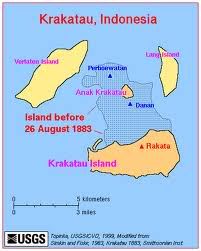
Krakatau exhibited its first stirrings in more than 200 years on May 20, 1883. A German warship passing by reported a seven-mile high cloud of ash and dust over Krakatau. For the next two months, similar explosions would be witnessed by commercial liners and natives on nearby Java and Sumatra. With little to no idea of the impending catastrophe, the local inhabitants greeted the volcanic activity with festive excitement.
On 27 August four enormous explosions took place at 05:30, 06:44, 10:02, and 10:41 local time. The explosions were so violent that they were heard 3,500 km (2,200 mi) away in Perth, Western Australia and the Indian Ocean island of Rodrigues near Mauritius, 4,800 km (3,000 mi) away, where they were thought to be cannonfire from a nearby ship. Each was accompanied by very large tsunamis, which are believed to have been over 30 meters (100 ft) high in places. A large area of the Sunda Strait and a number of places on the Sumatran coast were affected by pyroclastic flows from the volcano.
The pressure wave generated by the colossal final explosion radiated from Krakatoa at 1,086 km/h (675 mph). It was so powerful that it shattered the eardrums of sailors on ships in the Sunda Strait and caused a spike of more than two and half inches of mercury in pressure gauges attached to gasometers in the Jakarta gasworks, sending them off the scale. The pressure wave radiated across the globe and was recorded on barographs all over the world, which continued to register it up to 5 days after the explosion. Barograph recordings show that the shockwave from the final explosion reverberated around the globe 7 times in total. Ash was propelled to a height of 80 km (50 mi).
The eruptions diminished rapidly after that point, and by the morning of August 28 Krakatoa was silent. Small eruptions, mostly of mud, continued through October, though further reports continued through February 1884. These reports were discounted by (Rogier) Verbeek.
The combined effects of pyroclastic flows, volcanic ashes and tsunamis had disastrous results in the region. There were no survivors from 3,000 people located at the island of Sebesi, about 13 km (8.1 mi) from Krakatoa. Pyroclastic flows killed around 1,000 people at Ketimbang on the coast of Sumatra some 40 km (25 mi) north from Krakatoa. The official death toll recorded by the Dutch authorities was 36,417, although some sources put the estimate at 120,000 or more.
Ships as far away as South Africa rocked as tsunamis hit them, and the bodies of victims were found floating in the ocean for weeks after the event. The tsunamis which accompanied the eruption are believed to have been caused by gigantic pyroclastic flows entering the sea; each of the four great explosions was accompanied by a massive pyroclastic flow resulting from the gravitational collapse of the eruption column.
In the aftermath of the eruption, it was found that the island of Krakatoa had almost entirely disappeared, except for the southern half of Rakata cone cut off along a vertical cliff, leaving behind a 250-metre (820 ft) deep caldera.
In the year following the eruption, average global temperatures fell by as much as 1.2 C (2.2 F). Weather patterns continued to be chaotic for years, and temperatures did not return to normal until 1888.
The eruption darkened the sky worldwide for years afterwards, and produced spectacular sunsets throughout the world for many months. British artist William Ashcroft made thousands of colour sketches of the red sunsets half-way around the world from Krakatoa in the years after the eruption.
479 BC – Greco-Persian Wars: Persian forces led by Mardonius are routed by Pausanias, the Spartan commander of the Greek army in the Battle of Plataea.
410 – The sacking of Rome by the Visigoths ends after three days.
663 – Battle of Baekgang: Remnants of the Korean Baekje Kingdom and their Yamato Japanese allies engage the combined naval forces of the Tang Chinese and Silla Koreans on the Geum River in Korea.
1172 – Henry the Young King and Margaret of France are crowned as junior king and queen of England.
1232 – The Formulary of Adjudications is promulgated by Regent Hojo Yasutoki. (Traditional Japanese date: August 10, 1232)
1776 – The Battle of Long Island: in what is now Brooklyn, New York, British forces under General William Howe defeat Americans under General George Washington.
1789 – The French National Assembly adopts the Declaration of the Rights of Man and of the Citizen, proclaiming that “men are born and remain free and equal in rights”.
1793 – French counter-revolution: the port of Toulon revolts and admits the British fleet, which lands troops and seizes the port leading to Siege of Toulon.
1798 – Wolfe Tone’s United Irish and French forces clash with the British Army in the Battle of Castlebar, part of the Irish Rebellion of 1798, resulting in the creation of the French puppet Republic of Connaught.
1810 – Napoleonic Wars: The French Navy defeats the British Royal Navy, preventing them from taking the harbour of Grand Port on Ile de France.
1813 – French Emperor Napoleon Bonaparte defeats a larger force of Austrians, Russians, and Prussians at the Battle of Dresden.
1828 – Uruguay is formally proclaimed independent at preliminary peace talks brokered by Great Britain between Brazil and Argentina during the Argentina-Brazil War.
1859 – Petroleum is discovered in Titusville, Pennsylvania leading to the world’s first commercially successful oil well.
1861 – Union forces attack Cape Hatteras, North Carolina.
1883 – Krakatoa, an Indonesian volcano, enters the final stage of its eruption.
1896 – Anglo-Zanzibar War: the shortest war in world history (09:00 to 09:45) between the United Kingdom and Zanzibar.
1916 – Romania declares war against Austria-Hungary, entering World War I as one of the Allied nations.
1921 – The British install the son of Sharif Hussein bin Ali (leader of the Arab Revolt of 1916 against the Ottoman Empire) as King Faisal I of Iraq.
1928 – The Kellogg-Briand Pact outlawing war is signed by the first fifteen nations to do so. Ultimately sixty-one nations will sign it.
1939 – First flight of the turbojet-powered Heinkel He 178, the world’s first jet aircraft.
1943 – Japanese forces evacuate New Georgia Island in the Pacific Theater of Operations during World War II.
1957 – The Constitution of Malaysia comes into force.
1962 – The Mariner 2 unmanned space mission is launched to Venus by NASA.
1969 – Israeli commando force penetrates deep into Egyptian territory to stage a mortar attack on regional Egyptian Army headquarters in the Nile Valley of Upper Egypt.
1971 An attempted coup fails in the African nation of Chad. The Government of Chad accuses Egypt of playing a role in the attempt and breaks off diplomatic relations.
1979 – An IRA bomb kills British World War II admiral Louis Mountbatten, 1st Earl Mountbatten of Burma and 3 others while they are boating on holiday in Sligo, Republic of Ireland. Another bomb near Warrenpoint, Northern Ireland kills 18 British soldiers.
1993 – The Rainbow Bridge, connecting Tokyo’s Shibaura and the island of Odaiba, is completed.
2003 – Mars makes its closest approach to Earth in nearly 60,000 years, passing 34,646,418 miles (55,758,005 km) distant.
2007 – Bluegrass Army Depot Sarin(GB) leak in Lexington, Kentucky. Officials reported the Sarin levels 85 times above the safe limit.
2009 – The Burmese military junta and ethnic armies begin three days of violent clashes in the Kokang Special Region.
2013 – The riots between two religious communities started at Muzaffarnagar, Uttar Pradesh, India
(Note: This is a panel discussion from some time ago with Joseph Stiglitz and Paul Krugman, Nobel Laureates in Economics, and Thomas Piketty, Capital in the Twenty-First Century. The interview with Christopher Beha of Harper’s Magazine referenced below took place recently at Book Culture book store in New York- ek)
Bad economic ideas inflict untold human suffering. When they come cloaked in a fog of Orwellian obfuscation, their poison and effects can spread with little hindrance. The public is misled. Power plays are hidden from view.
…
In discussing Greece’s Third Memorandum of Understanding and its draconian terms, Stiglitz observes that the MoU is really a “surrender document” that eclipses the country’s economic sovereignty and ensures that Greece’s depression – already deeper than America’s Great Depression – will get worse. An economy that is seeing youth unemployment reaching up to 60 percent is likely to lose another 5 percent in GDP. That is over and beyond the 25 percent plunge in GDP the country has suffered since the imposition of austerity measures.
Socially conservative Germans, Stiglitz warns, are doubling down on the discredited notion that austerity policies help economies recover in times of crisis. In reality, the insistence on keeping wages down, stripping bargaining power from workers, forcing small business owners to pay taxes a year in advance, and cutting pensions will only hamper demand and lead to a deepening spiral of debt. (Stiglitz emphasizes that hardly any of the money loaned to Greece has actually gone to help the Greeks themselves, but rather private-sector creditors, namely German and French banks).
…
In Stiglitz’s view, what’s behind the ill-advised economic schemes is a power struggle in which Germany and its supporters seek to undermine the Greek economy in order to push out a government (Syriza) they do not like. In doing so they are tearing apart families, snuffing out the hopes of young people and delivering humiliation and suffering to a country. History shows that such a policy does not turn out well for anyone.
Stiglitz reminded the audience that John Maynard Keynes once issued warnings about the Treaty of Versailles, the peace settlement signed at the end of World War I, which ordered Germany to pay massive reparations. Inflicting more pain on a weakened economy would send an already-battered nation into depression. Keynes turned out to be correct: resentment of the harsh terms and the resulting high unemployment led to the rise of Adolf Hitler. Far from restoring stability in Europe, the Treaty set the stage for an unprecedented disaster and unspeakable human misery.
Stiglitz warned that Germany, a major beneficiary of debt write-offs following WWII, had not learned the lesson of its own history. Officials are blind to the reality that debt forgiveness is necessary for Greece at a time when nearly everyone, including the International Monetary Fund (IMF), recognizes that the country simply can’t pay back what it owes. Instead of remembering the terrible consequences of mass unemployment following WWI, many Germans insist that it was hyperinflation that led to Hitler, and so they tend to support central bank policies that guard against that problem rather than the far more worrisome specter of joblessness.
As Stiglitz describes, the result of all this historical amnesia and economic blindness is a “Dickensian” nightmare that recalls 19th-century debtors prisons where people were punished for the inability to pay debts and locked (literally) into a situation in which paying them was, of course, impossible. Only now, the prisoner is an entire country.
Stiglitz notes the fundamental problem that eurozone leaders will not let individual countries like Greece, Portugal or Spain change economic policies, no matter how harmful they become. Extreme right-wing elements will benefit as trust in government diminishes. As Stiglitz sees it, flaws in the design of the euro, as well as flaws in the design of the European Central Bank, which is not equipped to address unemployment, hurt Europe’s prospects and yet are extremely difficult to address because they are embedded in treaties that require the unanimous agreement of member countries to alter. He pointed out that if you look at countries like Sweden, it appears that those that did not join the eurozone seem to be in better shape than those that joined. The eurozone has been stuck in persistent stagnation, whereas Sweden’s economy, for example, is brightening.
When an audience member asked whether forgiving Greek debt would lead to moral hazard – encouraging other countries to borrow beyond their means – Stiglitz responded that it was unimaginable that any country would want to go through what the Greeks are enduring. He noted that the lenders bear even more responsibility for the current mess than the borrowers. Goldman Sachs structured irresponsible deals that allowed the Greek government at the time of the Maastricht Treaty to hide its debt. Stiglitz concluded that if anything, moral hazard is a problem on the lender side, as there is little to discourage lending money to countries that are unlikely to be able to pay back. He also noted that the idea of the Greek government selling assets in the middle of a depression to pay back debt was a bad idea, because prices are so low this amounts to little more than a fire sale.
…
The real deficit in Europe, said Stiglitz, is a “democratic deficit.”
“The right of citizens of the United States to vote shall not be denied or abridged by the United States or by any State on account of sex” and “Congress shall have power to enforce this article by appropriate legislation.”
America’s woman suffrage movement was founded in the mid 19th century by women who had become politically active through their work in the abolitionist and temperance movements. In July 1848, 200 woman suffragists, organized by Elizabeth Cady Stanton and Lucretia Mott, met in Seneca Falls, New York, to discuss women’s rights. After approving measures asserting the right of women to educational and employment opportunities, they passed a resolution that declared “it is the duty of the women of this country to secure to themselves their sacred right to the elective franchise.” For proclaiming a women’s right to vote, the Seneca Falls Convention was subjected to public ridicule, and some backers of women’s rights withdrew their support. However, the resolution marked the beginning of the woman suffrage movement in America.
n January 1918, the woman suffrage amendment passed the House of Representatives with the necessary two-thirds majority vote. In June 1919, it was approved by the Senate and sent to the states for ratification. Campaigns were waged by suffragists around the country to secure ratification, and on August 18, 1920, Tennessee became the 36th state to ratify the amendment, giving it the two-thirds majority of state ratification necessary to make it the law of the land.
The package containing the certified record of the action of the Tennessee legislature was sent by train to the nation’s capital, arriving in the early hours of August 26. At 8 a.m. that morning, Secretary of State Bainbridge Colby signed it without ceremony at his residence in Washington. None of the leaders of the woman suffrage movement were present when the proclamation was signed, and no photographers or film cameras recorded the event. That afternoon, Carrie Chapman Catt, head of the National American Suffrage Association, was received at the White House by President Woodrow Wilson and Edith Wilson, the first lady.
WHEREAS, the women of the United States have been treated as second-class citizens and have not been entitled the full rights and privileges, public or private, legal or institutional, which are available to male citizens of the United States; and
WHEREAS, the women of the United States have united to assure that these rights and privileges are available to all citizens equally regardless of sex;
WHEREAS, the women of the United States have designated August 26th, the anniversary date of the passage of the Nineteenth Amendment, as symbol of the continued fight for equal rights: and
WHEREAS, the women of United States are to be commended and supported in their organizations and activities,
NOW, THEREFORE, BE IT RESOLVED, the Senate and House of Representatives of the United States of America in Congress assembled, that August 26th of each year is designated as “Women’s Equality Day,” and the President is authorized and requested to issue a proclamation annually in commemoration of that day in 1920, on which the women of America were first given the right to vote, and that day in 1970, on which a nationwide demonstration for women’s rights took place.
1071 – Battle of Manzikert: The Seljuk Turks defeat the Byzantine Army at Manzikert.
1346 – Hundred Years’ War: the military supremacy of the English longbow over the French combination of crossbow and armoured knights is established at the Battle of Crecy.
1466 – A conspiracy against Piero di Cosimo de’ Medici in Florence, led by Luca Pitti, is discovered.
1498 – Michelangelo is commissioned to carve the Pieta.
1748 – The first Lutheran denomination in North America, the Pennsylvania Ministerium, is founded in Philadelphia, Pennsylvania.
1768 – The HM Bark Endeavour expedition under Captain James Cook sets sail from England.
* 1778 – The first recorded ascent of Triglav, the highest mountain in Slovenia.
1789 – Declaration of the Rights of Man and of the Citizen approved by National Assembly at Palace of Versailles.
1858 – First news dispatch by telegraph.
1862 – American Civil War: the Second Battle of Bull Run begins.
1883 – The 1883 eruption of Krakatoa begins its final, paroxysmal, stage.
1914 – World War I: the British Expeditionary Force fights a rear-guard action at the Battle of Le Cateau that briefly checks the German advance.
1914 – World War I: the German colony of Togoland is invaded by French and British forces, who take it after 5 days.
1920 – The 19th amendment to United States Constitution takes effect, giving women the right to vote.
1939 – The first Major League Baseball game is telecast, a doubleheader between the Cincinnati Reds and the Brooklyn Dodgers at Ebbets Field, in Brooklyn, New York.
1940 – Chad is the first French colony to join the Allies under the administration of Felix Eboue, France’s first black colonial governor.
1942 – Holocaust in Chortkiv, western Ukraine: At 2.30 am the German Schutzpolizei starts driving Jews out of their houses, divides them into groups of 120, packs them in freight cars and deports 2000 to Belzec death camp. 500 of the sick and children murdered on the spot.
1944 – World War II: Charles de Gaulle enters Paris.
1957 – The USSR announces the successful test of an ICBM – a “super long distance intercontinental multistage ballistic rocket … a few days ago,” according to the Soviet news agency, ITAR-TASS.
1970 – The then new feminist movement, led by Betty Friedan, leads a nation-wide Women’s Strike for Equality.
1971 – The United States Congress declares August 26th as an annual Women’s Equality Day.
1977 – The Charter of the French Language is adopted by the National Assembly of Quebec
1978 – Papal conclave, 1978 (August): Pope John Paul I is elected to the Papacy.
1978 – Sigmund Jahn becomes first German cosmonaut on board of the Soyuz 31 spacecraft.
1980 – John Birges plants a bomb at Harvey’s Resort Hotel in Stateline, Nevada.
1987 – President Ronald Reagan proclaims September 11, 1987 as 9-1-1 Emergency Number Day.
1992 – Vaclav Klaus and Vladimír Meciar signed agreement of split of Czechoslovakia in Brno.
2003 – The Columbia Accident Investigation Board releases its final reports on Space Shuttle Columbia disaster.
2008 – Russia unilaterally recognizes the independence of the former Georgian breakaway republics Abkhazia and South Ossetia.
2011 – The Boeing 787 Dreamliner, Boeing’s all-new composite airliner, receives certification from the EASA and the FAA
2013 – Nationwide protests are held across the Philippines over the Priority Development Assistance Fund scam.
Welcome to The Breakfast Club! We’re a disorganized group of rebel lefties who hang out and chat if and when we’re not too hungoverwe’ve been bailed outwe’re not too exhausted from last night’s (CENSORED) the caffeine kicks in. Join us every weekday morning at 9am (ET) and weekend morning at 10:30am (ET) to talk about current news and our boring lives and to make fun of LaEscapee! If we are ever running late, it’s PhilJD’s fault.
This Day in History
Paris liberated during World War II; A first swim across the English Channel; Actor Sean Connery, composer Leonard Bernstein, and musician Elvis Costello born; Bruce Springsteen’s ‘Born to Run’ released.
It was a tumultuous Monday on Wall Street, as the US stock market suffered its biggest one-day fall since 2011 over fears of a collapse in the Chinese economy.
The Dow Jones Industrial average lost 586 points, or 3.56%, recovering slightly from when it plunged 1,089 points on Monday morning. The S&P 500 lost about 3.9%, closing at a seven-month low, and Nasdaq lost 3.8%. [..]
Despite the rollercoaster of stocks plunging, recovering and diving again, business seemed to be moving on Wall Street itself, as tourists snapped pictures of the New York stock exchange and traders rushed outside to grab a quick bite to eat or pick up delivery, saying they weren’t authorized to speak to the press.
Those not working for the stock exchange offered candid viewpoints on the drama on Wall Street, with most advising against panic or worry because the numbers will sort themselves out. Two Deutsche Bank employees having lunch outside the stock exchange were unsurprised the events of the morning, and said they thought the fall was “easily predictable”.
A new municipal judge in Ferguson, Missouri, on Monday ordered sweeping changes to court practices in response to a scathing Justice Department report following the shooting of unarmed black teenager Michael Brown a year ago.
Municipal court judge Donald McCullin, appointed in June, ordered that all arrest warrants issued in the city before 31 December 2014 be withdrawn.
Defendants will receive new court dates along with options for disposing of their cases, such as payment plans or community service. Fines may be commuted for indigent people.
The changes come five months after the Justice Department strongly criticized city leaders in its report, saying the police force and court worked together to exploit people in order to raise revenue.
The fire complex burning in north-central Washington is now the largest in state history, beating a record set just last year in the same county.
Fire spokesman Rick Isaacson said on Monday that the Okanogan Complex of wildfires grew overnight to just over 400 square miles, slightly more than the Carlton fires, which also burned in Okanogan County last summer.
Late morning local time on Monday, officials said the complex of fires had burned 256,567 acres, or just over 400 square miles. For comparison, New York City is just over 300 square miles, Los Angeles is about 500 square miles, and London is just over 600 square miles. The fire has burned an area roughly one-fifth the size of Delaware.
The US is to deploy F-22 fighter jets to Europe as part of efforts to support eastern European members of the Nato alliance unnerved by Russia’s intervention in Ukraine.
“Russia’s military activity in the Ukraine continues to be of great concern to us and to our European allies,” the air force secretary, Deborah James, told a news conference at the Pentagon. “For the air force an F-22 deployment is certainly on the strong side of the coin.”
James did not give details about the specific number of planes, date or location of the deployment but said it was in line with defence secretary Ash Carter’s recent call for a strong and balanced approach to Russia.
Thousands of refugees were heading towards Hungary and the EU border on Monday, as the German chancellor, Angela Merkel, said the union’s member states must fairly share the burden of dealing with Europe’s biggest migration crisis since the second world war.
Speaking before talks in Berlin with the French president, François Hollande, Merkel said Europe needed to act together to deal with the chaotic scenes in Greece and the western Balkans as desperate migrants tried to reach the EU. “The current situation troubles us greatly,” she said.
Germany and France are to draft common proposals on immigration and security to deal with the worsening emergency. On Monday, Merkel said they could include building new registration centres in Greece and Italy to be run and staffed by the EU as a whole by the end of the year.

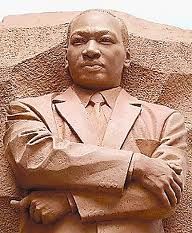 His speech,
 It’s not what you think. This is the game Christopher Robin played with Winnie the Pooh in many of their A.A. Milne adventures.