Just Last Week!

Look, I doubt there are many who are more supportive of Sam Bee than I, after all I thought they ought to put her and Jason Jones in charge at The Daily Show and do a spoof of the Happy/Eyewitness News Format in the Colbert Pundit mold.

It’s still a good idea dammit.

Alas she likes the weekly format and she’s very good at it. While her YouTube channel is not quite as well curated as Colbert’s and Seth Meyer’s (hey, it’s only Basic Cable money, not Network money) she’s really inclusive and I admire that.

All of which is to say that I have no excuse for not highlighting last week’s effort except that I was lazy and distracted. It was as good as always and in retrospect seems amazingly prescient.

A Terrible Person

I mean John Kelly, racism apologist. Sorry, there are so many you need a scorecard.

What’s the difference between Terrorism and a Tragic Mass Killing?

Oh, that’s right. Scary Brown Muslim people. And Guns.

Don’t forget the history of Domesic Violence.

Amazingly foresighted. That piece was broadcast on November 1st. The Sutherland Springs Church Shooting? November 5th.

Scary, huh? She must be a witch. Does she weigh the same as a duck? Why a duck?

Because it’s a classic comedy bit pioneered by Groucho Marx.

Here’s an alternate take by Jordan Klepper.

He also believes in witches.

I hope we’re now all clear about this witch thing. I’m a stone cold atheist and think it’s all a bunch of hooey myself.

Hope you all enjoyed that democracy

I thought this would be so fun. Instead it’s so depressing. In New Hampshire you actually have to stand up and be counted. How retro is that? Anyway, another episode tonight.

The Breakfast Club (Power Of Information)

Welcome to The Breakfast Club! We’re a disorganized group of rebel lefties who hang out and chat if and when we’re not too hungover we’ve been bailed out we’re not too exhausted from last night’s (CENSORED) the caffeine kicks in. Join us every weekday morning at 9am (ET) and weekend morning at 10:00am (ET) to talk about current news and our boring lives and to make fun of LaEscapee! If we are ever running late, it’s PhilJD’s fault.

 photo stress free zone_zps7hlsflkj.jpg

This Day in History

Adolf Hitler makes his first attempt to seize power in Germany; Democrat John F. Kennedy wins the presidency; Ronald Reagan is elected governor of California; Bonnie Raitt is born; Led Zeppelin releases the album ”Led Zeppelin Four.”.

Breakfast Tunes

Something to Think about over Coffee Prozac

Information is power. But like all power, there are those who want to keep it for themselves.

Aaron Swartz

Continue reading

2017 Election Night Results

The polls have closed in Virginia and we are awaiting the first results in the race for governor, lieutenant governor, state attorney general and 100 state house seats. The polls in New Jersey close at 8 PM ET and in New York at 9 PM ET. There is one down ballot race that has some importance in Washington state. A win by Democrats in a state senate seat sill determine if they will control that body. Democrats would then control both chambers and the governorship. in Utah there is a special election to replace Rep, Justin Chaffetz (R). Republicans are expected to hold onto that House seat.

All eyes are on Virginia which has turned into a tight race that pundits see as a referendum on Donald Trump. it is pretty much a foregone conclusion that races for NJ governor and New York City mayor will go to the Democrats who have held substantial leads in the pols for weeks. Expect those races to be called shortly after the polls close. Virginia, however, is going to be a late night and may result in calls for recounts.

Up Date 1 – 2005 ET: CNN, MSNBC have called the New Jersey governors race for the Democrat Phil Murphy, the former US Ambassador to Germany.

Up Date 2 – 2015 ET: MSNBC and CNN are projecting the Ralph Northam will be the next governor of Virginia. Thismay not be as late a night as expected.

Up Date 3 – 2200 ET: as was expected, shortly after polls closed NYC Mayor Bil de Blasio was reelected to a second term.

In other races, Democrat Danica Roen is the first transgender to be elected to the state legislature. The Democrats need 17 seats to take back the House of Delegates. So far they have taken 10 and lead in seven others.

Up Date 4 – 0001 ET: In Boston, Mayor Marty Walsh won a second four-year term by beating City Councilor Tito Jackson after a low-key campaign.

Maine voters approved a measure allowing them to join 31 other states in expanding Medicaid under the Affordable Care Act.

John Curtis, the Republican mayor of the Mormon stronghold of Provo, has been elected to finish out the term of Rep. Justin Chaffetz (R-UT3) who resigned.

Democrat Manka Dhingra led with 55 percent of the vote in Tuesday’s general election count. The final results may not in until Wednesday. If the seat flips to Democrats, Washington will join Oregon and California with total Democratic rule in both legislative chambers and the governor’s office.

Acrophobia

Simply put it’s fear of falling or heights and I have it in spades. Famously it’s the subject of Hitchcock’s Vertigo but I think that and other popular cultural depictions don’t capture the feeling as I experience it.

For one thing it’s not paralyzing. If you were hanging off a precipice or should we want to achieve a goal that required it I am quite capable of ascending dizzying heights voluntarily without prompting. Indeed I frequently do so to prove that to others (and myself). Do I find it a pleasant experience? Not at all. I am acutely aware at all times that gravity is a real thing and take care to position myself as best as circumstances permit so that the prospect of succumbing to it is unlikely. I don’t hang over the edges of tall buildings, cliffs, bridges, or cataracts just to snap a picture I can easily capture using a telephoto lens.

Is this an irrational fear? Yes, but… This is a real thing that happened to me. I went to a convention where the primary purpose was to adjourn to the rooftop restaurant as quickly as you decently could and engage in a bacchanalia of indulgence on the Club dime. I selected a seat next to the outer window because heights disturb me. Imagine my surprise when I leaned back in my chair, put a hand on the window to steady myself and…

It swung open behind me. The washer had neglected to refasten it after cleaning and none of the other staff had bothered to check it. I now sit facing out.

If you are familiar enough with my habits my disability is readily apparent though were the time requirement urgent I will drive across the Mackinaw Bridge rather than circle Lake Michigan as would be my preference and try to project my customary air of calm confidence and hope my fixed attention and firm grip on the wheel passed unnoticed. As a passenger my practice is to close my eyes and fall asleep (or pretend to) long before we approach.

All this is to add weight to the statement that I hate flying, not because of my acrophobia, but of the inconvenience and experience. The seating is worse than a bus and the noise is like sitting next to a speaker at a really long and boring rock concert by a band you don’t care for.

Flying the Unfriendly Skies
By David Dayen, Alternet
November 6, 2017

When Dr. David Dao was forcibly removed from United Airlines Flight 3411 on April 9, with cell phone cameras documenting the display, the uproar was immediate. People were infuriated by United’s resort to brutality, by the use of law enforcement to solve an overbooking problem, by the bloodied face of the doctor, and by United CEO Oscar Munoz’s ham-handed apology for “re-accommodating” customers.

But the real outrage should be directed at the fact that abuse of passengers is the logical endpoint of a 40-year trend since the government liberated the airline industry. Until 1978, air travel was heavily regulated. In that year, some of the nation’s most celebrated liberals joined conservatives in trusting free markets. A brief rush of competition in the 1980s gave way to consolidation and monopoly power, at the expense of workers and passengers alike. Today, four carriers control 80 percent of all U.S. routes.

The industry’s recipe for record profitability has been to ratchet up misery on travelers bit by bit. You cannot opt out of the suffering; you cannot vote with your wallet to find another flight—if you want to get from Chicago to Louisville, you have to sit back (not very far back) and take it. And if the airlines want to violently pull you off the plane? What are you going to do, drive?

Today, democracy ends at the gate entrance. The government relinquished control of the airline industry to a handful of CEOs—and more important, to a handful of shareholders on Wall Street. We merely converted regulation by and for the public into regulation by plutocrats, who now rule the friendly skies in their own interest. The airline industry’s spiral epitomizes the shifts in our economy since the Reagan era—deregulation, financialization, wage stagnation, and abuse of market power. “It’s the perfect example, too perfect in some ways,” says Northeastern University economics professor John Kwoka. “And since we all spend our lives in the air, it hits home.”

Access to air travel is as important to the economic vitality of U.S. cities today as rail access was in the 19th century. If manufacturers or farmers could use railroads to get goods to market, they could thrive. Rail barons used this inherent power to fix prices and gouge customers dependent on their services. Eventually government stepped in to regulate railroads as public utilities, ensuring broad access throughout the country while allowing a reasonable profit for the private companies that managed them.

The United States adapted the public utility model to air travel in 1938, putting control of the fledgling industry under the auspices of the new Civil Aeronautics Board (CAB). Officials recognized that, similar to railroads, a reliable aviation network was a potent economic development tool. You can’t be a major-league city and attract business investment without an airport with national reach. The Roosevelt administration believed air travel, like rails, was a “public convenience and necessity,” instead of hoping the free market would provide it.

CAB guaranteed airlines a 12 percent profit on a flight that was 55 percent full. If fuel or other fixed costs rose, fares could go up; if they fell, prices had to drop. In addition, airlines had to serve the entire nation, with more popular routes effectively subsidizing the flights to the outskirts. CAB’s control was rather strict; airlines had to get permission to alter routes and fares, or even change uniform colors. But the idea was to maintain a standard of accessibility and reasonable service for every American.
…
The drive to kill CAB came from a surprising source: liberals. Ralph Nader, for example, attacked the board for being captured by an industry it protected from competition. But the real ringleader was Ted Kennedy. Future Supreme Court Justice Stephen Breyer, a staff aide who ran Kennedy’s Senate Judiciary subcommittee on administrative practices and procedures, convinced his boss that taking on CAB would make him a hero to the consumer, amid spiking inflation and unemployment. Labor unions objected, but market-oriented liberal economists longed to ditch central planners like CAB.

Alfred Kahn, then a professor at Cornell, was a leading voice, promising that deregulation, then a new concept, would make airlines more efficient, and benefit consumers, employees, and stockholders. Airline routes, Kahn said, were “contestable,” no matter the huge startup costs. Dismantling CAB would force even a monopoly carrier to lower prices because of the mere threat of competition.

As Paul Stephen Dempsey wrote in a 1990 chronicle of deregulation for the Economic Policy Institute called “Flying Blind,” economists believed entry and pricing restrictions led to “excessive service” for passengers who were paying for more frills than they really wanted, while airlines were denied “adequate profits.” In other words, the fliers were too comfortable and the corporations too poor. Making flying less relaxing to the passenger and more profitable to the corporation was the real premise of deregulation, regardless of hype about open competition and lower prices.
…
After deregulation, the system of delivering air travel also changed, from nonstop point-to-point service to a hub-and-spoke setup, with more connections from airports dominated by a single carrier. “It’s an efficient way to market their product because it allowed a larger array of destinations,” said Dempsey. “But it’s an inefficient way to provide the product.” Centralizing activity in hubs maximized pricing power and added airport congestion. The environment suffered from extra takeoffs and landings and out-of-the-way detours to hub cities. Startup airlines gradually found open slots at hub airports hard to come by. Even the hub cities did not benefit greatly from becoming hubs; passengers just changed planes at the airport rather than experiencing the city.

As the old CAB guarantee of a national network ended, airlines dropped unprofitable routes and smaller cities became virtually frozen out of air service. A hundred cities fell off the commercial aviation map in just the first two years of deregulation. By the 1980s, the only way to fly into state capitals like Dover, Delaware, or Salem, Oregon, was by private plane. Inaccessibility made these outposts less attractive to business, with jarring effects to local economies.

Before long, the burst of competition led to a washout. Just in the 1980s, 200 airlines went bankrupt, including majors like Eastern and Braniff. Competition turned destructive, as price wars quickly crippled businesses with large fixed costs like airplanes. CAB had denied additional city routes; critics liked to bring up the horror story of Continental waiting eight years to get approval to fly from Denver to San Diego. But CAB based its determinations on customer demand. Without bureaucrats holding the reins, competitors rushed into unprofitable routes and imploded.

Bankruptcies led inexorably to concentration. After CAB dissolved, the Department of Transportation took jurisdiction for airline mergers, and they never denied one, finally losing the authority to the Department of Justice in 1990. Between 1979 and 1988, 51 airlines merged. Even Alfred Kahn, architect of deregulation, admitted in 1990 that the industry was a “tight oligopoly.”
…
Today we’re down to three legacy carriers: United, American, and Delta. Southwest maintains its reputation as a “low-cost” disruptor but has begun to control certain airports as well. “When they dominate, they don’t leave money on the table either,” says economics professor John Kwoka. Four out of every five passengers in America flies with one of these four companies. And in 93 of the top 100 airports, either one or two airlines control a majority of all seats. There is a tacit understanding to stay out of each other’s turf, to protect everyone’s pricing power; competing airlines only schedule a handful of flights into a competitor’s hub. “You don’t find Delta trying to get into Chicago, you don’t find United getting into Minneapolis or Atlanta,” says Morris. “You have these little fiefdoms.”

This dominance flowed from two critical bend points, each coinciding with economic catastrophe. First there was September 11, which fundamentally transformed air travel and the companies that provide it. The financial crisis of 2008, which hit just as airlines had clawed back to profitability, had a similar crushing effect. Every major airline declared bankruptcy in the 2000s, primarily employing it to shed “legacy costs,” or what workers call wages and benefits.

About one-fifth of full-time airline jobs were eliminated between 2001 and 2005. Mainline jobs evaporated as airlines contracted with the equivalent of low-cost temps, regional jet companies who wear the same colors as United or American but actually work for a different carrier. Those left at the majors suffered across-the-board wage cuts of 30 percent to 40 percent, according to Sara Nelson, president of the Association of Flight Attendants, the largest flight attendant union. “The pay is not for a middle-class income anymore,” she says. Crews made up for it by flying more; a cap on time in the air was lifted to increase workloads. Starting salaries for pilots, particularly at the regional airlines, can be as low as $20,000 a year. Reduced options due to industry consolidation left most employees with no choice.

A lesser-known consequence of worker restructuring was the outsourcing of repair work overseas, to low-cost operations in El Salvador, Mexico, and China. While U.S. maintenance jobs fell nearly one-third since 2000, planes now routinely get serviced abroad, away from Federal Aviation Administration inspectors and in ways that local mechanics have criticized as slipshod. Most of the overseas repair workers don’t speak English even though the technical manuals are written in English.

The main targets for airline bankruptcies were pensions. US Airways terminated its pilot pensions and shifted to 401(k) plans in 2003; Delta did the same in 2006. United used a grueling, 30-month bankruptcy to terminate pension obligations for four plans affecting 134,000 workers in 2005. Attorney James Sprayregen, who handled the bankruptcy for United, admitted to PBS’s Frontline that the company deliberately dragged out the process, adding concessions gradually to prevent labor unrest.

Existing pensions shifted to the Pension Benefit Guaranty Corporation, where payouts dropped significantly. An inspector general’s report in 2011 found that the PBGC cut United pensions too deeply, and US Airways pilots fought for higher payouts for over a decade. “It really affects workers close to retirement, five to ten years away, who are not able to retire,” says Sara Nelson.

According to Paul Stephen Dempsey, Ted Kennedy never recognized at the time how deregulation might impact labor, especially as the industry bust shook out. “This never came out,” Dempsey said, “but Kennedy subsequently said to his staff, you never told me this would be the result.”
…
Though prices increased after mergers began, the industry claims that fares have fallen for the past three years. This statistic is incredibly misleading, because it doesn’t count ancillary fees, a growing profit center. In essence, practically everything you used to get for free on a plane now costs you: a hot meal, a comfortable seat, an in-flight movie, checked baggage, the flexibility to change flights. Airlines added fuel surcharges and kept them on even after oil prices dropped; in 2011 they raised base fares when FAA authorization lapsed and federal taxes could not be collected temporarily, pocketing the difference without the consumer realizing it. Fees and other charges represented a little over one-tenth of all revenue in 1995; today the figure is over one-quarter. Last year, U.S. airlines made $20.2 billion in ancillary revenue, according to research firm IdeaWorks; that’s more than two times industry profits.

The ancillary fees play off other innovations to maximize the revenue potential of travelers’ behavioral responses. For instance, checked-bag fees give passengers incentives to bring their roller-bags on board. That makes getting on first to find space in the overhead bin a priority. So airlines started charging for pre-boarding. Plus, moving baggage onto the plane allowed airlines to cut costs on baggage handlers. Eliminating meals in the main cabin enabled airlines to reduce the size of the galley, opening more space for seats. The personal entertainment device on the seat-back seems like a new amenity, until you realize it allows airlines to isolate and charge for viewing in ways they couldn’t with a communal screen.

Airlines have also shrunk what is called “seat pitch,” the measurement from one seat to the one behind it. Every inch removed between rows equals another row of seats that can be added to the back of the plane, and at least six more paying customers. The cramped quarters lead many to cry uncle and pay for “preferred” seating, which mostly have the same seat pitch that was standard in coach 10 or 20 years ago.

Fee structures like this can only work if there’s no competition on quality to lure passengers away from being nickeled and dimed. Virtually all airlines have added the same charges; if anything, the low-cost carriers like Spirit Airlines are worse, charging for seat assignments, online booking, a soda, and any carry-on larger than a purse. While most carriers derive about 26 percent of their revenue from ancillary fees, for Spirit it’s a whopping 46 percent. The ticket fares simply bear no resemblance to how much you’ll pay.
…
The consequences for passengers can be grave. Disobeying a flight crew constitutes a federal felony under the Patriot Act. Paul Hudson of Flyers Rights, a consumer organization, estimates between 400 and 500 prosecutions on that statute since 2002, none of them terrorism-related. “This has essentially been a license to crack the whip on passengers,” Hudson says. And there’s a severe power imbalance at work, he adds. “People don’t realize, as a practical matter passengers are exempted from all legal remedies except for injury or death.”

Hudson explains that deregulation prevented states from instituting rules based on “service,” which industry attorneys have interpreted to mean anything the airline does in terms of operations. The Department of Transportation takes complaints—they have jumped 70 percent since the Dr. Dao incident in April—but mostly they’re filed away for statistical purposes. “If an airline violates a rule they can be fined, however the individuals involved, they don’t get a thing,” says Hudson. And typically the fines are reduced or even waived if the airline cooperates and promises to improve. For dragging Dr. Dao off Flight 3411, United won’t even face a fine.

But blaming passengers or crewmembers for flare-ups in the cabin, as an anonymous Delta employee pointed out, misses the point. They are both exploited by unforgiving corporate behemoths. The raised tension inside the plane draws attention away from the elephant in the aisle. Deregulation was supposed to increase competition. Mainly, it increased concentration and market power. That’s why airlines keep getting away with the relentless degradation of service.
…
In sum, Airline deregulation has been disastrous for workers, frustrating for travelers, and devastating for communities. When hubs pulled up stakes in cities like Cincinnati, Memphis, and St. Louis, their link to the global economy withered, as business travel became difficult and exceedingly expensive. “It’s like Walmart came into town and then Walmart left town,” says David Morris. As Washington Monthly detailed in 2012, major businesses and convention-goers have abandoned heartland cities because of the inability to easily travel across the country.

Delta has touted how it takes advantage of the paucity of regional air service by raising fares and profit margins. Leaving communities behind like this would have been impossible under CAB. This aerial divide fosters regional inequality, with societal gains going disproportionately to a handful of cities lucky enough to have a functioning airport and reasonable prices. “It’s also what helped put Donald Trump in the White House,” says Crandall, reasoning that the large clusters of regions not benefiting from economic growth rebelled against the regime in Washington that presided over their plight.

So what can be done today? Consumer advocates like Flyers Rights have begun to fight back, against large odds. In July, the group scored a major victory in federal court, forcing the FAA to issue rules it requested in 2015 mandating minimum seat sizes and legroom on planes. “We did it on safety and health grounds, because they claimed no jurisdiction for comfort,” Paul Hudson of Flyers Rights says. “We said confining on long-haul flights increases chances of blood clots.” In advance of the ruling, American tossed out a plan to drop seat pitch to 29 inches on its 737 planes, perhaps running into its customers’ breaking point.
…
The last serious legislative win for consumers, a regulation preventing airlines from stranding passengers on the tarmac for more than three hours, took eleven years to complete.

But importantly, advocates and even ordinary people are thinking and speaking about the airlines in a new way. People understood the violent ejection of Dr. Dao as a byproduct of an oligopoly that doesn’t have to care about consumer comfort. People no longer look at deregulation with reverence; they’re skeptical of its benefits and see clearly its negative consequences. People no longer want to accept the mental and physical toll just to get from point A to point B. Even the Democratic Party’s “Better Deal” campaign specifically goes after the airline industry as too concentrated and too powerful.

“The passenger is basically expected to sit down and shut up,” says Paul Stephen Dempsey. “If you don’t like it, what are you going to do about it?”

Changing the mindset is the first step to changing the policy. If we agree that regulation by CEOs and investors doesn’t serve Americans, we can return to rule by the people. We can restore federal authority to impose quality-of-service standards. We can mandate universal access, giving every citizen, regardless of his or her location, the opportunity of air travel. That includes cross-subsidizing less-profitable routes and reinstituting some form of reasonable price regulation. We can talk about building new airports—there hasn’t been a single major one built in America since 1995, in Denver, which bulldozed their old one the same day—or at least opening up slots in existing terminals through forced divestment. We could mandate reasonable service throughout the country as an economic engine for smaller cities and regions. We could use the antitrust powers for what they were meant for, to eliminate anti-competitive behavior. If that means breaking up the big airlines, so be it.

More broadly, we need to see the airline industry as a microcosm of the way the U.S. economy now works: for the benefit of small groups of shareholders and executives rather than the mass public. The freedom of movement is too important to leave its governance to such a tiny sliver of the population. The problem with airlines reflects the problem with democracy in America. And we don’t have to stand for it, or sit with our seat belt securely fastened.


So, What Is ‘Fake News’?

First, I want to assure you that anything you read on this site, from this author, is fake, no matter how seemingly reputable and well documented the source (The New York Times, Washington Post, Politico, CNN, MSNBC) even if it is accompanied by video or sound recordings and a transcript because, who are you going to believe? Me, or your lying eyes?

Also while I have nothing but disdain for greedy, racist, bigoted, and misogynous Republicans I can name too many Democrats who share all those qualities and simply lie about it because decent people don’t really tolerate that anymore (in fairness Republicans are actually working to change society so that those attitudes are not only accepted but celebrated, and they’re quite honest about thier goals).

I on the other hand, not that I want or expect your pity, am equally despised by both sides, which in a highly ironic way makes me a prime example of your much coveted centrist moderate swing voter.

It makes me deeply sympathetic to those who are more dependent on external validation when I see them unfairly slandered.

The attack on “fake news” is really an attack on alternative media
by Dave Lindorff, Salon
2017-11-06

Historians say the term “fake news” dates from the late 19th-century era of “yellow journalism,” but the term really took off in 2016, a little over a year ago, during Donald Trump’s run for the presidency. It described several different things, from fact-free, pro-Trump online media to sensationalistic and largely untrue stories whose only goal was eyeballs and dollars. During the primary season, Trump himself began labeling all mainstream media stories about him as “fake news.” The idea that there could be different truths, while dating at least back to the administration of President George W. Bush, when his consigliere Karl Rove claimed that the administration “made its own” reality, gained currency when Trump adviser Kellyanne Conway, caught making stuff up in a TV interview, claimed that she was relying on “alternative facts.”

That dodge would be fine, on its own. Most people are primed to believe that politicians lie — whatever party or persuasion they represent — so their attempts to deny it when called a conjurer of falsehoods posing tend to be recognized as such.

The corporate media — The New York Times, The Washington Post, the network news programs and even National Public Radio — have all responded to being called liars and “fake news” fabricators of by promoting themselves as “the reality-based community” (NPR), or claiming they are fighting the good fight against ignorance, as demonstrated by the Post’s new masthead slogan “Democracy dies in darkness.” The Times has stuck with its hoary “All the news that’s fit to print”slogan, but has added a page-three daily feature listing “noteworthy facts from today’s paper” and has taken to calling out Trump administration whoppers as “lies.”

Last December Congress passed a new law, promptly signed by then-President Barack Obama, that enacted an Orwellian amendment to the Defense Authorization Act of 2017. Called the Countering Disinformation and Propaganda Act, this measure tasks the State Department, in consultation with the Department of Defense, the director of national intelligence and an obscure government propaganda organization called the Broadcasting Board of Governors, to establish a “Center for Information Analysis and Response.” The job of this new center, funded by a $160 million, two-year budget allocation, would be to collect information on “foreign propaganda and disinformation efforts” and “proactively advance fact-based narratives that support United States allies and interests.”

This might all seem laughable, but as a journalist who has worked in this field for 45 years, in both mainstream newspapers and television and in the alternative media, and as a long-time freelancer who has written for publications as widely varied as Business Week, the Nation, the Village Voice and a collectively run news site called ThisCantBeHappening.net, I have watched as this obsession with “fake news” has turned into an attack on alternative news and alternative news organizations.

Last Nov. 24, The Washington Post published a McCarthyite-style front-page article declaring that some 200 news sites on the web were actually witting or unwitting “purveyors of pro-Russian propaganda.” The article, by Post National Security Reporter Craig Timberg, was based on the work of a shady outfit called PropOrNot, whose owner-organizers were kept anonymous by Timberg and whose source of funding was left unexplained. PropOrNot, Timberg wrote, had developed a list of sites which it had determined to be peddling “pro-Russia propaganda.”

For one of the sites on the list, the prominent left-wing journal Counterpunch, founded decades ago by former Village Voice and Nation columnist Alexander Cockburn, PropOrNot offered up two articles as justification for its designation. One of those articles was by me. It was a piece I’d actually written for ThisCantBeHappening, which had been republished with credit by Counterpunch. The reviewer, a retired military intelligence officer named Joel Harding (who I discovered is linked to Fort Belvoir outside Washington, home to the U.S. Army’s Information Operations Command, or INSCOM), labeled my article “absurdly pro-Russian propaganda.”

In fact, the article was a pretty straightforward report on the Sept. 29, 2016 findings by the joint Dutch-Australian investigation into the July 2014 shoot-down of a Malaysian jumbo passenger jet over Ukraine, which concluded that Russia was the culprit. I noted in the article that this investigation was not legitimate, because two nations — Russia and Ukraine — were known to possess the Buk missiles and launchers that had brought down the plane, but only one of them, Ukraine, was permitted to offer evidence. Russian offers of evidence in the case were repeatedly rebuffed. The report also failed to mention that the Ukrainian government had received veto power over any conclusions reached by the investigators.

Was my report “fake news” or propaganda? Not at all.

The fake news in this case has been what has been written and aired by virtually all of the U.S. media, including the Times, the Post and all the major networks, about that horrific tragedy. They all continue to state as fact that a Russian Buk missile downed that plane, though no honest investigation has been conducted. (Technically it is true that the Buk missiles are all “Russian,” in that they were all manufactured in Russia. Left unsaid is that Ukraine’s military had Buk launchers since their nation was part of the Soviet Union and continued to purchase them after independence.)

“Labeling news reports that you don’t like as ’fake news’ is the laziest form of media criticism,” says Jim Naureckas, editor of Fairness and Accuracy In Reporting, a New York-based journalism review. “It’s like putting your fingers in your ears and going ‘la la la’ really loudly. Both the government and the corporate media have reasons for not wanting the public to hear points of view that are threats to their power.”

While Kellyanne Conway claimed her right to offer “alternative facts” as a way to justify getting caught in a lie, there are also alternative facts which are real but don’t get reported in the corporate media. A classic example was in the run-up to the U.S. invasion of Iraq, when the entire corporate media reported as fact that Saddam Hussein had weapons of mass destruction and was attempting to develop a nuclear bomb.

There were plenty of alternative news organizations who quoted UN inspectors saying that none of that was true and there were no WMDs or WMD programs in Iraq, but they were simply blacked out by the corporate media like the Times, the Post and the major news networks.
…
There is certainly fake news all over the internet, and baseless conspiracies run rampant on both the left and the right. But all too often, articles like mine cited by PropOrNot (a genuine purveyor of fake news!) are being labeled as propaganda in what Naureckas says is simply “the use of irony as a defense mechanism” by news organizations that themselves are actually guilty of publishing really fake news, as the Post did with its PropOrNot blacklist “scoop.”

“What the government and the corporate media are trying to do, with the help of the big internet corporations,” argues Mickey Huff, director of the Project Censored organization in California, “is basically to shut down alternative news sites that question the media consensus position on issues.”

That’s a threat to any online news organization, including this one, that depend upon equal access to the internet and to fast download speeds. Already, Huff charges, there are reports that Facebook is slowing down certain sites that have links on its platform, in a misguided response to charges that it sold ad space to Russian government-linked organizations accused of trying to influence last November’s presidential election.

An end to internet neutrality, the equal access to high-speed internet for surfing and downloading that has been guaranteed to all users — but that is now under attack by the Trump administration, its Federal Communications Commission and a Republican-led Congress — would make it that much easier for such a shutdown of alternative media to happen.

The real answer, of course, is for readers and viewers of all media, mainstream or alternative, to become critical consumers of news. This means not just looking at articles critically, including this one, but going to multiple sources for information on important issues. Relying on just the Times or the Post, or on Fox News or NPR, will leave you informationally malnourished — not just uninformed but misinformed. Even if you were to read both those papers and watch both those networks, you’d often be left with an incomplete version of the truth.

To get to the truth, we need to also check out alternative news sources, whether of the left, right or center — and we need to maintain the critical distinction between unpopular or unorthodox points of view and blatant lies or propaganda. Without such a distinction, and the freedom to make such decisions for ourselves, maintaining democracy will be impossible.

I’ve been in the business of publishing ‘fake news’ since April 2005 and I claim nothing except the results of my experiments are as reported and you can duplicate them yourself if you’re inclined to (provided conditions have not changed, the bane of many social sciences). I don’t really give a rat’s ass what you think about me because I don’t depend on your approval or seek it. We call this a ‘thick skin’ and if you don’t have one I suggest a gentler pastime than writing on the Internet, like crochet, which has only the one needle and it’s blunt at that.

The Breakfast Club (Fear Less)

Welcome to The Breakfast Club! We’re a disorganized group of rebel lefties who hang out and chat if and when we’re not too hungover we’ve been bailed out we’re not too exhausted from last night’s (CENSORED) the caffeine kicks in. Join us every weekday morning at 9am (ET) and weekend morning at 10:00am (ET) to talk about current news and our boring lives and to make fun of LaEscapee! If we are ever running late, it’s PhilJD’s fault.

 photo stress free zone_zps7hlsflkj.jpg

This Day in History

Bolshevik Revolution takes place; America’s 2000 presidential vote faces limbo; Nixon loses Calif. governor’s race; Tacoma Narrows Bridge collapses; Evangelist Billy Graham and singer Joni Mitchell born.

Breakfast Tunes

Something to Think about over Coffee Prozac

Nothing in life is to be feared, it is only to be understood. Now is the time to understand more, so that we may fear less.

Marie Curie

Continue reading

The Russian Connection: Living In Paradise

Over the weekend, a trough of 13.4 million files from two offshore service providers and 19 tax havens’ company registries were released to the press. The files revealed the secrets of the world elite’s hidden wealth.

Files from offshore law firm show financial dealings of the Queen, big multinationals and members of Donald Trump’s cabinet

The material, which has come from two offshore service providers and the company registries of 19 tax havens, was obtained by the German newspaper Süddeutsche Zeitung and shared by the International Consortium of Investigative Journalists with partners including the Guardian, the BBC and the New York Times.

The project has been called the Paradise Papers. It reveals:

At the centre of the leak is Appleby, a law firm with outposts in Bermuda, the Cayman Islands, the British Virgin Islands, the Isle of Man, Jersey and Guernsey. In contrast to Mossack Fonseca, the discredited firm at the centre of last year’s Panama Papers investigation, Appleby prides itself on being a leading member of the “magic circle” of top-ranking offshore service providers.

It acted for the establishment offshore, providing the structures that helped to legally reduce their tax bills.

One of the bigger revelations from these files concerned Commerce Secretary and billionaire Wilbur Ross. The leaks showed Ross did not disclose his close ties to cronies of Russian President Vladimir Putin either during his confirmation hearing or in his financial disclosure statement.

In Ross’s case, the documents give a far fuller picture of his finances than the filings he submitted to the government on Jan. 15 as part of his confirmation process. On that date, Ross, President-elect Donald Trump’s choice for commerce secretary, submitted a letter to the designated ethics official at the department, explaining steps he was taking to avoid all conflicts of interest.

That explanation was vital to his confirmation, because Ross held financial interests in hundreds of companies across dozens of sectors, many of which could be affected by his decisions as commerce secretary. Any one of them could represent a potential conflict of interest, which is why the disclosures, by law, are supposed to be thorough. [..]

In his submission letter to the government, Ross pledged to cut ties with more than 80 financial entities in which he has interests.

Ross’s apparent ethical probity won praise, even before he signed the divestment agreement, from both sides of the political aisle.

Wilbur Ross, the commerce secretary in the Trump administration, shares business interests with Vladimir Putin’s immediate family, and he failed to clearly disclose those interests when he was being confirmed for his cabinet position.

Ross — a billionaire industrialist — retains an interest in a shipping company, Navigator Holdings, that was partially owned by his former investment company. One of Navigator’s most important business relationships is with a Russian energy firm controlled, in turn, by Putin’s son-in-law and other members of the Russian president’s inner circle.
[Wilbur Ross Latest Trump Official to Fall Under Scrutiny for Russia-Relations]
Wilbur Ross Latest Trump Official to Fall Under Scrutiny for Russia-Relations 1:59

Some of the details of Ross’s continuing financial holdings — much of which were not disclosed during his confirmation process — are revealed in a trove of more than 7 million internal documents of Appleby, a Bermuda-based law firm, that was leaked to the German newspaper Süddeutsche Zeitung. The documents consist of emails, presentations and other electronic data. These were then shared with the International Consortium of Investigative Journalists — a global network that won the Pulitzer Prize this year for its work on the Panama Papers — and its international media partners. NBC News was given access to some of the leaked documents, which the ICIJ calls the “Paradise Papers.”
Image: Wilbur Ross
Wilbur Ross, picked by President-elect Donald Trump to serve as his commerce secretary, arrives to testify at his confirmation hearing in front of the Senate Commerce Committee on Capitol Hill on January 18, 2017 in Washington. Joe Raedle / Getty Images file

Overall, the document leak provides a rare insight into the workings of the global offshore financial world, which is used by many of the world’s most powerful companies and government officials to legally avoid paying taxes and to conduct business away from public scrutiny. More than 120 politicians and royal rulers around the world are identified in the leak as having ties to offshore finance.

The New York Times reported Sunday that the documents also contain references to offshore interests held by Gary Cohn, Trump’s chief economic adviser, and Secretary of State Rex Tillerson. There is no evidence of illegality in their dealings.
Ross’ widespread financial interests

In Ross’s case, the documents give a far fuller picture of his finances than the filings he submitted to the government on Jan. 15 as part of his confirmation process. On that date, Ross, President-elect Donald Trump’s choice for commerce secretary, submitted a letter to the designated ethics official at the department, explaining steps he was taking to avoid all conflicts of interest.

That explanation was vital to his confirmation, because Ross held financial interests in hundreds of companies across dozens of sectors, many of which could be affected by his decisions as commerce secretary. Any one of them could represent a potential conflict of interest, which is why the disclosures, by law, are supposed to be thorough.

“The information that he provided on that form is just a start. It is incomplete,” said Kathleen Clark, an expert on government ethics at Washington University in St. Louis. “I have no reason to believe that he violated the law of disclosure, but in order … for the Commerce Department to understand, you’d have to have more information than what is listed on that form.”

Ross, through a Commerce Department spokesperson, issued a statement saying that he recuses himself as secretary from any matters regarding transoceanic shipping, and said he works closely with ethics officials in the department “to ensure the highest ethical standards.”

The statement said Ross “has been generally supportive of the Administration’s sanctions of Russian” business entities. But the statement did not address the question of whether he informed Congress or the Commerce Department that he was retaining an interest in companies that have close Russian ties.

In his submission letter to the government, Ross pledged to cut ties with more than 80 financial entities in which he has interests.
Image: Wilbur Ross
Wilbur Ross testifies before a Senate Commerce, Science and Transportation Committee confirmation hearing on his nomination to be commerce secretary at Capitol Hill on January 18, 2017 in Washington. Carlos Barria / Reuters file

Ross’s apparent ethical probity won praise, even before he signed the divestment agreement, from both sides of the political aisle.

The documents seen by NBC News, however, along with a careful examination of filings with the Securities and Exchange Commission, tell a different story than the one Ross told at his confirmation. Ross divested most of his holdings, but did not reveal to the government the full details of the holdings he kept.

In his letter to the ethics official of the Commerce Department, Ross created two lists: those entities and interests he planned to get rid of and those he intended to keep. The second list consisted of nine entities, four of which were Cayman Islands companies represented and managed by the Appleby law firm, which specializes in creating complex offshore holdings for wealthy clients and businesses. The Wilbur Ross Group is one of the firm’s biggest clients, according to the leaked documents, connected to more than 60 offshore holdings.

The four holdings on the list of assets that Ross held onto were valued by him on the form as between $2.05 million and $10.1 million. These four, in turn, are linked through ownership chains to two other entities, WLR Recovery Fund IV DSS AIV L.P. and WLR Recovery Fund V DSS AIV L.P., which were listed in Ross’ financial disclosure prior to confirmation, but were not among the assets he declared he would retain. According to an SEC filing, those entities hold 17.5 million shares in Navigator, which constitutes control of nearly one-third of the shipping firm.

The biggest questions circle around the shipping firm, Navigator, and its close ties to Russia

The shipper, Navigator Holdings, earns millions of dollars a year transporting gas for one of its top clients, a giant Russian energy company called Sibur, whose owners include the oligarch and Mr. Putin’s family member. Despite selling off numerous other holdings to join the Trump administration and spearhead its “America first” trade policy, Mr. Ross kept an investment in Navigator, which increased its business dealings with Sibur even as the West sought to punish Russia’s energy sector over Mr. Putin’s incursions into Ukraine.

Partnerships used by Mr. Ross, whose private equity firm has long been the biggest shareholder in Navigator, have a 31 percent stake in the company. Though his personal share of that stake was reduced as he took office in February, he retained an investment in the partnerships valued between $2 million and $10 million, and stood to earn a higher share of profits as a general partner, according to his government ethics disclosure and securities filings. [..]

Mr. Ross emerges as a particularly valued client for the offshore law firm, whose records provide more insight into his financial holdings beyond the public ethics disclosures he made upon joining the Trump administration. His ethics agreement filed in January listed the partnerships he intended to keep, but not the investments they held. Previously, Navigator had been mentioned in a separate, 57-page description of his holdings for the year that ended in December 2016, but with no hint of its ties to Sibur.

Sibur’s top ownership — including Gennady Timchenko, who is Mr. Putin’s friend and judo partner and is subject to American sanctions, and Kirill Shamalov, who is married to the Russian president’s youngest daughter — makes it “a company with crony connections” in Moscow, said Daniel Fried, a Russia expert who served in senior State Department posts in Republican and Democratic administrations.

Another of Navigator’s major customers is PDVSA, the Venezuelan state oil company, controlled by the authoritarian regime of Nicolás Maduro. The Trump administration imposed sanctions on PDVSA this summer. [..]

It is perhaps unsurprising that Navigator would have a relationship with a major Russian company during Mr. Ross’s tenure. Much like President Trump, whose company sought approval for a hotel project in Moscow as recently as last year, Mr. Ross has long shown an appreciation for the untapped potential of Russian markets when seeking investment opportunities. His involvement there dates at least to the 1990s, when he was appointed by President Bill Clinton to the board of the U.S. Russia Investment Fund, established to promote American business interests in Russia. [..]

In the wake of reports of Russian interference in the United States presidential election, multiple investigations have explored potential business ties between Russia and members of the Trump administration. While several Trump campaign and business associates have come under scrutiny, until now no business connections have been reported between senior administration officials and members of Mr. Putin’s family or inner circle.

During Mr. Ross’s confirmation process, he was asked repeatedly about his business ties to Russia, mostly related to his former role as vice chairman of the Bank of Cyprus, where he dealt with Russian investors but also forced some of them out of the bank. He was also asked about his investment in another shipping company, Diamond S, and whether its dealings with China could pose a conflict with his government duties. But he faced no questions about Navigator and its significant financial relationship with Sibur.


MSNBC’s intrepid investigative reporter Richard Engel unravels the story.

Economic Development: A Money Hole

Recently Amazon decided to open a second headquarters away from Seattle and started a bidding war among US and Canadian cities. The company is spending over $5 billion dollars on this campaign which also includes a list of demands. So far their have been 238 cities offering a variety of incentives to entice the retail giant to build there.

The pitch to cities from Amazon is simple: the company will bring highly skilled employment worth billions to the local area. Amazon says the second HQ will include “as many as 50,000 high-paying jobs”, and notes that the construction and economic impact of the building “is expected to create tens of thousands of additional jobs and tens of billions of dollars in additional investment in the surrounding community”. [..]

In exchange for all that economic growth, the company has a long list of requirements for any city which wants to bid for its presence. Amazon lists a number of “core preferences”, including a 45-minute drive to an international airport, mass transit (such as a tram or subway stop) connected directly to the site, and at least 500,000 square feet of office space available by 2019. [..]

In a seven-page document provided to cities interested in bidding, Amazon also lists a number of “decision drivers”, including “the presence and support of a diverse population”, “a strong university system” and “an overall high quality of life”.

But simply being a nice place to live is unlikely to be enough to win the company over. Amazon also lists financial incentives to “offset [its] initial capital outlay and ongoing operational costs” as a “key preference”.

For years now, cities and states have been offering companies tax breaks and relaxed regulation to bring in business and create jobs for the regions. As was realized in the nineteenth century, these incentives rarely worked. Noam Maggor, who teaches the history of capitalism at Cornell University, explains why in his article for The Guardian

In the past, these pressure tactics often failed to accomplish their desired results. Geared to exact valuable concessions and pit one city against another, they instead inspired fierce and widespread opposition.

Like today, urban boosters in the 19th century dazzled ordinary Americans with grand visions of economic growth. In the fast-paced age of the railroad and the telegraph, they explained, corporate capital had become more mobile than ever before and much better able to choose between contending sites for investment. Cities that garnered favor with investors would win a prosperous future, securing an abundance of financial resources, thriving industries, and thousands of high-paying jobs.

The policy prescriptions for cities were clear: eliminate corporate taxes, provide public subsidies, and avoid heavy-handed government regulation. “What we want is capital,” one member of the chamber of commerce in Laramie, Wyoming, advised. “Is it not rather to throw open the gates wide and welcome capital with outstretched arms?”

Any departure from these tenets, a prominent lawyer from Olympia, Washington, warned, would “paralyze the great enterprises of improvement which have already been commenced, and … prevent the inauguration of others now in contemplation”. In the context of competition for investment among cities, the disastrous results would be a languishing economy, unrealized development potential, and lackluster job creation.
Advertisement

Fortunately, urban leaders stood up against the race to the bottom that these methods aimed to generate. Many lawmakers remained skeptical about doomsday scenarios painted by investors and refused to cater to corporate demands. They mocked the notion that they had “to coddle and fondle and caress these great capitalists in order to get them to … invest their money”, as Charles Hartman of Bozeman, Montana put it.

The pushback against concessions produced legal prohibitions, often inscribed in state constitutions, that explicitly barred politicians from succumbing to pressure from investors. Lawmakers in Colorado, for example, explained that cities had at times been overeager in their dealings with business interests. These municipalities had struggled to protect the people “from the grasping and monopolizing tendencies of railroads and other corporations”.

The Colorado constitution, written in 1876, thus placed such legislative initiatives beyond reach. It included an explicit injunction against any legislation offering special tax exemptions to corporations. It likewise prohibited cities from using public borrowing to subsidize corporate ventures.

Determined to advance public priorities over corporate profits, many state constitutions sanctioned broad government authority to regulate corporations. These provisions, and many others, did not entirely eliminate special corporate incentives, but they made such policies much more difficult to enact.

Tax breaks and government subsidies have of late become synonymous with development strategy – something Amazon is now skillfully taking advantage of. An influx of unregulated private investment, however, has never in itself been enough to nurture urban prosperity and well-being.

In the heyday of American urban growth, cities expanded and proliferated and did not do so in an environment of submissiveness to corporate ultimatums. They instead benefited from political institutions that carefully guarded their tax revenues and were therefore able to invest in long-term foundations for development.

As. HBO’s “Last Week Tonight” host John Oliver explains these economic incentives that these cites are offering corporations is like throwing money down a hole.

“We’re basically throwing money down a hole and hoping it brings us prosperity, which is the exact business model of a fucking wishing well.”

The Breakfast Club (Dog Fights)

Welcome to The Breakfast Club! We’re a disorganized group of rebel lefties who hang out and chat if and when we’re not too hungover we’ve been bailed out we’re not too exhausted from last night’s (CENSORED) the caffeine kicks in. Join us every weekday morning at 9am (ET) and weekend morning at 10:00am (ET) to talk about current news and our boring lives and to make fun of LaEscapee! If we are ever running late, it’s PhilJD’s fault.

 photo stress free zone_zps7hlsflkj.jpg
 

This Day in History


Highlights of this day in history: Abraham Lincoln wins four-way race for President as American Civil War nears; March music ‘king’ John Phillip Sousa born; Composer Peter Ilyich Tchaikovsky dies; Director Mike Nichols born.


Breakfast Tunes


Something to Think about over Coffee Prozac


It’s not the size of the dog in the fight, it’s the size of the fight in the dog.

Mark Twain

Continue reading

Rant of the Week: Stephen Colbert – Restoring Democracy Spanish Style

Catalonia is a triangular region of Spain that borders on France and the Mediterranean. It is a prosperous region and, in October, it held a referendum declaring its independence from Spain. Needless to say the Spanish government did not react kindly to this and took action to squash the vote by declaring it null and void and arresting the leaders.

Stephen Colbert, host of CBS’ “The Late Show,” examines the situation.

Remember, Remember the 5th of November


Remember, remember! The Fifth of November, the Gunpowder Treason and plot;

I know of no reason why the Gunpowder Treason should ever be forgot!


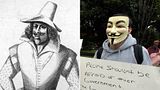
Guy Fawkes photo gty_guy_fawkes_nt_111104_wblog_zps060f73e0.jpg So the poem starts that commemorates the Gun Powder Plot of 1605 and Guy Fawkes, a member of the Gunpowder Plot, was arrested while guarding explosives the plotters had placed beneath the House of Lords.
November 5 commemorates the failure of the November 1605 Gunpowder Plot by a gang of Roman Catholic activists led by Warwickshire-born Robert Catesby.

When Protestant King James I acceded to the throne, English Catholics had hoped that the persecution they had felt for over 45 years under Queen Elizabeth I would finally end, and they would be granted the freedom to practice their religion.

When this didn’t transpire, a group of conspirators resolved to assassinate the King and his ministers by blowing up the Palace of Westminster during the state opening of Parliament.

Guy (Guido) Fawkes, from York, and his fellow conspirators, having rented out a house close to the Houses of Parliament, managed to smuggle 36 barrels of gunpowder into a cellar of the House of Lords – enough to completely destroy the building.

(Physicists from the Institute of Physics later calculated that the 2,500kg of gunpowder beneath Parliament would have obliterated an area 500 metres from the centre of the explosion).

The scheme began to unravel when an anonymous letter was sent to William Parker, the 4th Baron Monteagle, warning him to avoid the House of Lords.

The letter (which could well have been sent by Lord Monteagle’s brother-in-law Francis Tresham), was made public and this led to a search of Westminster Palace in the early hours of November 5.

Explosive expert Fawkes, who had been left in the cellars to set off the fuse, was caught when a group of guards discovered him at the last moment.

Fawkes was arrested, sent to the Tower of London and tortured until he gave up the names of his fellow plotters.

Lord Monteagle was rewarded with £500 plus £200 worth of lands for his service in protecting the crown.

Guy Fawkes, Thomas Bates, Robert and Thomas Wintour, Thomas Percy, Christopher and John Wright, Francis Tresham, Everard Digby, Ambrose Rookwood, Robert Keyes, Hugh Owen, John Grant and the man who organised the whole plot – Robert Catesby.

The conspirators were all either killed resisting capture or – like Fawkes – tried, convicted, and executed.

The traditional death for traitors in 17th-century England was to be hanged, drawn
As he awaited his punishment on the gallows, Fawkes leapt off the platform to avoid having his testicles cut off, his stomach opened and his guts spilled out before his eyes.

Mercifully for him, he died from a broken neck but his body was subsequently quartered, and his remains were sent to “the four corners of the kingdom” as a warning to others.

Following the failed plot, Parliament declared November 5th a national day of thanksgiving, and the first celebration of it took place in 1606.

Following the plot, King James I sought to control non-conforming English Catholics in England. In May 1606, Parliament passed ‘The Popish Recusants Act’ which required any citizen to take an oath of allegiance denying the Pope’s authority over the king.

Observance of the 5th November Act, passed within months of the plot, made church attendance compulsory on that day and by the late 17th Century, the day had gained a reputation for riotousness and disorder and anti-Catholicism. William of Orange’s birthday (November 4th) was also conveniently close.

The Houses of Parliament are still searched by the Yeomen of the Guard before the state opening, which has been held in November since 1928. The idea is to ensure no modern-day Guy Fawkes is hiding in the cellars with a bomb, although it is more ceremonial than serious. And they do it with lanterns.

The cellar that Fawkes tried to blow up no longer exists. In 1834 it was destroyed in a fire which devastated the medieval Houses of Parliament. The lantern Guy Fawkes carried in 1605 is in the Ashmolean Museum, Oxford.

That night has been celebrated in England on November 5th as Guy Fawkes Night or Bonfire Night ever since with bonfires and masks inspired by Guy Fawkes’ image. Straw effigies of Fawkes and modern day political figures are tossed onto the fires. The only place in England where it is not celebrated is Fawkes alma mater, St. Peter’s in York. They refuse to burn a guy out of respect for one of their own.

The holiday, the poem and, especially, the mask was made popular again by the 2006 motion picture “V for Vendetta.” Set in the future, “V” is an anonymous masked revolutionary working to destroy the fascist, totalitarian government with elaborate, violent, and intentionally theatrical campaign that kills the leaders of the government and inspires the people to take back self-rule.

The mask was adopted by the group Anonymous whose members wore the mask during a 2008 protest of the Church of Scientology. The group has been called “freedom fighters,” “digital Robin Hoods,” “a cyber lynch-mob” and “cyber terrorists.” Whatever you call them they were named of Time‘s “100 most influential people in the world for 2012.

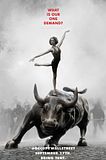
It also became a symbol of the Occupy Wall Street movement that raised the awareness of the world to social and economic inequality, greed, corruption and the undue influence of corporations on government, especially Wall Street. Their slogan “We Are the 99%” became the probably the best known phrase of the protest and the mask one of the most recognized symbols of the movement next to the dancer on the Wall Street bull.

OWS Symbol photo adbusters_occupy-wall-street-590_zps26ba429c.jpg

Really?

Pelosi: Impeaching Trump ‘not someplace that I think we should go’
By CRISTIANO LIMA, Politico
11/05/2017

House Minority Leader Nancy Pelosi said Sunday that even if Democrats were to retake control of the House in the 2018 elections, pushing for impeachment proceedings of President Donald Trump would not be one of their legislative priorities.

“It’s not someplace that I think we should go,” Pelosi, appearing on CNN’s “State of the Union,” said of whether Democrats would seek to oust the president if they regained the majority.

The California Democrat left the door open to the possibility, however, saying that if ongoing investigations into Russian election meddling were to turn up any sort of concrete criminal evidence, lawmakers might reconsider the matter. “If that’s there, perhaps it will come out in these investigations” she said.

Pelosi was reportedly privately critical of an ad put out by billionaire Democratic donor Tom Steyer calling for the impeachment of Trump, with the House leader believing the key to the Democrats retaking the House in 2018 to be avoiding the distractions surrounding the White House.

“I believe that whatever we do, we have a responsibility to first and foremost to unify the nation,” Pelosi said Sunday.

So you’re just going to tolerate someone who has objectively obstructed justice, bragged about it on national TV, sold the White House to Russian oligarchs and the Федеральная служба безопасности Российской Федерации (FSB), and threatened a global nuclear war which we will lose? Indeed you personally endorse such a war.

And we’re supposed to support your Party in elections because they are the lesser of 2 evils?

Lesser how exactly?

Load more