On This Day In History September 28

This is your morning Open Thread. Pour your favorite beverage and review the past and comment on the future.

Find the past “On This Day in History” here.

September 28 is the 271st day of the year (272nd in leap years) in the Gregorian calendar. There are 94 days remaining until the end of the year.

On this day in 1928, the antibiotic Penicillin was discovered. It’s discovery is attributed to Scottish scientist and Nobel laureate Alexander Fleming in 1928. He showed that, if Penicillium notatum  was grown in the appropriate substrate, it would exude a substance with antibiotic properties, which he dubbed penicillin. This serendipitous  observation began the modern era of antibiotic discovery. The development of penicillin for use as a medicine is attributed to the Australian Nobel laureate Howard Walter Florey together with the German Nobel laureate Ernst Chain and the English biochemist Norman Heatley.

However, several others reported the bacteriostatic effects of Penicillium earlier than Fleming. The use of bread with a blue mould (presumably penicillium) as a means of treating suppurating wounds was a staple of folk medicine in Europe since the Middle Ages. The first published reference appears in the publication of the Royal Society in 1875, by John Tyndall. Ernest Duchesne documented it in an 1897 paper, which was not accepted by the Institut Pasteur because of his youth. In March 2000, doctors at the San Juan de Dios Hospital in San José, Costa Rica published the manuscripts of the Costa Rican scientist and medical doctor Clodomiro (Clorito) Picado Twight (1887-1944). They reported Picado’s observations on the inhibitory actions of fungi of the genus Penicillium between 1915 and 1927. Picado reported his discovery to the Paris Academy of Sciences, yet did not patent it, even though his investigations started years before Fleming’s. Joseph Lister was experimenting with penicillum in 1871 for his Aseptic surgery. He found that it weakened the microbes but then he dismissed the fungi.

Fleming recounted that the date of his discovery of penicillin was on the morning of Friday, September 28, 1928. It was a fortuitous accident: in his laboratory in the basement of St. Mary’s Hospital in London (now part of Imperial College), Fleming noticed a petri dish containing Staphylococcus plate culture he had mistakenly left open, which was contaminated by blue-green mould, which had formed a visible growth. There was a halo of inhibited bacterial growth around the mould. Fleming concluded that the mould was releasing a substance that was repressing the growth and lysing the bacteria. He grew a pure culture and discovered that it was a Penicillium mould, now known to be Penicillium notatum. Charles Thom, an American specialist working at the U.S. Department of Agriculture, was the acknowledged expert, and Fleming referred the matter to him. Fleming coined the term “penicillin” to describe the filtrate of a broth culture of the Penicillium mould. Even in these early stages, penicillin was found to be most effective against Gram-positive bacteria, and ineffective against Gram-negative organisms and fungi. He expressed initial optimism that penicillin would be a useful disinfectant, being highly potent with minimal toxicity compared to antiseptics of the day, and noted its laboratory value in the isolation of “Bacillus influenzae” (now Haemophilus influenzae). After further experiments, Fleming was convinced that penicillin could not last long enough in the human body to kill pathogenic bacteria, and stopped studying it after 1931. He restarted clinical trials in 1934, and continued to try to get someone to purify it until 1940.

 48 BC – Pompey the Great is assassinated on the orders of King Ptolemy of Egypt after landing in Egypt.

351 – Battle of Mursa Major: the Roman Emperor Constantius II defeats the usurper Magnentius.

365 – Roman usurper Procopius bribes two legions passing by Constantinople, and proclaims himself Roman emperor.

935 – Saint Wenceslas is murdered by his brother, Boleslaus I of Bohemia.

1066 – William the Conqueror invades England: the Norman Conquest begins.

1106 – The Battle of Tinchebrai – Henry I of England defeats his brother, Robert Curthose.

1238 – Muslim Valencia surrenders to the besieging King James I of Aragon the Conqueror.

1322 – Louis IV, Holy Roman Emperor defeats Frederick I of Austria in the Battle of Muhldorf.

1448 – Christian I is crowned king of Denmark.

1542 – Navigator Joao Rodrigues Cabrilho of Portugal arrives at what is now San Diego, California, United States.

1708 – Peter the Great defeats the Swedes at the Battle of Lesnaya.

1779 – American Revolution: Samuel Huntington is elected President of the Continental Congress, succeeding John Jay.

1781 – American forces backed by a French fleet begin the siege of Yorktown, Virginia, during the American Revolutionary War.

1787 – The newly completed United States Constitution is voted on by the U.S. Congress to be sent to the state legislatures for approval.

1791 – France becomes the first European country to emancipate its Jewish population.

1844 – Oscar I of Sweden-Norway is crowned king of Sweden.

1864 – The International Workingmen’s Association is founded in London.

1867 – Toronto becomes the capital of Ontario.

1867 – The United States takes control of Midway Island.

1868 – Battle of Alcolea causes Queen Isabella II of Spain to flee to France.

1889 – The first General Conference on Weights and Measures (CGPM) defines the length of a meter as the distance between two lines on a standard bar of an alloy of platinum with ten percent iridium, measured at the melting point of ice.

1928 – The U.K. Parliament passes the Dangerous Drugs Act outlawing cannabis.

1928 – Sir Alexander Fleming notices a bacteria-killing mould growing in his laboratory, discovering what later became known as penicillin.

1939 – Nazi Germany and the Soviet Union agree on a division of Poland after their invasion during World War II.

1939 – Warsaw surrenders to Nazi Germany during World War II.

1944 – Soviet Army troops liberate Klooga concentration camp in Klooga, Estonia.

1950 – Indonesia joins the United Nations.

1958 – France ratifies a new Constitution of France; the French Fifth Republic is then formed upon the formal adoption of the new constitution on October 4. Guinea rejects the new constitution, voting for independence instead.

1960 – Mali and Senegal join the United Nations.

1961 – A military coup in Damascus effectively ends the United Arab Republic, the union between Egypt and Syria.

1971 – The Parliament of the United Kingdom passes the Misuse of Drugs Act 1971 banning the medicinal use of cannabis.

1973 – The ITT Building in New York City is bombed in protest at ITT’s alleged involvement in the September 11 1973 coup d’etat in Chile.

1975 – The Spaghetti House siege, in which nine people are taken hostage, takes place in London.

1987 – The beginning of the Palestinian civil disobedience uprising, “The First Intifada” against the Israeli occupation.

1994 – The car ferry MS Estonia sinks in Baltic Sea, killing 852 people.

1995 – Bob Denard and a group of mercenaries take the islands of Comoros in a coup.

2000 – Al-Aqsa Intifada: Ariel Sharon visits the Temple Mount in Jerusalem.

2008 – SpaceX launches the first ever private spacecraft, the Falcon 1 into orbit.

2009 – The military junta leading Guinea, headed by Captain Moussa Dadis Camara, raped, killed, and wounded protesters during a protest rally in a stadium called Stade du 28 Septembre.

2012 – Somali and African Union forces launch a coordinated assault on the Somali port city of Kismayo to take back the city from al-Shabaab militants.

2012 – A Dornier Do 228 light aircraft crashes on the outskirts of the Nepalese capital of Kathmandu, killing 19 people.

2014 – Hong Kong protests : Benny Tai announces that Occupy Central is launched as Hong Kong’s government headquarters is being occupied by thousands of protesters. Hong Kong police resort to tear gas to disperse protesters but thousands remain.

The Super Blood Moon

Tonight most of North America, especially the east coast, will enjoy the site of a full lunar eclipse. The full moon of September is also the Harvest Moon, the full moon closest to the Vernal Equinox. It’s also a super moon, when the moon’s closest to the earth in its orbit, thus the moon will appear brighter and larger than usual. Because of its proximity during the eclipse, the moon will take on a reddish hue as the earth’s shadow passes across its surface. This is known as a “blood moon.” This is the fourth blood moon over the last 2 years which is called a “tetrad” in astronomical circles. The last time this occurred was in 1982 and will not happen again until 2033.

Needless to say, the event has also brought out the religious fringes, who believe the event is a signal for the end of time. However, according to NASA, there is no current threat of the earth being destroyed by a comet or asteroid for the “next several hundred years.”

For those of you who are camera buffs, Huffington Post Science has some helpful tricks for photographing tonight eclipse

Smartphones have made it easy to capture all sorts of fleeting moments — from a seal riding a whale to the pontiff gliding past in his popemobile.

But if you’re hoping to capture an Instagram-perfect shot of this weekend’s supermoon lunar eclipse, it will take a bit of preparation. After all, you’ll be shooting a darkened moon against the night sky. [..]

Keep your camera steady and your exposure long.

Whether you’re using a smartphone, a point-and-shoot or a DSLR, keeping it steady is essential. As Andreo explains, “Taking photos at night almost always drives up the exposure time, which means you need a stable tripod to mount your camera to in order to keep your pictures from turning out blurry.” If you don’t have a tripod, try resting your camera on a stool, or just try this hack that uses a piece of string.

Once your lens is steady, long exposure will help capture details of the moon’s surface despite the darkness. [..]

Get some magnification.

There are two kinds of zoom. One is desirable for this purpose, and the other is not. With a point-and-shoot camera, zoom until your lens is fully extended toward your subject. But then stop. After the lens is fully extended, your camera switches over to ‘digital zoom’ — which makes your photo look pixelated. It “just crops into your picture to make your subject take up more of the frame, but it isn’t true telephoto,” Leuchter explains. [..]

Pay attention to composition.

Unless you’re able to capture all the tiny details on the surface of the moon, you’ll need other objects in the shot to make it interesting. Snap while the moon is low on the horizon, and “try to find interesting objects to juxtapose with the full moon, like shooting through trees, or using silhouettes and other objects to show size contrast,” says Gerard. [..]

Use a self-timer

Sometimes you set up the perfect shot, but the act of actually pressing the button to snap the picture ruins it. A self-timer allows you to take a hands-off shot — you can even download an app that does it for you! Gerard explains that “using a self-timing feature helps to prevent vibrations in the camera by allowing it to settle before it takes the picture.”

Moon rise in the East at 6:36 p.m. The first shadow on the moon’s “face” will begin around 8:11 p.m. However, the total eclipse starts at 10:11 p.m. and peak at 10:47 p.m.  The process then reverses itself and the moon will be back in full view after midnight.

Check your local paper for community events for watching the eclipse. If the weather is overcast in your area, you can watch it here with NASA starting at 8 PM EDT, or you can join us here at 8 PM.

Cartnoon

The Breakfast Club (Ripple, Sprung Style)

Welcome to The Breakfast Club! We’re a disorganized group of rebel lefties who hang out and chat if and when we’re not too hungover  we’ve been bailed out we’re not too exhausted from last night’s (CENSORED) the caffeine kicks in. Join us every weekday morning at 9am (ET) and weekend morning at 10:30am (ET) to talk about current news and our boring lives and to make fun of LaEscapee! If we are ever running late, it’s PhilJD’s fault.

 photo 807561379_e6771a7c8e_zps7668d00e.jpg

Breakfast Tune: Roger Sprung & Friends Play “Ripple” at ROMP 2009

Today in History: September 27th


Warren Commission concludes Lee Harvey Oswald acted alone in JFK’s assassination; Taliban captures Afghanistan’s capital; First steam locomotive to haul passengers; ‘The Tonight Show’ premieres. (Sept. 27)

Something to Think about, Breakfast News & Blogs Below

Bolivia’s parliament passes law to let Evo Morales run for another term

Reuters

Bolivia’s parliament passed a law on Saturday that would allow President Evo Morales to run for another term if ratified in a national referendum next year.

The law, approved in a marathon overnight session by more than two-thirds of lawmakers, would amend the constitution to eliminate presidential term limits.

“It’s not about being forever,” Morales told reporters in New York, where he is attending the annual UN general assembly. …

Catalonia set to elect new regional parliament ruled by ‘independentistas’

Jamie Maxwell, Al Jazeera

BARCELONA, Spain – On Sunday, Catalonia, a prosperous region of 7.4 million people in northeastern Spain, goes to the polls to elect a new devolved parliament and government.

For many Catalans, however, the election is about more than the business of provincial administration. It is about national sovereignty.

…

Over the last five years, Catalan nationalists, or independentistas, have fought a grueling political campaign against Spanish rule, fueled, in part, by growing resentment among Catalans of the large fiscal subsidies they send to less developed parts of the country. …

Mormon church issues call for calm as ‘blood moon’ sparks apocalypse fears

Associated Press in Salt Lake City

A rare confluence of a lunar eclipse and a supermoon to happen this weekend has prompted such widespread fear of an impending apocalypse that the Mormon church was compelled to issue a statement cautioning the faithful to not get caught up in speculation about a major calamity.

Sunday night’s “blood moon” and recent natural disasters and political unrest around the world have led to a rise in sales at emergency-preparedness retailers.

Apocalyptic statements by a Mormon author have only heightened fears among a small number of Mormon followers about the looming end of time. The eclipse will give the moon a red tint and make it look larger than usual, in an event that will not happen again for 18 years.  …

Switzerland bans sales of Volkswagen cars

Wire Services

Switzerland has banned the sale of Volkswagen Group cars equipped with software designed to skirt emissions regulations in the wake of an emissions-rigging scandal that erupted in the United States earlier this month.

Thomas Rohrbach, spokesman for the Swiss federal office of roadways, said Friday that the ban is on all cars with diesel engines in the “euro 5” emissions category. It includes all VW models – as well as Seat, Skodas and other vehicle brands owned by Volkswagen Group.

But the ban only affects cars not yet sold or registered, not ones already in circulation. It also doesn’t apply to cars currently in production with “euro 6” engines, which aren’t affected by the emissions scandal. …

Weather service accidentally sends Connecticut tsunami alert

AP

HARTFORD, Conn. – The Connecticut shoreline was briefly under a tsunami warning before the National Weather Service disclosed the alert had been sent by mistake during a routine monthly test.

The Weather Service’s office in New York sent the warning Thursday morning to its radio and emergency alert systems, which resulted in the alert being mentioned on local broadcasts and Twitter posts. The warning was for all four coastal counties and part of Long Island Sound.

The Weather Service later issued a statement saying there was no real tsunami threat and the warning was sent inadvertently during a routine monthly test by the service’s National Tsunami Warning Center in Alaska.

The Connecticut Broadcasters Association says the alert ran on several Connecticut stations.

There are no records indicating a tsunami has ever hit Connecticut.

Viewed this alert / test myself just after rubbing the sleep out of my eyes. Thought I was dreaming.

Something to Think about over Coffee Prozac:

Deep-sea treasure hunter still must answer for missing gold

September 25, 2015 1:05 PM

COLUMBUS, Ohio (AP) – A deep-sea treasure hunter who pleaded guilty to contempt of court after spending years as a fugitive will have to testify before his sentencing about gold he discovered in a historic shipwreck.

Tommy Thompson went missing three years ago amid demands that he appear in court. He and his longtime companion, Alison Antekeier (an-tuh-KEER’), were apprehended in January at a hotel where he was living near Boca Raton, Florida.

…

During the week before the hearing, Thompson will have to answer questions in a closed court session about the location of the gold and other assets sought by his investors.

Thompson faces two years in prison and a maximum fine of $250,000.

X marks the spot.

Breakfast Quote:

I used to be a heavy gambler. But now I just make mental bets. That’s how I lost my mind.

Steve Allen

On This Day In History September 27

This is your morning Open Thread. Pour your favorite beverage and review the past and comment on the future.

Find the past “On This Day in History” here.

September 27 is the 270th day of the year (271st in leap years) in the Gregorian calendar. There are 95 days remaining until the end of the year.

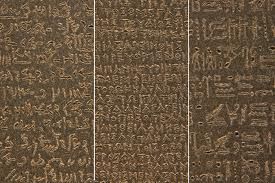
On this day in 1922, Jean-François Champollion deciphered the hieroglyphs of the Rosetta Stone with the help of groundwork laid by his predecessors: Athanasius Kircher, Silvestre de Sacy, Johan David Akerblad, Thomas Young, and William John Bankes. Champollion translated parts of the Rosetta Stone, showing that the Egyptian writing system was a combination of phonetic and ideographic signs.

Thomas Young was one of the first to attempt decipherment of the Egyptian hieroglyphs, basing his own work on the investigations of Swedish diplomat Akerblad, who built up a demotic  alphabet of 29 letters (15 turned out to be correct) and translated all personal names and other words in the Demotic part of the Rosetta Stone  in 1802. Akerblad however, wrongly believed that demotic was entirely phonetic or alphabetic. Young thought the same, and by 1814 he had completely translated the enchorial (which Champollion labeled Demotic as it is called today) text of the Rosetta Stone (he had a list with 86 demotic words). Young then studied the hieroglyphic alphabet and made some progress but failed to recognise that demotic and hieroglyphic texts were paraphrases and not simple translations. In 1823 he published an Account of the Recent Discoveries in Hieroglyphic Literature and Egyptian Antiquities. Some of Young’s conclusions appeared in the famous article Egypt he wrote for the 1818 edition of the Encyclopædia Britannica.

When Champollion, in 1822, published his translation of the hieroglyphs and the key to the grammatical system, Young and all others praised this work. Young had indicated in a letter to Gurney that he wished to see Champollion acknowledge that he had made use of Young’s earlier work in assisting his eventual deciphering of hieroglyphics. Champollion was unwilling to share the credit even though initially he had not recognized that hieroglyphics were phonetic. Young corrected him on this, and Champollion attempted to have an early article withdrawn once he realized his mistake. Strongly motivated by the political tensions of that time, the British supported Young and the French Champollion. Champollion completely translated the hieroglyphic grammar based in part upon the earlier work of others including Young. However, Champollion maintained that he alone had deciphered the hieroglyphs. After 1826, he did offer Young access to demotic manuscripts in the Louvre, when he was a curator. Baron Georges Cuvier (1825) credited Champollion’s work as an important aid in dating the Dendera Zodiac.

 489 – Odoacer attacks Theodoric at the Battle of Verona, and is defeated again.

1066 – William the Conqueror and his army set sail from the mouth of the River Somme, beginning the Norman conquest of England.

1331 – The Battle of Plowce between the Kingdom of Poland and the Teutonic Order is fought.

1422 – after the brief Gollub War the Teutonic Knights sign the Treaty of Melno with the Kingdom of Poland and Grand Duchy of Lithuania

1529 – The Siege of Vienna begins when Suleiman I attacks the city.

1540 – The Society of Jesus (the Jesuits) receives its charter from Pope Paul III.

1590 – Pope Urban VII dies 13 days after being chosen as the Pope, making his reign the shortest papacy in history.

1605 – The armies of Sweden are defeated by the Polish-Lithuanian Commonwealth in the Battle of Kircholm.

1669 – The Venetians surrender the fortress of Candia to the Ottomans, thus ending the 21-year long Siege of Candia.

1777 – Lancaster, Pennsylvania is the capital of the United States, for one day.

1821 – Mexico gains its independence from Spain.

1822 – Jean-Francois Champollion announces that he has deciphered the Rosetta stone.

1825 – The Stockton and Darlington Railway opens, and begins operation of the world’s first service of locomotive-hauled passenger trains.

1854 – The steamship SS Arctic sinks with 300 people on board. This marks the first great disaster in the Atlantic Ocean.

1903 – Wreck of the Old 97, a train crash made famous by the song of the same name.

1905 – The physics journal Annalen der Physik published Albert Einstein’s paper “Does the Inertia of a Body Depend Upon Its Energy Content?”, introducing the equation E=mc².

1908 – The first production of the Ford Model T automobile was built at the Piquette Plant in Detroit, Michigan.

1916 – Iyasu is proclaimed deposed as ruler of Ethiopia in a palace coup in favor of his aunt Zauditu.

1922 – King Constantine I of Greece abdicates his throne in favor of his eldest son, King George II.

1928 – The Republic of China is recognised by the United States.

1930 – Bobby Jones wins the U.S. Amateur Championship to complete the Grand Slam of golf. The old structure of the grand slam was the U.S. Open, British Open, U.S. Amateur, and British Amateur.

1937 – Balinese Tiger declared extinct.

1938 – Ocean liner Queen Elizabeth launched in Glasgow.

1940 – World War II: The Tripartite Pact is signed in Berlin by Germany, Japan and Italy.

1941 – The SS Patrick Henry is launched becoming the first of more than 2,700 Liberty ships.

1941 – Foundation of EAM (National Liberation Front) in Greece.

1942 – Last day of the September Matanikau action on Guadalcanal as United States Marine Corps troops barely escape after being surrounded by Japanese forces near the Matanikau River.

1944 – The Kassel Mission results in the largest loss by a USAAF group on any mission in World War II.

1949 – The first Plenary Session of the National People’s Congress approves the design of the Flag of the People’s Republic of China.

1954 – The nationwide debut of Tonight! (The Tonight Show) hosted by Steve Allen on NBC.

1956 – USAF Captain Milburn G. Apt becomes the first man to exceed Mach 3 while flying the Bell X-2. Shortly thereafter, the craft goes out of control and Captain Apt is killed.

1959 – Nearly 5000 people die on the main Japanese island of Honshu as the result of a typhoon.

1961 – Sierra Leone joins the United Nations.

1964 – The Warren Commission releases its report, concluding that Lee Harvey Oswald, acting alone, assassinated President John F. Kennedy.

1964 – The British TSR-2 aircraft XR219 made its maiden flight from Boscombe Down in Wiltshire.

1968 – The stage musical Hair opened at the Shaftesbury Theatre in London, where it played 1,998 performances until its closure was forced by the roof’s collapsing in July 1973.

1977 – The 300 metre tall CKVR-TV transmission tower in Barrie, Ontario, Canada is hit by a light aircraft in a fog, causing it to collapse. All aboard the aircraft are killed.

1979 – The United States Department of Education receives final approval from the U.S. Congress to become the 13th US Cabinet agency.

1983 – Richard Stallman announces the GNU project to develop a free Unix-like operating system.

1988 – The National League for Democracy, led by Aung San Suu Kyi is founded.

1993 – The Sukhumi massacre takes place in Abkhazia.

1995 – The Government of the United States unveils the first of its redesigned bank notes with the $100 bill featuring a larger portrait of Benjamin Franklin slightly off-center.

1996 – In Afghanistan, the Taliban capture the capital city Kabul after driving out President Burhanuddin Rabbani and executing former leader Mohammad Najibullah.

1996 – The Julie N. tanker skip crashes into the Million Dollar Bridge in Portland, Maine spilling thousands of gallons of oil.

1997 – Communications are suddenly lost with the Mars Pathfinder space probe.

1998 – Google is founded.

2002 – Timor-Leste (East Timor) joins the United Nations.

2003 – Smart 1 satellite is launched.

2005 – After 162 episodes, Tom and Jerry aired it’s final episode titled, The Karate Guard.

2007 – NASA launches the Dawn probe.

2008 – CNSA astronaut Zhai Zhigang becomes the first Chinese person to perform a spacewalk while flying on Shenzhou 7.

2012 – A mass shooting takes place at Accent Signage Systems, in Minneapolis, Minnesota, killing 6 people, including the gunman who committed suicide, and wounding 2 others.

Rant of the Week: Stephen Colbert – Marathon GOP Debate

Stephen Colbert: ‘This Wasn’t A Debate. It Was An Intervention.’

This Week in Dumb IP Claims

Normally the beat of my Tech Dirt homes, this one struck me because I’m a sucker for Gummy Bears.

Lindt wins legal battle after court rules Haribo claim does not bear up

by Sean Farrell, The Guardian

Wednesday 23 September 2015 12.21 EDT

The decision ended a dispute between the companies that started in 2012 when Haribo accused Lindt & Sprüngli of copying its Gold Bear trademark by launching a foil-wrapped teddy.

Haribo, which invented gummy bears in the 1920s, said shoppers would confuse the two products, even though Lindt’s bears are made of chocolate and gummy bears are a jelly sweet.

Lindt argued that its bears were a variation on its Easter rabbit chocolates. Both are wrapped in gold foil with a red ribbon. Haribo’s gummy bear marketing is fronted by a yellow cartoon bear with a red ribbon round its neck.

…

Last week the European court of justice failed to uphold Nestlé’s attempt to protect its four-fingered KitKat in another long-running dispute between the Swiss company and Cadbury. Cadbury tried to thwart Nestlé’s attempt to trademark KitKat in 2010 after Nestlé blocked Cadbury’s effort to trademark the shade of purple used for its chocolate wrappers.

Georgie Collins, a partner at the law firm Irwin Mitchell, said: “The confectionery industry is extremely competitive so it’s not surprising that you often see these rivals coming up against each other.

“The cost of these cases is significant, but it’s about being seen to take action and ringfencing your brand and intellectual property rights as much as you can.”

Why this is at once hilarious and very, very wrong is a little too involved to go into right now, but you should really read Tech Dirt.  And now, a recipe to make Gummy Bears at home-

Take one 3 oz. box of any flavored jello and add sugar according to directions if required (not usually).  Add 7 packs of unflavored gelatin and 1/2 cup of water.  Heat over low in a pan until everything is completely dissolved.  Pour into molds (available at most cooking stores) and chill in freezer for 5 minutes, then refrigerate until very firm.  If you coat the molds with a little flavorless cooking oil spray (canola works) you can remove them easier.  Let them continue to dry unrefrigerated until they have the chewiness you like.

Cartnoon

The Breakfast Club (Catapult Propaganda)

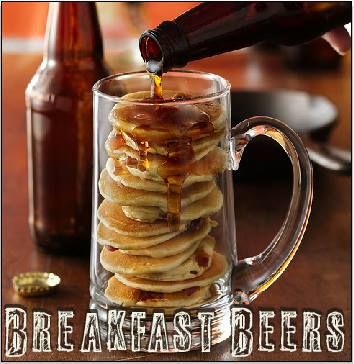
breakfast beers photo breakfastbeers.jpgIt’s been a while so let’s review-

The Rules of Opera

  1. It must be long, boring, and in an incomprehesible foreign language (even if that language is English).
  2. The characters, especially the main ones, must be thoroughly unsympathetic and their activities horrid and callous.
  3. Everyone must die, hopefully in an ironic and gruesome way.

Ballet is the same, but with more men in tights and without the superfluous singing.

The case in point is Henry Purcell’s Dido and Aeneas.  It’s sometimes called the first English Opera but while it is very early indeed (1689) that honor probably belongs to his teacher John Blow’s Venus and Adonis.

Aeneas you may recognize as the “hero” of Virgil’s Odyssey rip off The Aeneid.  The Roman source is actually kind of a great screaming neurotic rant of self justification about why exactly Romans were such bloodthirsty assholes.

First of all let’s talk about the psychological depravity and inferiority complex that would lead you to rewrite the seminal national text of your cultural superiors who’s land you had violently conquered and whom you were still dependent on for intellectual talent because you’re basically a bunch of frat boy barbarians so that the bad guys were the good guys and the founders of your own state.

Then let’s add the seduction and abandonment of the Queen of the nation that was your chief rival.

I think we’re in Operatown Jake.

So Aeneas, noble warrior of Troy cruelly cheated and defeated by those perfidious Greeks, especially Odysseus who’s story he’s stealing, is sailing with a boatload of refugees to find someplace new to settle down when they are blown off course and shipwrecked due to internecine disputes among the Gods related to the Judgement of Paris.

Oddly enough for this ancestor of the founders of Rome (who were raised by wolves in a sterling example of good parenting) he ended up at the gates of Rome’s great future rival- Carthage.

Dido Queen of Carthage, a widow, falls in love with him and fixes up his ships.  Witches plotting against Dido conjure up a storm and when the couple is temporarily separated one of them, impersonating Hermes, tells Aeneas that he simply must hit the road and found that New Troy in Italy he’s been planning.  Aeneas, being a cad in addition to a credulous dope, promptly shoves off.

Dido, despondent, kills herself.  The End.

Now there were in fact heavy political subtexts to both The Aeneid and Dido and Aeneas.  Virgil was not just stroking the Roman sense of entitlement and righteous justification but, because of Ceasar’s reputed descent from Aeneas, sucking up to the Julio-Claudian Emperors (it was written between 29 and 19 BCE).

With Dido and Aeneas Purcell is alluding to the (for him) recent events of the English Civil War.  Aeneas is said to represent James II and the Witches Roman Catholicism while Dido represents Britain, abandoned due to deception.

Like many early compositions it’s not entirely complete and for performance various arrangers fill in the gaps in a variety of ways.  This particular version is from the San Francisco School of the Arts.

Obligatories, News and Blogs below.

Obligatories

Welcome to The Breakfast Club! We’re a disorganized group of rebel lefties who hang out and chat if and when we’re not too hungover we’ve been bailed out we’re not too exhausted from last night’s (CENSORED) the caffeine kicks in. Join us every weekday morning at 9am (ET) and weekend morning at 10:30am (ET) to talk about current news and our boring lives and to make fun of LaEscapee! If we are ever running late, it’s PhilJD’s fault.

I would never make fun of LaEscapee or blame PhilJD.  And I am highly organized.

The fault, dear Brutus, is not in our stars, but in ourselves, that we are underlings.

–Julius Caesar (I, ii, 140-141)

This Day in History

News

Blogs

On This Day In History September 26

This is your morning Open Thread. Pour your favorite beverage and review the past and comment on the future.

Find the past “On This Day in History” here.

September 26 is the 269th day of the year (270th in leap years) in the Gregorian calendar. There are 96 days remaining until the end of the year.

On this day on 1957, West Side Story premieres on Broadway. East Side Story was the original title of the Shakespeare-inspired musical conceived by choreographer Jerome Robbins, written by playwright Arthur Laurents and scored by composer and lyricist Leonard Bernstein in 1949. A tale of star-crossed lovers-one Jewish, the other Catholic-on Manhattan’s Lower East Side, the show in its original form never went into production, and the idea was set aside for the next six years. It was more than just a change of setting, however, that helped the re-titled show get off the ground in the mid-1950s. It was also the addition of a young, relatively unknown lyricist named Stephen Sondheim. The book by Arthur Laurents and the incredible choreography by Jerome Robbins helped make West Side Story a work of lasting genius, but it was the strength of the songs by Stephen Sondheim and Leonard Bernstein that allowed it to make its Broadway debut on this day in 1957.

There are no videos of the original Broadway production which starred Larry Kert as Tony, Carol Lawrence as Maria, Ken Le Roy as Bernardo and Chita Rivera as Anita (Ms. Rivera reprized her role in the movie), so here is the Prologue from the Academy Award winning movie. The area that the movie was filmed no longer exists. The 17 blocks between Columbus and Amsterdam Avenues, from West 60th to West 66th Street on the Upper West Side of Manhattan where he filming took place were demolished to build Lincoln Center for the Preforming Arts.

46 BC – Julius Caesar dedicates a temple to his mythical ancestor Venus Genetrix in accordance with a vow he made at the battle of Pharsalus.

715 – Ragenfrid defeats Theudoald at the Battle of Compiegne.

1212 – Golden Bull of Sicily is certified as an hereditary royal title in Bohemia for the Premyslid dynasty.

1580 – Sir Francis Drake finishes his circumnavigation of the Earth.

1687 – The Parthenon in Athens is partially destroyed by an explosion caused by the bombing from Venetian forces led by Morosini who are besieging the Ottoman Turks stationed in Athens.

1687 – The city council of Amsterdam votes to support William of Orange’s invasion of England, which became the Glorious Revolution.

1777 – British troops occupy Philadelphia, Pennsylvania during the American Revolution.

1783 – The first battle of Shays’ Rebellion begins.

1789 – Thomas Jefferson is appointed the first United States Secretary of State, John Jay is appointed the first Chief Justice of the United States, Samuel Osgood is appointed the first United States Postmaster General, and Edmund Randolph is appointed the first United States Attorney General.

1792 – Marc-David Lasource begins accusing Maximilien Robespierre of wanting a dictatorship for France.

1810 – A new Act of Succession is adopted by the Riksdag of the Estates and Jean Baptiste Bernadotte becomes heir to the Swedish throne.

1820 – Colonel Robert Gibbon Johnson proved tomatoes weren’t poisonous by eating several on the steps of the courthouse in Salem, New Jersey.

1872 – The first Shriners Temple (called Mecca) is established in New York City.

1907 – New Zealand and Newfoundland each become dominions within the British Empire.

1908 – Ed Reulbach becomes the first and only pitcher to throw two shutouts in one day against the Brooklyn Dodgers.

1914 – The United States Federal Trade Commission (FTC) is established by the Federal Trade Commission Act.

1918 – World War I: The Meuse-Argonne Offensive, the bloodiest single battle in American history, begins.

1934 – Steamship RMS Queen Mary is launched.

1944 – World War II: Operation Market Garden fails.

1944 – World War II: On the central front of the Gothic Line Brazilian troops control the Serchio valley region after ten days of fighting.

1950 – United Nations troops recapture Seoul from the North Koreans.

1950 – Indonesia is admitted to the United Nations.

1954 – Japanese rail ferry Toya Maru sinks during a typhoon in the Tsugaru Strait, Japan killing 1,172.

1960 – In Chicago, the first televised debate takes place between presidential candidates Richard M. Nixon and John F. Kennedy.

1960 – Fidel Castro announces Cuba’s support for the U.S.S.R.

1962 – The Yemen Arab Republic is proclaimed.

1970 – The Laguna Fire starts in San Diego County, California, burning 175,425 acres.

1973 – Concorde makes its first non-stop crossing of the Atlantic in record-breaking time.

1981 – Baseball: Nolan Ryan sets a Major League record by throwing his fifth no-hitter.

1983 – Soviet military officer Stanislav Petrov averts a likely worldwide nuclear war by correctly identifying a report of an incoming nuclear missile as a computer error and not an American first strike.

1984 – The United Kingdom agrees to the handover of Hong Kong

1997 – A Garuda Indonesia Airbus A-300 crashes near Medan, Indonesia, airport, killing 234.

1997 – An earthquake strikes the Italian regions of Umbria and the Marche, causing part of the Basilica of St. Francis at Assisi to collapse.

2000 – Anti-globalization protests in Prague (some 20,000 protesters) turn violent during the IMF and World Bank summits.

2000 – The MS Express Samina sinks off Paros in the Agean sea killing 80 passengers.

2002 – The overcrowded Senegalese ferry MV Joola capsizes off the coast of Gambia killing more than 1,000.

2008 – Swiss pilot and inventor Yves Rossy becomes first person to fly a jet engine-powered wing across the English Channel.

2009 – Typhoon Ketsana (2009) hit the Philippines, China, Vietnam, Cambodia, Laos and Thailand, causing 700 fatalities.

2010 – Scottish aid worker Linda Norgrove and three Afghan colleagues are kidnapped by members of the Taliban in the Kunar Province of eastern Afghanistan.

2014 – Ayotzinapa mass kidnapping.

The Daily Late Nightly Show (Trevor)

So it’s been 3 weeks, hardly seems it.  I think we know pretty well by now what Stephen’s format is going to be- dancing, a little monolog/guest intro/joke, the playover, a longer desk monologue, break, another monologue/sketch, break.

That’s the first half hour.

Then first guest, break, second guest, break, musical guest.

Unfortunately it is likely that all the good parts are going to be in that first half hour which goes head to head with Larry.  I’m more conflicted than before about what to pay attention to.

Next Week’s Guests

Of that lot the one I’m really excited about is John, but clearly Stephen is downshifting into production mode and not every night is going to be ‘must see’ TV, at least for me.

Tonight we have Malala Yousafzai, Kerry Washington, and the Arcs.

The New Kid

I don’t know what to expect from Trevor and neither I suspect do you.  He’s diversified the writing and correspondent teams.  Most of the senior production team has stayed though there have been some shifting of responsibilities and promotions.  He has a new “social media” co-ordinator who’s supposed to be very good (maybe he can talk to Larry about his terrible site).

He’s been hated on by professional racists his whole life and there are indications he views the United States as amateur hour.  His political orientation is literally unAmerican (in that peculiar way we’ve adopted a term that spans 2 continents to mean only the United States) and says that he’ll be non-partisan.

Less confrontational too and I must say it amazes me that this meme that Jon Stewart was some kind of raving, rabid, radical Lefty has in such a short time become conventional wisdom.

Or maybe not.  That someone as weak tea as Jon (remember his bi-partisany bits?) should be cast this way serves the interests of the neolib consensus “centrists” that pervade D.C. and the corporatist whore Media.

We have always been at war with EastAsia.

Here are some pieces to read-

His initial guests are-

Health and Fitness News

Welcome to the Health and Fitness News, a weekly diary which is cross-posted from The Stars Hollow Gazette. It is open for discussion about health related issues including diet, exercise, health and health care issues, as well as, tips on what you can do when there is a medical emergency. Also an opportunity to share and exchange your favorite healthy recipes.

Questions are encouraged and I will answer to the best of my ability. If I can’t, I will try to steer you in the right direction. Naturally, I cannot give individual medical advice for personal health issues. I can give you information about medical conditions and the current treatments available.

You can now find past Health and Fitness News diaries here and on the right hand side of the Front Page.

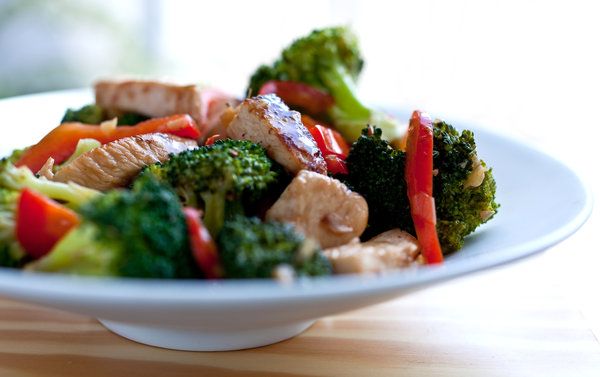
Stir-Fries With Fresh Vegetables
Photobucket

Stir-Fried Broccoli, Red pepper and Chicken

Over 50 percent of this colorful chicken stir-fry is composed of vegetables.

Spicy Stir-Fried Japanese Eggplant and Cucumber

Crunchy, water cucumber contrasts nicely with soft eggplant in this stir-fry.

Spicy Stir-Fried Tofu With Corn, Green Beans and Cilantro

This stir-fry is a light meal, sweet and spicy.

Stir-Fried Brown Rice With Poblano Chiles and Edamame

The rich, nutty taste of brown rice adds a satisfying note to this dish.

Rainbow Peppers and Shrimp With Rice Noodles

For a vegetarian version of this dish, try it with tofu instead of shrimp.

Warnings/Alerts/Guidelines

Antidepressant Paxil Not Safe for Teens: Analysis

By Dennis Thompson, HealthDay

Review of study data contradicts findings reported in 2001

Sept. 16, 2015 (HealthDay News) — A controversial clinical trial of the antidepressant Paxil came to the wrong conclusion when it declared the drug safe and effective for treating troubled teenagers, according to a reanalysis of the original data more than a decade later.

This new look finds Paxil (paroxetine) can make some teenagers suicidal and likely to harm themselves, claims a report published Sept. 17 in the BMJ.

Hand Sanitizers Poisoning More Kids

By Brenda Goodman, MA, WebMD Health News

Sept. 15, 2015 — Poison center officials are warning parents and school officials about a troubling trend — small children becoming intoxicated after drinking alcohol-based hand sanitizer.

“A doctor called us about a week and a half ago about two cases he saw the same day at the ER,” says Gaylord Lopez, PharmD, director of the Georgia Poison Center. “It was a 5- and a 6-year-old.” [..]

What Adults Need to Know

Hand sanitizers come in brightly colored bottles, can be laced with glitter, and smell like bubble gum, lemonade, and vanilla — packaging that makes them very tempting to young children.

The trouble is that these products can be 40% to 95% alcohol. Drinking even just little bit can make kids intoxicated. It’s like drinking a shot or two of hard liquor.

More than 400 Ill in Latest Salmonella Outbreak

By HealthDay staff, HealthDay

Tainted cucumbers now linked to 418 cases in 31 states, CDC officials report

Sept. 15, 2015 (HealthDay News) — A salmonella outbreak that has been linked to contaminated cucumbers imported from Mexico has now caused 418 illnesses in 31 states, U.S. health officials said Tuesday.

According to the U.S. Centers for Disease Control and Prevention, the cucumbers were distributed in Alaska, Arizona, Arkansas, California, Colorado, Florida, Idaho, Illinois, Iowa, Kansas, Kentucky, Louisiana, Minnesota, Mississippi, Montana, Nevada, New Jersey, New Mexico, North Dakota, Oklahoma, Oregon, South Carolina, Texas and Utah. Distribution to other states may also have occurred, the agency added.

Two deaths have also been reported in the outbreak, one in California and one in Texas.

So far, 91 people have been hospitalized, CDC officials said Tuesday.

FDA Bans Sale of New R.J. Reynolds Cigarettes

By Steven Reinberg, HealthDay

Sept. 15, 2015 (HealthDay News) — The U.S. Food and Drug Administration has ordered the R.J. Reynolds Tobacco Co. to stop selling four new cigarette brands because they violate provisions of the 2009 tobacco control law.

The agency determined that the cigarettes are substantially different from existing Reynolds tobacco products on the market and need a full agency review before they can be marketed. The cigarettes are Camel Crush Bold, Pall Mall Deep Set Recessed Filter, Pall Mall Deep Set Recessed Filter Menthol and Vantage Tech 13.

General Medicine/Family Medical

Daytime Napping Linked to Diabetes Risk

By Clint Witchalls, WebMD Health News

Sept. 18, 2015 — Being sleepy and taking long naps during the day are both tied to worse odds of getting type 2 diabetes, a new review suggests.

Researchers from the University of Tokyo analyzed 10 studies from countries around the world, which included data on 261,365 participants. They found that “excessive daytime sleepiness” was linked to a 56% higher risk of getting type 2. And taking a long daytime nap (1 hour or more) was tied to a 46% higher risk. Shorter naps of less than an hour didn’t raise a red flag, though.

Most Smokers Haven’t Considered Quitting

WebMD News from HealthDay

Sept. 17, 2015 (HealthDay News) — The idea of quitting doesn’t cross the minds of most smokers, and the few who do think about it don’t actively try to quit.

That’s the conclusion of a 21-country study released Sept. 17 and done by the U.S. Centers for Disease Control and Prevention, whose authors analyzed data on more than 57,000 smokers compiled between 2009 and 2013.

The prevalence of smoking among the countries ranged from 4 percent in Nigeria to 39 percent in Russia. The United States was not included in the study.

Smoking Linked to Greater Risk for Type 2 Diabetes

By Mary Elizabeth Dallas, HealthDay

Study also found continual exposure to secondhand smoke raised chances of developing disease

Sept. 18, 2015 (HealthDay News) — Smokers have a much greater risk for type 2 diabetes than those who never smoked, and the same is true for those routinely exposed to secondhand smoke, a new study suggests.

But the Harvard researchers said this increased risk gradually drops over time once smokers kick the habit.

“Cigarette smoking should be considered as a key modifiable risk factor for diabetes,” study co-author Frank Hu, a professor of nutrition and epidemiology at the Harvard T.H. Chan School of Public Health in Boston, said in a university news release.

“Public health efforts to reduce smoking will have a substantial impact on the global burden of type 2 diabetes,” Hu added.

Scans Spot Brain Damage in Those With High BP

By Alan Mozes, HealthDay

Researchers suggest doctors could use technology to identify possible therapies to fight mental decline

Sept. 17, 2015 (HealthDay News) — Sophisticated scans can spot early signs of brain damage in patients who have high blood pressure, researchers say.

This type of brain damage may ultimately undermine the ability to think clearly, make decisions and control emotions, the scientists explained.

The finding is based on a small study involving 30 people whose brains were scanned using a highly sensitive imaging technology known as DTI, or diffusion tensor imaging. DTI is an enhanced form of MRI.

Artificial Pancreas Works Well in Home Trial

By Serena Gordon, HealthDay

Study found improved diabetes management in a real-world setting

Sept. 17, 2015 (HealthDay News) — The latest trial of an artificial pancreas system offers good news for people with type 1 diabetes — the system lowered blood sugar levels without increasing the risk of dangerously low blood sugar (hypoglycemia), a new British study says.

The testing, done at home by both adults and children, proved the system better than today’s standard care for managing diabetes, the researchers found.

Antibacterial Soaps Fail to Beat Plain Soap

By Alan Mozes, HealthDay

Short exposure to specific germ-killing ingredients doesn’t get hands cleaner, study says

Sept. 17, 2015 (HealthDay News) — When it comes to ridding your hands of bacteria, plain old soap is just as good as many “antibacterial” soaps, new research contends.

Lab tests conducted by a team of Korean researchers revealed that when bacteria are exposed to the standard over-the-counter antibacterial ingredient known as triclosan for hours at a time, the antiseptic formulation is a more potent killer than plain soap.

Type 2 Diabetes and Weight-Loss Surgery Decision

By Kathleen Doheny, HealthDay

Health costs decline if obese patients with type 2 get procedure soon after diagnosis, experts say

Sept. 17, 2015 (HealthDay News) — Obese patients with type 2 diabetes might reap greater health-care savings after weight-loss surgery than obese patients without diabetes, researchers say.

Most health-care systems use a high body mass index (BMI) to prioritize patients for weight-loss (“bariatric”) surgery. BMI is a measure of body fat based on height and weight.

But researchers who tracked thousands of obese Swedes for 15 years concluded that if containing health costs is the goal, then type 2 diabetes, especially newly diagnosed cases, should be added to the reasons to consider weight-loss surgery.

Cancer Still Leading Cause of Death for Hispanics

Steven Reinberg, HealthDay

Lack of insurance is an obstacle to high-quality care, experts say

Sept. 16, 2015 (HealthDay News) — Heart disease is the leading cause of death in the United States overall, but a new report finds that cancer remains the number one killer of U.S. Hispanics.

Hispanics now make up over 17 percent of the U.S. population, according to the U.S. Census Bureau. In a new report, the American Cancer Society predicts that nearly 126,000 new cancers will be diagnosed among Hispanics this year and an estimated 38,000 will die from the disease.

Treating Sleep Apnea May Reverse Brain Changes

WebMD News from HealthDay

Sept. 14, 2015 (HealthDay News) — Sleep apnea treatment may reverse changes in brain stem activity associated with increased risk of heart disease, a new study suggests.

The findings “highlight the effectiveness of CPAP treatment in reducing one of the most significant health issues [heart disease] associated with obstructive sleep apnea,” the researchers concluded. CPAP stands for continuous positive airway pressure.

Caffeine at Night May Disrupt Your Internal Clock

By Randy Dotinga, HealthDay

And that could make you want to sleep later, say researchers, who see possible treatment for jet lag

Sept. 16, 2015 (HealthDay News) — A small and preliminary study suggests that caffeine does more than serve as an eye-opener: When consumed a few hours before bed, the most widely consumed psychoactive drug in the world seems to disrupt the body’s internal clock.

And this could cause jet lag-style sluggishness during daylight hours, the study authors suggest.

Pesticide Exposure Tied to Diabetes Risk

By Mary Elizabeth Dallas, HealthDay

Review finds these chemicals may boost odds of blood sugar disease by about 60 percent

Sept. 16, 2015 (HealthDay News) — Exposure to pesticides may increase your risk of diabetes, a new analysis suggests.

After reviewing 21 previous studies, researchers found exposure to any type of pesticide was associated with a 61 percent increased risk for any type of diabetes. The increased risk for type 2 diabetes — the most common type — was 64 percent, the investigators found.

Heavy Drinking and Alcohol-Related Cancers Risk

By Mary Elizabeth Dallas, HealthDay

Researchers say it’s a risk factor for death and disability that can be controlled

Sept. 16, 2015 (HealthDay News) — Heavy drinking increases the risk for injury and alcohol-related cancers, a new study reports.

Strategies are needed to curb alcohol abuse, particularly in low-income countries, the Canadian researchers said in the study published Sept. 16 in The Lancet.

“Our data support the call to increase global awareness of the importance of harmful use of alcohol and the need to further identify and target the modifiable determinants of harmful alcohol use,” study author Dr. Andrew Smyth, of the Population Health Research Institute at McMaster University in Ontario, said in a journal news release.

Hip-Fracture Surgery Risk Not Just Due to Age

By Amy Norton, HealthDay

Sept. 15, 2015 (HealthDay News) — People who need surgery for a broken hip face a higher risk of serious complications and death than those who undergo an elective hip replacement — and the disparity is not explained by fracture sufferers’ older age or poorer health, a new study finds.

Doctors have long known that hip-fracture surgery is a riskier procedure than elective hip replacements, which are done to treat severe arthritis.

Chronic Pain Linked to ADHD

By Pauline Anderson, Medscape Medical News

Sept. 14, 2015 — More than a third of people with ongoing “central pain” may also have ADHD, a small study suggests.

Central pain stems from damage to the central nervous system — the brain, brain stem and spinal cord. It differs from ongoing pain from bone or muscle conditions such as arthritis, or peripheral nerve pain like diabetic neuropathy.

Researcher Forest Tennant, MD, of Intractable Pain Management, presented the findings at the PAINWeek 2015 conference.

Seasonal Flu/Other Epidemics/Disasters

This Year’s Flu Shot Should Be Better Match: CDC

Steven Reinberg, HealthDay

Americans 6 months of age and older encouraged to get vaccinated

Sept. 17, 2015 (HealthDay News) — This year’s flu vaccine should be a better match than last year’s for circulating flu strains, U.S. health officials said Thursday.

Dr. Tom Frieden, director of the U.S. Centers for Disease Control and Prevention, said that in most years, the vaccine is 50 to 60 percent effective, meaning that your odds of getting the flu are reduced by as much as 60 percent if you get a flu shot.

Women’s Health

‘Organic Pollutants’ Linked to Gestational Diabetes

By Mary Elizabeth Dallas, HealthDay

High PCBs levels in early pregnancy associated with greater risk, study shows

Sept. 16, 2015 (HealthDay News) — Women exposed to high levels of polychlorinated biphenyls (PCBs) in early pregnancy have a higher risk of developing gestational diabetes, new research from Greece suggests.

These findings add to a growing body of evidence suggesting there is an association between these chemicals, known as persistent organic pollutants (POPs), and metabolic health issues.

Pregnancy Intervals May Affect Autism Risk

By Kathleen Doheny, HealthDay

Sept. 14, 2015 (HealthDay News) — The amount of time between a woman’s pregnancies may matter when it comes to the possible risk of her children developing autism, new research suggests.

“Children conceived in less than two years after the birth of their older sibling or greater than six years have [about] a two- to threefold increased risk of being diagnosed with autism,” said study researcher Lisa Croen, director of the autism research program at Kaiser Permanente division of research, in Oakland, Calif

Pediatric Health

Teens Copy Parents’ Smoking: Study

By Mary Elizabeth Dallas, HealthDay

If mom smokes, daughters are almost four times as likely to get hooked on cigarettes

Sept. 18, 2015 (HealthDay News) — Although many teens don’t often copy their parents’ behavior, there’s one habit they may pick up from mom or dad — smoking.

Teens are three times more likely to smoke at least one cigarette — and their odds of nicotine dependence are nearly twice as high — if one of their parents is dependent on nicotine, the new study found.

And teenage daughters of women who smoke seem to be most at risk. These young girls were almost four times as likely to be dependent on nicotine if their mother was a regular smoker, the researchers said.

Can More Outside Time Help Kids’ Eyesight?

WebMD News from HealthDay

Sept. 15, 2015 (HealthDay News) — More time outdoors may reduce the odds your young child will need eyeglasses, new research from China suggests.

In a three-year study, adding 40 minutes of outdoor activities daily was associated with lower rates of nearsightedness among school-aged Chinese children. People with nearsightedness, also called myopia, have trouble seeing things at a distance.

Breast-Feeding and Some Babies’ Social Development

By Amy Norton, HealthDay

Sept. 14, 2015 (HealthDay News) — Researchers found that among 44 babies with a particular autism “risk” gene, those who were breast-fed longer spent more time looking at images of “happy” eyes and shied away from “angry” eyes.

The findings, published online Sept. 14 in the Proceedings of the National Academy of Sciences, suggest that breast-feeding might enhance social development in certain at-risk infants.

However, the authors and other experts stressed that the study offers no evidence that breast-feeding ultimately affects a child’s odds of developing autism, or that it lessens the severity of autism symptoms.

Home Pesticide Use Tied to Child Cancer Risk

By Amy Norton, HealthDay

Sept. 14, 2015 (HealthDay News) — Children exposed to insecticides at home may have a slightly increased risk of developing leukemia or lymphoma, a new review finds.

The analysis, of 16 studies done since the 1990s, found that children exposed to indoor insecticides had an elevated risk of developing the blood cancers. There was also a weaker link between exposure to weed killers and the risk of leukemia.

ADHD May Mask Autism in Young Kids

By Dennis Thompson, HealthDay

Sept. 14, 2015 (HealthDay News) — Symptoms attributed to attention-deficit hyperactivity disorder (ADHD) may overshadow or mask autism spectrum disorder in very young children, a new study reveals.

This can create a significant delay in the diagnosis of autism. It took an average of three years longer to diagnose autism in children initially thought to have just ADHD, the researchers said.

Aging

Daily Aspirin Benefits Those in 50s Most: Report

By Dennis Thompson, HealthDay

Sept. 14, 2015 (HealthDay News) — Daily low-dose aspirin is best used as a preventive measure against heart disease for people in their 50s, top U.S. experts in preventive medicine have determined.

People in their 60s also can take low-dose aspirin to reduce their risk of heart attack and stroke, but they will not benefit as much, the U.S. Preventive Services Task Force stated in a set of draft recommendations issued Monday.

Mental Health

Drug Approved for Schizophrenia, Bipolar Disorder

By Mary Elizabeth Dallas, HealthDay

Vraylar is an atypical antipsychotic taken once a day

Sept. 18, 2015 (HealthDay News) — A new antipsychotic drug to treat schizophrenia and bipolar disorder in adults has been approved by the U.S. Food and Drug Administration.

The drug, Vraylar (cariprazine), is a capsule taken once a day.

Family Involvement Helps in Treating Teen Bulimia

By Mary Elizabeth Dallas, HealthDay

Recovery is faster when family is part of therapy, researchers find

Sept. 18, 2015 (HealthDay News) — Teens with bulimia recover faster when their parents are involved in their treatment, new research reports.

Traditionally, parents have been excluded from the treatment and counseling of teens with bulimia, the researchers said. But, the study’s authors found that having parents play a role in their children’s treatment was ultimately more effective.

Too Little Vitamin D May Hasten Mental Decline

By Steven Reinberg, HealthDay

Sept. 15, 2015 (HealthDay News) — Mental function may decline faster in older adults with low levels of vitamin D, a new study suggests.

Among more than 380 people the researchers followed for an average of five years, those with dementia had the lowest levels of vitamin D.

“It is unclear what vitamin D might be doing,” said study author Joshua Miller, chair of the department of nutritional sciences at Rutgers University School of Environmental and Biological Sciences in New Brunswick, N.J.

Brain Scans May Help Schizophrenia Treatment

By Randy Dotinga, HealthDay

Goal is to help physicians make better drug choices for psychotic patients

Sept. 15, 2015 (HealthDay News) — A brain scan might someday help psychiatrists quickly determine which antipsychotic drugs work best for patients with schizophrenia or bipolar disorder, researchers say.

This personalized approach could eliminate a lot of trial-and-error and hasten critical time to treatment, the study authors suggested.

Blood Pressure Meds May Cut Alzheimer’s Risk

By Sydney Devine, WebMD Health News

Sept. 14, 2015 — Inexpensive blood pressure medications may help protect the brain from Alzheimer’s disease, new research suggests.

People with early thinking and memory issues who took an ACE inhibitor or an ARB medication for their high blood pressure were less likely to get Alzheimer’s disease than those on other BP drugs.

Nutrition/Diet/Fitness

Tai Chi Might Help Those With Long-Term Conditions

By Steven Reinberg, HealthDay

Study shows ancient exercise improves physical ability in those with arthritis, heart failure, emphysema and breast cancer

Sept. 17, 2015 (HealthDay News) — The slow, fluid movements of tai chi — an ancient Chinese exercise — appear to help older adults with chronic conditions improve their physical function, a new review suggests.

Specifically, those with breast cancer, heart failure, osteoarthritis or chronic obstructive pulmonary disease (COPD, which includes emphysema) saw improvements in strength, balance and posture without worsening pain or being out of breath, researchers said.

“If you’re older and have one of the conditions mentioned in the study, tai chi may be an alternative you can use to increase your fitness level,” said senior researcher Darlene Reid, professor and chair of the Department of Physical Therapy at the University of Toronto in Canada.

Tai chi is a series of gentle, flowing movements that aim to improve muscle power, balance, posture and flexibility, she said.

High Salt, Potassium Diet and Kidney Disease

By Mary Elizabeth Dallas, HealthDay

Study participants had far more sodium than the recommended daily limit

Sept. 17, 2015 (HealthDay News) — A diet high in sodium and potassium can make chronic kidney disease (CKD) worse, a new study claims.

“These data warrant future clinical trials to test the effect of a moderate reduction in dietary sodium and potassium intake on CKD progression in patients with high dietary sodium or potassium intake,” study leader Dr. Jiang He, from Tulane University, said in a news release from the American Society of Nephrology.

 Excess Weight Linked to Brain Cancer Risk in Study

By Emily Willingham, HealthDay

And physical activity associated with lower odds of meningioma, though these tumors are considered rare

Sept. 16, 2015 (HealthDay News) — Weight and physical activity levels may affect the risk of a certain brain cancers, new research suggests.

Excess weight was associated with a higher risk of a type of brain cancer known as meningioma. Obesity increased the risk of meningioma by 54 percent, and being overweight upped the risk by 21 percent, the study found.

On the other hand, people who were physically active reduced the risk of meningioma by 27 percent, the researchers said.

Sugary Drinks Often Part of Overall Poor Diet

By Mary Elizabeth Dallas, HealthDay

Unhealthy eating, sweetened beverages may combine to raise diabetes risk, researchers say

Sept. 16, 2015 (HealthDay News) — People who drink a lot of sugar-sweetened drinks tend to have a poor diet overall, which could play a role in their risk for type 2 diabetes, scientists report.

Previous research has linked high consumption of sugary drinks with development of type 2 diabetes. This new finding suggests a more complicated scenario.

“As this study is cross-sectional, we can not draw any conclusions about causality or the exact effect of the diet or beverage,” the researchers said. “However, our results indicate that the associations previously seen with sugar-sweetened beverages might be due to … individuals consuming a lot of these beverages also have a diet low in healthy foods, which in combination give associations with several chronic diseases such as type 2 diabetes.”

Red Wine Ingredient and Alzheimer’s Progression

By Amy Norton, HealthDay

Sept. 11, 2015 (HealthDay News) — High doses of resveratrol, a compound found in red wine and berries, may have some activity against Alzheimer’s disease, a preliminary clinical trial suggests.

Resveratrol is an antioxidant that certain plants produce to shield against stress from the environment. People ingest small amounts when they eat red grapes, red wine, berries or dark chocolate.

Lab research has suggested that resveratrol might have some powers against the diseases of aging — including Alzheimer’s disease. But evidence from human studies has been lacking.

Load more