
Sep 26 2016
Cartnoon
Sep 26 2016
The Breakfast Club (Risk)
Welcome to The Breakfast Club! We’re a disorganized group of rebel lefties who hang out and chat if and when we’re not too hungover we’ve been bailed out we’re not too exhausted from last night’s (CENSORED) the caffeine kicks in. Join us every weekday morning at 9am (ET) and weekend morning at 10:30am (ET) to talk about current news and our boring lives and to make fun of LaEscapee! If we are ever running late, it’s PhilJD’s fault.
This Day in History
JFK and Nixon participate in TV’s first presidential debate; Cuba ends Mariel boatlift; Composer George Gershwin, poet T.S. Eliot and tennis star Serena Williams born; ‘West Side Story’ hits Broadway.
Breakfast Tunes
Something to Think about over Coffee Prozac
Only those who will risk going too far can possibly find out how far one can go.
Sep 25 2016
Rache- Part 1
Do not count me among those who revel at opposition retreat, to regroup and rise again, You spare me at your peril.
Hear that scratching sound? It’s moderate rats scrambling back aboard the good ship Corbyn
By Dan Hodges, The Mail
19:49 EST, 24 September 2016
What we witnessed yesterday was billed as the result of the Labour leadership contest. But instead it had the feeling of a surrender ceremony. The final, formal capitulation of moderate, progressive socialism.
‘It’s already starting,’ one Labour MP told me. ‘I’ve had people emailing me saying, “I don’t want to go back, but I’ve got a wife and kids to think about”.’
By ‘going back’ they mean returning to serve in Jeremy Corbyn’s shadow cabinet. Two months ago the instigators of Labour’s Summer of Discontent were desperately struggling to restrain people from resigning to help manage the insurrection in an orderly manner. Today they’re fighting to prevent those same MPs scrambling back aboard the sinking ship.
…
(Deputy Leader Tom) Watson (the face of the Parliamentary Labour Party Quislings) knows full well the rebellion is teetering on the point of collapse. His move is simply an attempt to provide a way of giving a route back into the shadow cabinet that allows Labour moderates to save face.‘Tom’s priority is just trying to protect the MPs and the party staff from the coming backlash’, an ally told me.
But there can be no dignified return. No peace with honour.
Whether people go back to the shadow cabinet via elections or via the munificence of their leader is utterly irrelevant. They will – to borrow the words of one former Labour Minister – have ‘done a Burnham’, a reference to the newly anointed Marshall Petain of Manchester, who refused to back the coup against Corbyn in order to secure his party’s mayoral nomination.
Once again, Labour’s moderates are preparing to reinforce every negative caricature painted by Corbyn and his acolytes. That they are governed solely by personal ambition. That they have no courage or conviction. That they exist only to secure for themselves the closest proximity to power.
And if they bow the knee to Corbyn now, that caricature will become a self-portrait.
A portrait of Dorian Gray, so to say.
Jeremy Corbyn’s victory was crushing. There is simply nothing else to call it, 62 – 38 is a 24 point margin. In raw votes it was 119,980, almost as many as the 130,000 votes suppressed (in Britain they call it “gerrymandering” and are quite wrong to do so, it’s an entirely different thing all together- “it’s an entirely different thing”). 77% of the Party voted, you can hardly call it undemocratic unless, as the straw grasping Tory-lite Quisling Blairites do, you posit a “silent majority” of people who feel too intimidated to express publicly their ‘I got mine’ selfishness in the face of moral disapproval (and please, call it ‘bullying’ so you demean people who actually suffer persecution not privilege).
The reaction is not unexpected or unpredictable, legacy media is howling Dolchstoßlegende conspiracy theories about why they are no longer respected or trusted (duh), they and the PLP (nice blokes you’d share a pint with at the pub, not stinking radical entryist Trots) are consoling themselves with fantasies of redemption (unfortunately likely, we’ll see, more later in any event)- in the words of The Mirror bowing the knee, or schism (good luck with that, Britain already has a “Center-Left” Neoliberal Party- the Liberal Democrats who by virtue of licking Tory boots now have a whopping 8 seats in Parliament, exactly the same as the Democratic Unionist Party, you know, Ian Paisley’s Northern Irish sectarian thugs and terrorists).
Humiliated in fact if not in attitude the PLP lurches zombie-like chanting “reconciliation” instead of “brains” which if they had any would have stopped them from starting this coup in the first place. They live in existential fear that they’ll be “deselected” and have to face what we would call a primary challenge from their constituency whom they’ve given no reason to support them.
‘But the Media Guys still like us at the Pub!”, they whine. Yeah, but your voters don’t.
This is a distinct and pivotal defeat for Neoliberalism’s sense of inevitability. To compare it with Moscow (1815 or 1941, pick ’em) or Midway it represents a distinct change in Momentum and a guide for activism.
Sep 25 2016
The Breakfast Club (Which side)
Welcome to The Breakfast Club! We’re a disorganized group of rebel lefties who hang out and chat if and when we’re not too hungover we’ve been bailed out we’re not too exhausted from last night’s (CENSORED) the caffeine kicks in. Join us every weekday morning at 9am (ET) and weekend morning at 10:30am (ET) to talk about current news and our boring lives and to make fun of LaEscapee! If we are ever running late, it’s PhilJD’s fault.
AP’s Today in History for September 25th
Nine black students escorted into Little Rock’s Central High School; President Woodrow Wilson collapses; Author William Faulkner born; TV’s Barbara Walters and movie actor-producer Michael Douglas born.
Breakfast Tune Pete Seeger – Talks about his banjo tutorial and sings ‘Which side are you on’.
Something to Think about, Breakfast News & Blogs Below
Former Wells Fargo workers file $2.6bn class action lawsuit amid quota scandal
Reuters
Two former Wells Fargo employees have filed a class action in California seeking $2.6bn or more for workers who tried to meet aggressive sales quotas without engaging in fraud and were later demoted, forced to resign or fired.
The lawsuit on behalf of people who worked for Wells Fargo in California over the past 10 years, including current employees, focuses on those who followed the rules and were penalized for not meeting sales quotas.
“Wells Fargo fired or demoted employees who failed to meet unrealistic quotas while at the same time providing promotions to employees who met these quotas by opening fraudulent accounts,” said the lawsuit, which was filed on Thursday in California superior court in Los Angeles County. …
Charlotte police release footage of fatal Keith Scott shooting
Alan Yuhas and Oliver Laughland, The Guardian
Charlotte police on Saturday released footage of the fatal police shooting of Keith Scott, a 43-year-old African American man whose death precipitated both riots and peaceful protests in North Carolina this week.
In two sets of video of the incident on Tuesday, one from a body camera and another from a police cruiser dashboard, cameras recorded the altercation between officers and Scott.
At a press conference on Saturday evening, members of Scott’s family welcomed the release of the footage but argued it offered no concrete evidence that the 43 year-old was armed at the time he was killed. …
Baltimore man who called 911 for help dies after being punched by police
Baynard Woods, The Guardian
A 21-year-old man died in a hospital near Baltimore on Wednesday, after an altercation with county police officers who repeatedly punched him as they responded to a call for an ambulance.
…
“Officer Bowman is the one that when he arrived, really started wailing on Mr Boyd, meaning Mr Boyd was on the ground in a prone position and Bowman sat on him, almost straddled his back, and put his left arm under Boyd’s neck and pulled his head up in a choking fashion.”
…
Boyd’s grandmother, Linda Burch, told the Baltimore Sun: “I kept telling them stop before they hurt him because I told them they could kill him like that. They told me to go across the street before they lock me up.” …
Baby lobsters in hot water as ocean temperatures rise
Associated Press
Baby lobsters might not be able to survive in the ocean’s waters if the ocean continues to warm at the expected rate. That is the key finding of a study performed by scientists in Maine, the state most closely associated with lobster. The scientists, who are affiliated with the University of Maine Darling Marine Center and Bigelow Laboratory for Ocean Sciences, said the discovery could mean bad news for the future of one of America’s most beloved seafood treats, as well as the industry lobsters support.
The scientists found that lobster larvae struggled to survive when they were reared in water five degrees Fahrenheit warmer than the temperatures that are currently typical of the western Gulf of Maine, a key lobster fishing area off of New England. Five degrees is how much the United Nations’ Intergovernmental Panel on Climate Change expects the Gulf of Maine’s temperature to warm by the year 2100.
The paper appears this month in the scientific journal ICES Journal of Marine Science. It could serve as a wake-up call that the lobster fishery faces a looming climate crisis that is already visible in southern New England, said Jesica Waller, one of the study’s authors.
Something to Think about over Coffee Prozac
Did Mickey Mouse’s Pants Wreck His Sex Life? We Have Science On This.
David Moye, Huffington Post
Ever wonder why Mickey Mouse never had any kids? Maybe it was those silly pants.
Let’s not even consider whether his lack of style turned Minnie off. Mickey may have failed to score because of the fabric of his red shorts.
Sound goofy? Well, that’s the finding of a 1993 study on the effect of textiles on the sexual activity of rats, Mickey’s fellow rodents.
Sexologist Ahmed Shafik of Cairo made 60 lab rats wear pants for a year, and he determined that they saw less action when wearing polyester shorts. Shafik passed away in 2007, but his findings are garnering attention this week after they earned a posthumous Ig Nobel Prize on Thursday night.
The Ig Nobels, a tradition at Harvard University, honor some of the strangest academic research in the world ― or as the award’s founders put it, “discoveries that cannot, or should not, be reproduced.”
“Shafik perfectly fulfilled the requirements to win an Ig Nobel Prize: his experiments make people first laugh, then think,” said Marc Abrahams, editor of The Annals of Improbable Research, the organization that hands out the awards.
To determine how pants affect male rats, Shafik actually dressed 60 of his subjects in special rat underwear made out of either 100 percent polyester, 100 percent cotton, 100 percent wool or a 50/50 polyester-cotton blend.
This illustration from the original paper shows how the pants looked on the rats, though it doesn’t show the opening in the back that allowed them to poop without dropping their shorts.
The lab rats wore these bun huggers for a year ― they were only changed when the pants became soiled.
It turned out different textiles had an effect on how much the rats catted around. The rats in 100 percent polyester mounted and ejaculated less than those wearing cotton, wool or the poly blend.
That makes sense to anyone who came of age in the 1970s and saw all the lounge lizards in polyester suits at the singles bars. They had a lot less sex as well.
But Shafik didn’t blame the rats’ style for their lack of animal magnetism.
He hypothesized that the polyester created electrostatic fields that negatively affected germ cells in the testicles and in the epididymis, the duct that connects the testicles to the vas deferens. Rats, and many other males, need germ cells to produce sperm.
Shafik posited:
“A negative charge is created on the inner surface of the pants and a positive one on the outer surface of the penile skin in contact with the pants.”
Luckily, those effects can be reversed within a year by simply not wearing polyester or polyester blends.Shafik believed these findings could be important to his fellow Egyptian men, many of them apparently wore polyester clothing commando-style.
Shafik didn’t drop the research after he tested it on rats, according to Pacific Standard. Three years later, he tested the hypothesis on 50 men and concluded that “polyester underpants could have an injurious effect on human sexual activity.”
Sep 24 2016
It Be International Talk Like A Pirate Day!
(ok, so I missed it a little.)
| The Pastafarian Service Council wants to remind you that today, September 19th, be International Talk Like A Pirate Day. As Slushy the Polar Bear says- “Only you can prevent Global Warming. Arrgh.” |
 Ahoy mateys. It be Cap’n Hank Bloodbeard hijacking your blog ag’in. Since the establishin’ of International Talk Like a Pirate Day in 1995, the number of Pirates has increased gratifyin’ly thereby proving the success of our Pastafarian Pirate Recruitin’ Program and confirmin’ the link between increased piracy and declinin’ Global Warmin’.
But wait ye say, Global Warmin’ has gotten worse and Pastafarianism is a made up religion contrived out of equal measures of ennui, ignorance and Rum!
WHY IS THERE NEVER ANY RUM! Oh, that’s why.
Ye scurvy dog, them be fightin’ wards. Ye’ll walk the plank. I’ll keelhaul ye. I’ll see your black hearted soul in Davey Jones Locker (the one ‘e shares w’ Peter Toth).
We used to worry about that too until we took up w’ a crew o’ Freshwater Pirates from the Chicago School who explained that it doesn’t matter how consistently and thoroughly wrong ye are if ye suck up to rich people enough and parrot their prejudices, beat down the po’ folk until morale improves, and kiss their ass long and hard. Take what ye can, give nothin’ back, yo ho.
Polly want a grant?
E’en on these shores Cap’n Bloodbeard (aside from really enjoyin’ referin’ to hisself in the thard person) be known for ‘is trail of terror and carnage and really bad puns.
I generally celebrate International Talk Like a Pirate Day by telling the 3 Pirate Jokes. There are only 3, all the others are just variations. As Cap’n Slappy says:
Thar be only three pirate jokes in the world. The biggest one is the one that ends with someone usin’ “Arrr” in the punchline. Oh, sure, thar be plenty o’ these, but they’re all the same damn joke.
“What’s the pirate movie rated? – Arrr!”
“What kind o’ socks does a pirate wear? – Arrrrgyle!”
“What’s the problem with the way a pirate speaks? – Arrrrticulation!”
…and so forth.The second joke is the one wear the pirate walks into the bar with a ships wheel attached to the front o’ his trousers. The bartender asks, “What the hell is that ships wheel for?” The pirate says, “I don’t know, but it’s drivin’ me nuts!”
And finally. A little boy is trick or treatin’ on Halloween by himself. He is dressed as a pirate. At one house, a friendly man asks him, “Where are your buccaneers?” The little boy responds, “On either side o’ me ‘buccan’ head!”
And there ye have it. A symposium on pirate humor that’ll last ye a lifetime – so long as life is violent and short.
If ye steer a course to the official website of International Talk Like A Pirate Day, ye may wish to read the FAQ, to help ye splice the mainbrace proper like. Then ye’ll be ready to talk like a pirate.
Talking like a pirate, however, doesn’t just mean running through the hallways yelling “yarr!” at everyone. To get more in touch with one’s inner pirate, here is a short list of useful terms that may help readers throughout their day of pillaging and searching for buried treasure.
I also spend this day in Worship at Church and emulate the manners, customs, and language o’ me Pirate forbearers (I have the good fortune to be 1/4 full blooded Pirate through my Viking ancestors, indeed Viking is a verb which means ‘Pirate’) and singing some Pirate Carols.
There will come a time when you have a chance to do the right thing.
I love those moments. I like to wave at them as they pass by.
In order to affect a timely halt to deterioriating conditions, and to ensure the common good, a state of emergency is declared for these territories by decree of Lord Cutler Beckett, duly appointed representative of His Majesty, the King. By decree, according to martial law, the following statutes are temporarily amended: Right to assembly, suspended. Right to habeas corpus, suspended. Right to legal counsel, suspended. Right to verdict by a jury of peers, suspended. By decree, all persons found guilty of piracy, or aiding a person convicted of piracy, or associating with a person convicted of piracy, shall be sentenced to hang by the neck until dead.
Yo, ho, haul together, hoist the colors high.
Heave ho, thieves and beggars, never shall we die.
The king and his men stole the queen from her bed and bound her in her Bones.
The seas be ours and by the powers where we will we’ll roam.
Yo, ho, haul together, hoist the colors high.
Heave ho, thieves and beggars, never shall we die.
Some men have died and some are alive and others sail on the sea,
With the keys to the cage and the Devil to pay we lay to Fiddler’s Green!
The bell has been raised from it’s watery grave. Do you hear it’s sepulchral tone?
We are a call to all, pay head the squall and turn your sail toward home!
Yo, ho, haul together, hoist the colors high.
Heave ho, thieves and beggars, never shall we die.
Now grog ain’t much o’ a much. A punch put together by th’ thieving English to cheat ye outen your full two tots. Real Pirates drink bumbo anyway. I’ve had your Fijian grog and it goes right nice with some piping hot chamomille tea. Let the savages use cold water, coconut and pineapple are for umbrella drinks.
| Are you ready kids? Aye, aye captain. I can’t hear you… Aye, aye captain! Ohhh…… Who lives in a pineapple under the sea? Sponge Bob square pants. Absorbent and yellow and porous is he. Sponge Bob square pants. If nautical nonsense be something you wish. Sponge Bob square pants. Then drop on the deck and flop like a fish. Sponge Bob square pants. Ready? Sponge Bob square pants, Sponge Bob square pants, Sponge Bob square pants, Sponge Bob…… square paaaaaants. Hah, hah, hah, hah, hah, hack, cough, cough. Arrgh. |
Nor will it keep ye in the pink.
Scurvy
We got spots on our backs so give it up and shout
We got Scurvy we need some vitamin C
We got Scurvy we need a lemon tree
We got Scurvy we just chillin’ on the sea
Lets get this Scurvy started
A pirate ain’t worthy
Till he got some Scurvy
Since you’ve got Scurvy on your nervy when you sing that song
Scurvy (Scurvy)
We got Scurvy (scurvy)
Pirates for Sail- Scurvey Awareness
Continue reading
Sep 24 2016
Health and Fitness News
 Welcome to the Stars Hollow Gazette‘s Health and Fitness News weekly diary. It will publish on Saturday afternoon and be open for discussion about health related issues including diet, exercise, health and health care issues, as well as, tips on what you can do when there is a medical emergency. Also an opportunity to share and exchange your favorite healthy recipes.
Questions are encouraged and I will answer to the best of my ability. If I can’t, I will try to steer you in the right direction. Naturally, I cannot give individual medical advice for personal health issues. I can give you information about medical conditions and the current treatments available.
You can now find past Health and Fitness News diaries here.
Follow us on Twitter @StarsHollowGzt
Recipes for Gorgeous Days and Cooler Nights
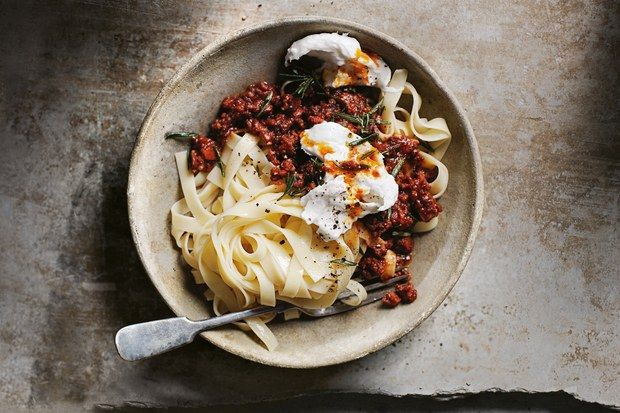
We’re on the cusp of #sweaterweather. You know how to dress—here’s what to cook.
This cheat bolognese is so easy to make and has a delicious richness that’s irresistible. Using the chorizo in place of beef means it’s packed with flavor and ready in under 15 minutes!
There are two players in this ring: crispy chicken and flaky biscuits. Both are the work of your own hands, and both are ready for the brunch treatment this weekend. Make the biscuits in advance to give you more time with guests (and mimosas).
Summer might be winding down, but that doesn’t mean you have to stop cooking with color. Exhibit A: this pan-seared pork chop dish with bright roasted carrots and orange juice.
Combine pickled vegetables, buttermilk dressing, and avocados in this towering lunch. While this drip-inducing sandwich would be a desk lunch disaster, this ain’t Tuesday, so mess away!
Health and Fitness News
Brain cancer now deadlier among US children than leukemia
Study Confirms That Zika Virus Causes Brain Damage In Newborns
New inhaler protects lungs against effects of air pollution
Maternal deaths worldwide drop by half, yet shocking disparities remain
First Case of West Nile Virus Discovered in New Hampshire
Treating Prostate Cancer Is Often No Better Than Doing Nothing
Sep 24 2016
The Breakfast Club (Inner Child)
Welcome to The Breakfast Club! We’re a disorganized group of rebel lefties who hang out and chat if and when we’re not too hungover we’ve been bailed out we’re not too exhausted from last night’s (CENSORED) the caffeine kicks in. Join us every weekday morning at 9am (ET) and weekend morning at 10:30am (ET) to talk about current news and our boring lives and to make fun of LaEscapee! If we are ever running late, it’s PhilJD’s fault.
This Day in History
Patricia Hearst gets prison time; Author F. Scott Fitzgerald born; ’60 Minutes’ premieres; Baseball’s Dodgers play last Brooklyn game; Muppets creator Jim Henson born; Children’s author Dr. Seuss dies.
Breakfast Tunes
Something to Think about over Coffee Prozac
The most sophisticated people I know – inside they are all children.
Sep 23 2016
Why The Quislings Lost
Labour MPs are finally accepting the terrifying victory of Jeremy Corbyn’s mass movement
by FRASER NELSON, The Telegraph
22 SEPTEMBER 2016 • 10:30PM
At lunchtime tomorrow, most Labour MPs will be sinking to a new depth of despair. The party will announce the results of a leadership challenge that was intended to either weaken or depose Jeremy Corbyn but will instead make him stronger than ever. The race has been decided by a Labour Party now 70 per cent composed of people who signed up after last year’s general election, delighted with the direction of the Corbyn project and convinced that he’s going to win. We have just witnessed something unprecedented in Western democracy: the takeover not just of a party’s leadership, but of its membership.
It’s not just that Owen Smith will be crushed tomorrow, it’s that the whole premise of his leadership bid was flawed. Just a few months ago, most Labour MPs signed a motion of no confidence against their leader and regarded his election as a freak, a historical burp from the Seventies. Now, they are coming to realise that he is the unlikely face of a very modern phenomenon where radical politics combines with digital technology to mobilise thousands of people who agree to click petitions. And even spend £3 (or, this time, £25) to join Labour, vote for Corbyn and shake things up. This army, once raised, represents a force that is very difficult for MPs to overcome.
In a rare BBC radio interview this week, Mr Corbyn said that things must be going well for Labour because he doesn’t recognise the people he sees at rallies nowadays. He wasn’t joking; for most of his political lifetime, he has been shaking fists with old friends. The hard Left spent decades scattered across Britain feuding with one another and selling (or, rather, not selling) copies of Socialist Worker outside stations. There are no more Trots now than there were then, but the digital era has allowed this happy few to join forces with thousands of “clicktivists”.
This is one of the great gifts of modern technology: the ability to turn a political party upside down without leaving your bedroom. Studies show just one in seven of Labour’s fiery new members are prepared to hit the doorsteps. Two thirds admit they put in no time campaigning in local, mayoral and devolved elections. But it’s amazing what trouble you can cause on a mobile phone nowadays. Before Andrew Feldman quit as Tory chairman, he told me he’d found that the most effective way of mobilising voters – other than doorstep visits – was persuading people to share Tory messages on Facebook.
…
The Labour frontbenchers who resigned en masse following the Brexit vote thought they were making a break for freedom. Now they themselves are trapped in a political equivalent of a Sartre play, an electoral hell with no exit. No tactical options are now open to them, but they face plenty of tactical threats. The emboldened Corbynistas can be expected to start a purge of their enemies, which should be easy when so many Labour MPs are having their constituencies redrawn and face reselection battles. Momentum, the hard-Left militia behind Corbyn, can be expected to fight for every seat.To many MPs, Mr Corbyn’s offer to “wipe the slate clean” after tomorrow’s election result sounds more like a Mafioso threat than a peace offering. Already, Labour’s civil war has moved the jungle of the party’s rules and committee procedures.
…
The Labour moderates now have only one option left. They shouldn’t do any more plotting, something they were never any good at. Nor should they set up a splinter party, and abandon the ship to the pirates. They need to stay, if they’re spared, and work out: what do they stand for? What’s the moral case against Jeremy Corbyn, and how to convince people of it? If the far-Left can persuade new people to join the Labour Party, moderates can too – but first they need a cause in which to enlist people.
…
Ever since Mr Corbyn’s first victory, Labour MPs have been walking about in disbelief – obsessing about what trick, or what candidate, might dislodge him. They should have started with a more basic question: why oppose him? Why should people join Labour to back their side of the argument? It’s a tougher question, and one that requires great thought. Their only consolation is that they will, now, have plenty of time to do the thinking.
The Case for Party Democracy
by Luke Savage, Jacobin
9.22.16
Corbyn will undoubtedly emerge stronger, (but) he and his supporters can expect to face a continuing barrage of attacks from the usual suspects in the media and the Labour right. One likely refrain will be that Corbyn’s victory, however large, lacks legitimacy because it rests on an energized minority of activists out of step with the rest of the electorate. Party democracy, we will be told, is anathema both to electoral success and the goal of representing the majority of society.
While these arguments are anything but new, recent debates provide an excellent opportunity to put these narratives to the test. So, does party democracy really matter? Should party members have a role in determining policy and directing leadership? And if so, why?
In broad terms, the two most common perspectives on party democracy can be summarized as follows.
The first, espoused by skeptics, is that the more democratic a party’s internal structures, the more likely it will become a vehicle for single-issue groups or marginal sects whose quixotic views and dilettantish zeal threaten its appeal to the wider population. The second, by contrast, holds that only internal mechanisms at least nominally democratic in character will encourage mass participation and foster the dynamism needed to win elections and, perhaps even more importantly, build real popular support for a program.
…
But if the second view is today represented by figures like Jeremy Corbyn and Bernie Sanders, the skeptical one is often found throughout liberal commentary and analysis.Corbyn in particular has made increasing member participation both a personal priority and a criterion for success. And it’s paid off. Labour’s total membership has risen from a relatively modest 187,000 just prior to the 2015 election defeat to a startling 600,000 as of July — easily overtaking the previous modern peak (405,000 in 1997) and making Labour the first mass party in the advanced capitalist world this century.
Not everyone, however, has applauded the explosion in membership.
Skeptics have variously portrayed the membership surge as the work of far-left infiltrators; a resurgent, zombified reincarnation of retrograde “Old Labour” politics; or the result of an influx of self-indulgent, middle-class socialist hipsters. Last week, Corbyn’s leadership opponent, Owen Smith, mused about expelling members of Momentum — the internal party organization that grew out of Corbyn’s 2015 leadership campaign — from the party altogether.
Regardless of the operative caricature, the implication is clear: Labour’s increasingly mass membership is essentially narrow and sectarian, representing the parochial flourishing of a minority political view in one of Britain’s two major parties and endangering its prospects by backing policies and leadership antithetical to the political mainstream.
…
At the core of Saunders’s argument and others like it is the notion that democratic legitimacy rests in the hands of parliamentarians or legislators, who are elected by the whole country.
…
It’s a truism that in any liberal-democratic system, the legitimacy of political decisions rests on the popular mandate that legislators at least nominally receive in general elections. But it’s quite wrong to imply, as Saunders does, that MPs had, or should have had, the authority to oust their party leader by way of a parliamentary vote.Given how immovable the political cultures of a good number of Western democracies have become, many commentators seem to forget that parties are, first and foremost, private institutions. Labour isn’t simply an appendage of the state or a creature of parliament, even if its representation there forms the most important and publicly visible part of its existence. MPs from every party may be chosen by voters, but candidates, leadership, and policies are determined completely by internal party structures (democratic or otherwise).
In the parliamentarist view, political legitimacy does indeed emanate from the people, who elect representatives in what Saunders calls the “wider democratic showdown.” But for Saunders and his ideological brethren, popular involvement beyond the routine practice of voting in elections is (and should be) severely limited. Membership participation, either in the form of candidate or leadership selection, let alone party policy, is conceived of as both an electoral weakness and a potentially illegitimate encroachment on parliamentary democracy itself.
When taken to its logical conclusion, this view essentially recasts democratic politics as an ongoing confrontation between a permanently embedded cluster of parties directed almost exclusively by unelected professional apparatchiks. Ordinary members have negligible influence and, consequently, the wider public cannot fundamentally alter the composition of the political class — its choices are limited to whatever options that class serves up at elections.
Yet this view misunderstands the origins of the Labour Party itself. Labour, like many other left and socialist parties, originated in the early twentieth century on the back of mass mobilization and discontent. Even before the party itself was constituted, popular participation was widespread in churches, community halls, and trade unions. This is not simply arbitrary historicism: recalling these origins, even more than one hundred years later, is vital because they clearly demonstrate the limits of conceiving democracy in purely parliamentary terms.
…
Today’s Parliamentary Labour Party is, to put it mildly, not particularly representative of the communities it represents throughout the country.In 1979, 40 percent of Labour MPs came from a manual occupation. That figure is now just 7 percent, according to an analysis by the Smith Institute. A full 29 percent entered parliament after working as political staffers; another 18 percent came out of business or finance, 10 percent began their careers in media, and 12 percent started in law. Only 15 percent have roots in the trade union movement that founded the party.
The numbers from parliament as a whole are even more striking: the average British MP is male, aged fifty-one, and university-educated. A full 33 percent of MPs attended private schools (compared to a national average of 7 percent), and one in four had a background in politics.
In short, Westminster politics has turned into a career path for upper-middle-class professionals, drawn from an incredibly narrow range of occupations. If the ostensible goal of democratic politics — let alone democratic socialist politics — is to represent and reflect the desires and interests of ordinary people, the British system is failing miserably.
…
At the core of its diagnosis was the notion that successive election defeats could be chalked up to the party’s inability to embrace “modernization” (which, in the Blairite formulation, implied zealous assimilation to the central tenets of both Thatcherism and neoliberal globalization.) This was in major part, the Blairites understood, thanks to an activist base that still viewed Labour as a vehicle for democratic socialism.The lingering trauma from the toxic internal debates of the 1980s offered an opportune psychological backdrop for the thoroughgoing restructuring of the party that followed. Not only were party members and constituencies disempowered but, mimicking a strategy pioneered by the Clintons in the US, Blair actively sought to antagonize them to shore up support with the Murdoch press, the City of London, and other right-wing interests.
Despite Blair’s three successive election victories, Labour shed millions of voters between 1997 and 2010, disproportionately from the working class.
…
The decline of Labour’s internal democracy, in other words, coincided with a growing severance from a significant chunk of its social base. The party’s increasingly professional composition has had very real consequences for its policy agenda and overall ideological outlook.Nowhere is this more evident than in the phenomenon of MPs with metropolitan backgrounds parachuting into Labour heartlands they have little or no connection to.
…
The consequences of diminished internal democracy, then, are anything but abstract. Not only has Labour become less representative of the communities that send its MPs to parliament, but the party’s increased professionalization has actively disconnected it from their needs, wounding its long-term electoral prospects. Lacking the ability to shape the party’s agenda or determine who stands at general elections, many have withdrawn their support and a good number have become alienated from politics altogether.The parliamentarist view, with its skepticism of party democracy, simply offers no solution to such an impasse.
…
When party democracy is absent, parties can sever themselves completely from the social bases they were initially formed to represent and, eventually, from the lived experiences of most of society. Democratic politics is effectively transformed into a profession like any other, with candidates drawn mostly from a narrow and privileged social caste and platforms and messaging meticulously engineered according to the marketing strategies of PR specialists.Parties are reduced to the status of corporate brands, and voters to passive consumers of whatever focus-grouped twaddle the political marketplace deems admissible. The very principle of democratic politics as a social enterprise, even in the most tepid liberal sense, collapses.
The result is a kind of post-democracy, in which the formal mechanisms of politics are captured by an unrepresentative class pursuing an agenda of its own, regardless of what the wider population may actually think or want.
While the business of party democracy may at times be messy, contentious, and disruptive, it remains the only means by which ordinary people can exert real influence on the political process, check the power of dominant interests, or qualitatively change things for the better.
If what we seek is a democratic society, there is no alternative.
The Decline and Fall of the Neoliberal political consensus rests on two rocks, the preening pompous arrogance of the professional political class (including media) is one, and their abject incompetence and failure is another.
Who would you rather elect? A Gilded Class Twit like David Miliband who masquerades as a working people’s delegate in Westminster and merely commutes to his constituency or Karen?
a woman born and raised in the area. Karen is a bus driver with a disabled husband, who has lived in a three-bedroom home for years — but the coalition thinks they have too much space and has cut their housing benefit. So when Karen attacks Cameron’s bedroom tax, she draws on personal experience of being forced to downsize.
The choice is more than obvious.
Sep 23 2016
Why Corbyn Will Win
Tomorrow the British Labour Party will announce the results of their second Leadership election in a year. Every expectation is that Jeremy Corbyn will win by a greater margin (60% – 40%) than he did the first time.
I am certainly going to revisit the mendacity and hubris of the Traitors at length, in depth, and repeatedly, because they illustrate so much of the Neoliberal sickness that infests our own politics but today I want to highlight the positive reasons he has won.
Jeremy Corbyn and the Problem With ‘Electability’
By ELLIE MAE O’HAGAN, The New York Times
SEPT. 22, 2016
Is the Labour Party engaging in an act of collective madness? How else to explain a rush to support a guy who can’t manage his own party, much less win a general election? To understand Mr. Corbyn’s remarkable support, you need to know the party’s recent history. What we are seeing now is a corrective to what happened during the years when Tony Blair rebranded the party as “New Labour.”
Under Mr. Blair, the party became professionalized. Activists, previously an important part of Labour’s organization, were reduced to foot soldiers with little influence on policy. Trade unions were marginalized. Members of Parliament were rewarded for obedience rather than talent.
New Labour won three elections, but its focus on spin and brand management alienated the traditional base. The leadership ignored grass-roots supporters — the people who go to local Labour Party meetings, who canvass on its behalf, who attend party conferences.
In addition to pushing the activists to the side, Mr. Blair made the party more conservative. It’s true that Mr. Blair fulfilled some progressive agenda items as prime minister, from expanding L.G.B.T. rights to introducing a minimum wage, but at the same time the party abandoned its traditional socialist values.
One of Mr. Blair’s first acts as prime minister was to introduce university tuition fees, leading to widespread student protests. His support for the Iraq war was similarly loathed by the party’s base. So was his attitude toward capitalism in a party with deep socialist roots. In 1998, his political mentor, Peter Mandelson, declared that he was “intensely relaxed about people getting filthy rich.”
Mr. Corbyn wants to reverse many of these positions. He vehemently opposes foreign military intervention and says he wants to rein in income inequality. He has even said he would renationalize industries. He also wants to give party members power to help shape policy, and to elect his top team.
For most rank-and-file members, the no-confidence vote was not just a vote against Mr. Corbyn, but against this ideological sea change, an impression reinforced by the presence of Mr. Blair’s allies at the forefront of the attempts to unseat Mr. Corbyn. During the leadership campaign in 2015, Mr. Blair himself excoriated Mr. Corbyn and his supporters. In July 2015, he told Labour members that voting for Mr. Corbyn could lead to “annihilation” and said, “If your heart’s with Jeremy Corbyn, get a transplant.”
Thus, many Labour members have viewed challenges to the Corbyn leadership not as about competence, but as about ensuring the left does not gain a significant foothold in the party.
Many of Mr. Corbyn’s opponents are tearing their hair out because his supporters are sticking by him even though everyone seems to believe he is unelectable. But the concept of “electability” is fraught within the party. Members of Parliament and commentators hostile to Mr. Corbyn argue that winning elections should be the Labour Party’s primary goal. And to win elections, they say, the party must support policies that the party’s base opposes, like cutting welfare.
But the issue is not that the Labour base would rather lose elections and remain left-wing; it’s that capitulating to British voters’ more right-wing inclinations does not seem to have worked for the party. In the 2015 general election, Labour’s candidate for prime minister was Ed Miliband, a social democrat who promised “controls on immigration,” and to establish stricter welfare policies. He still lost.
So even when Labour had a moderate, allegedly electable candidate, Britain still ended up with a Conservative government. Rank-and-file members therefore started to see the electability question as a cover for moving the party to the right. Mr. Blair embodied their worst fears when, in a 2015 speech on Labour’s future, he said: “I wouldn’t want to win on an old-fashioned leftist platform. Even if I thought it was the route to victory, I wouldn’t take it.”
The Labour Party has always been an uneasy coalition, and its internal factions are much more varied than simply Blairites and Corbynites. But the attempts to get rid of Mr. Corbyn have pushed Labour’s biggest ideological clash to center stage: on one side, proponents of a professionalized, media-friendly party whose role is to win elections so it can make modest social reforms; on the other, supporters of a social movement that aims to change society starting with the grass roots — but for whom winning parliamentary power is not a goal to be pursued at any cost.
Since New Labour’s first election victory in 1997, the British left has found itself virtually excommunicated from politics. These people are not stupid or crazy. In Mr. Corbyn, they have identified an opportunity to reinsert themselves into public life and to return the Labour Party to its socialist values. They recognize this may be the only chance they have. It’s entirely reasonable that they are taking it.
Get that? Your voters don’t support your policies. Your tactics lose elections. You are personally offensive and insulting to the poor souls who believed in your lies despite the many times you have betrayed them, by implying they are stupid for not blindly accepting anything you say no matter how self serving, corrupt, and contradictory.
Why Jeremy Corbyn Still Wins
By Richard Seymour, teleSur
21 September 2016
What changed? To look at politics with eyes attuned to the norm for the last 40 years, one would expect that every development in the intervening 12 months should have weakened Corbyn’s position, rather than strengthened it.
He has been lambasted in the press. A study carried out by the London School of Economics found that some 75 percent of news coverage seriously misrepresents Corbyn.
Every major news angle has been an attack, from the BBC’s false reporting of a march outside the home of anti-war MP Stella Creasy, to the inflated stories of anti-Semitism under his leadership. He has been assailed by parliamentary colleagues. Even before his election, there were briefings that he would be overthrown “within days.”
…
As good a place to start as any in exploring this is the recent referendum on membership of the European Union, in which just over half of the population voted for Brexit. In justifying their coup against Jeremy Corbyn, Labour MPs often cited his supposedly ineffectual or half-hearted support for the “remain” campaign, thus blaming him for the outcome. As the psephologist John Curtice points out, the evidence suggests that the real cause of the result was a collapse in support for Remain among Conservative voters in the weeks before the referendum.However, discounting for bad faith among Corbyn’s Labour critics, it seems likely that many of them simply don’t get why “remain” lost. Certainly, racism was a central part of the Brexit sentiment, but the function of racism was to organize an existing reservoir of anguish, resentment and bewilderment generated by the economic privation and social costs to much of the population visited by the credit crunch and its austerian sequel. John Lanchester described the “dominant note” of “bafflement, bewilderment and disorientation” in the country, the sense of having lost again and again, finally of having lost control of the country.
The “leave” campaign got this, while the government-led “remain” campaign spoke in a technocratic language, stressing the benefits of trade with Europe and security cooperation, which in no way touched on these wellsprings of resentment. Remain invoked expertise—economists, the IMF, the OECD, the ECB, and reams of studies suggesting that leaving would be a disaster. But these were the same experts who had championed globalization as an unmitigated boon while large parts of the country went into a protracted decline, and who emerged tainted after the credit crunch blew apart their credibility.
The politicians running the campaign weren’t better placed. For decades, participation in the electoral system had been in decline, a trend that accelerated in the U.K. and across powerful industrial democracies in the 2000s. Then there is the media, whose role in a representative democracy is to represent our major national political debates back to us, as if in our own voice. In fact, what we always got was a soothing establishment voice—but as long as enough of us felt “taken into account,” we continued to trust the media. But trust in politicians and journalists has been in steep decline for years, as many people are effectively excluded from the political system and ignored in the media spectacle.
…
Corbyn articulated varied discontents with the existing political settlement. He spoke to students, for whom the apparatus of supposed “meritocracy” had been trashed by tuition fees and marketization. He spoke to young workers, locked out of the labor market and the housing market. He spoke to trade unionists, for whom austerity is destroying their livelihoods and organizations. He spoke to trade union leaders who had watched their influence in a neoliberalized Labour Party plummet. He spoke to disenfranchised, formerly core Labour supporters who had voted with their feet under the Blair and Brown years. He spoke to users of under-funded public services and privatised utilities, who have been overcharged and underserved. It was clear by 2015, following Labour’s dismal defeat at the hands of the Conservatives, that it was simply not up to facing these problems. Something had to radically change, first in Labour, then in British society.
…
Corbyn often has “the moral clarity of a priest.” By putting these points in simple axiomatic statements to Labour members and the wider public, he sparked unprecedented excitement for a Labour leadership race. By contrast, his opponents, in a way that prefigured the mandarin panic of the official “remain” campaign, found their infantilized, poll-tested slogans failing, and drew a blank.Politicians who couldn’t but see Corbyn’s victory as some sort of joke, struggled over the ensuing year to find the killer comeback, hoping for some political esprit de l’escalier. To no avail. Every zinger has fallen flat. Heckling and sabotage, briefing against him, plotting his downfall, and leaking to the press, at a time when politicians and the media are widely held in contempt, didn’t do the job.
Corbyn declined to be trolled. He shamed them, simply by continuing to articulate more convincing answers to the crisis of British politics than they were able to. Simply because he could talk persuasively on that level, whereas they—often products of a gilded generation of special advisers and technocrats—have never had to.
And he faced down their coup, because his understanding of politics is broader than theirs. They had the political and media establishment, but he understood the power of movements in even a failing democracy. He appealed to that, and in the ensuing ferment drew tens of thousands of new members and supporters into the Labour Party.
That is why, for now, Corbyn still wins.