
Some news and open thread.
-
 The Washington Post reports The Senate Judiciary Committee will vote on Mukasey confirmation on Tuesday. “Sen. Patrick J. Leahy (D-Vt.) announced today that the Senate Judiciary Committee will vote Tuesday on attorney general nominee Michael B. Mukasey, whose confirmation has been complicated by his repeated refusal to declare that an interrogation tactic that uses simulated drowning constitutes illegal torture. The announcement from Leahy comes a day after Mukasey wrote a letter to the committee saying that while he considers waterboarding ‘repugnant,’ he does not know whether the technique violates U.S. laws against torture.”
Mukasey “said it is ‘an open question,’ for example, whether a U.S. citizen seized on U.S. soil can be detained indefinitely after the president declares that he is in an enemy combatant. He also reiterated his view that the president can ignore surveillance laws if they infringe on his powers as commander in chief, and said a Justice Department prosecutor cannot enforce a congressional subpoena if the White House has asserted a claim of executive privilege.”
Mukasey should be rejected by the senators. If any Democrat votes for Mukasey, he will become the Attorney General. Mukasey must be stopped in committee.
-
The New York Times reports the Fed lowers key interest rate by a quarter point. “Federal Reserve policymakers, worried that the meltdown in housing could continue to slow the entire economy, cut their benchmark interest rate today by a quarter point to 4.50 percent, from 4.75. Today’s rate cut follows an unusually large one-half percentage point in September”.
-
 According to Spiegel, Rising prices widen gap between rich and poor. “Central banks flooded the world with cheap money for years, helping the rich get richer. Now inflation is on the horizon, threatening to make the poor even poorer… The excess dollars, euro and yen that were not being spent on capital goods went into more lucrative investments… And those were the rich of this world, the people who had enough surplus income to invest it profitably. The gap between rich and poor only became wider… Those who have money can also attempt to beat inflation with evasive strategies. Existing loans, such as mortgage loans, become cheaper relative to income. Besides, high earners can shift their assets to inflation-proof investments like gold or other precious metals.”
 -
A couple of developments from Burma. The Guardian reports Burmese monks begin fresh protests. “More than 100 Buddhist monks marched and chanted in Burma today in the first public demonstration since the military junta crushed last month’s anti-government protests, several monks said. The monks in Pakokku made no political statements and shouted no slogans, but their march, which lasted nearly an hour, was in clear defiance of the government.”
The Independent reports Burma forces children into combat as adults desert army. “The Burmese junta is making more and more use of child soldiers, some as young as 10, according to a Human Rights Watch report published today. Finding it increasingly hard to recruit adult soldiers, and trying to cope with high desertion rates and a constantly expanding demand for fighters, army recruiters pick on children at bus and train stations and force them to join up.”
So, what else is happening?
 Ribbit. Ribbit. Great News! Scientists in New Zealand have discovered a possible cure to a deadly disease that has been destroying much of the world’s population of frogs and other amphibians. Kim Griggs, BBC News science reporter, reports from Wellington, New Zealand of a
  “The controversial proposal, which would have turned over 17,500 acres of the 74,000-acre Mabira forest to the Indian-owned Mehta Group, had caused alarm in environmental circles and stirred up racial tensions. Protected since 1932, the Mabira reserve acts as a vital catchment area for Lake Victoria, just eight miles south of the forest, and is home to more than 300 species of birds, 200 types of trees and nine different primates. Besides the biodiversity loss, local and international conservation groups claimed the forest’s value in storing carbon dioxide and mitigating global warming far exceeded any commercial gains from sugar cane production.”
 The Independent reports
  The New York Times reports
 BBC News reports
  Reuters reports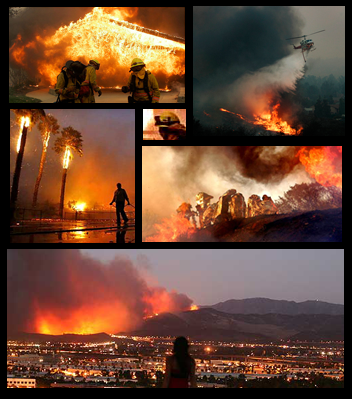
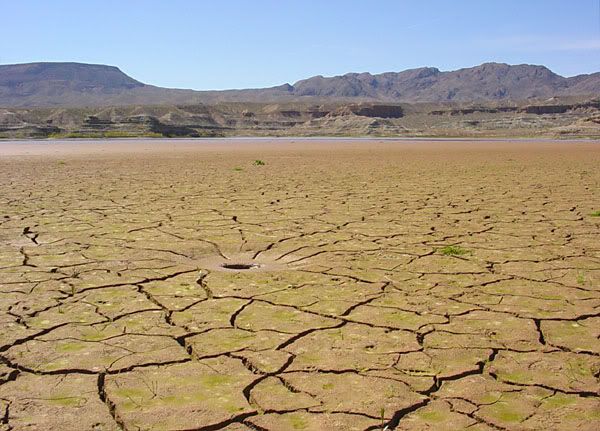 “Water tables all over the United States have been dropping, sometimes drastically, from overuse. In the Denver area, some cities that use only groundwater will almost certainly exhaust their accessible supplies by 2050.” Many western water managers were once of the belief that the severe drought years of 1950s marked the worse case fort the Colorado. But recent fir and pine tree ring studies have concluded that the drought in the 1950s “were mild and brief compared with other historical droughts.”
 CamerynLee was only 3 years old when her father, Lance Cpl. Eric J. Orlowski, a Marine Corps reservist, was killed in an accidental shooting during the first days of the Iraq war. Now 8, she is suddenly hungry for information about the man she remembers only in sketchy vignettes…
 For a growing number of the world’s emigrants, China — not the United States — is the land where opportunities are endless, individual enterprise is rewarded and tolerance is universal…