This is your morning Open Thread. Pour your favorite beverage and review the past and comment on the future.
Find the past “On This Day in History” here.
September 23 is the 266th day of the year (267th in leap years) in the Gregorian calendar. There are 99 days remaining until the end of the year.
On this day in 1964, the Paris Opera, Palais Garnier, unveils a stunning new ceiling painted as a gift by Belorussian-born artist Marc Chagall, who spent much of his life in France. The ceiling was typical of Chagall’s masterpieces–childlike in its apparent simplicity yet luminous with color and evocative of the world of dreams and the subconscious. . . .
. . . . Andre Malraux, the French minister of culture, commissioned him to design a new ceiling for the Paris Opera after seeing Chagall’s work in Daphnis et Chloe. Working with a surface of 560 square meters, Chagall divided the ceiling into color zones that he filled with landscapes and figures representing the luminaries of opera and ballet. The ceiling was unveiled on September 23, 1964, during a performance of the same Daphnis et Chloe. As usual, a few detractors condemned Chagall’s work as overly primitive, but this criticism was drowned out in the general acclaim for the work. In 1966, as a gift to the city that had sheltered him during World War II, he painted two vast murals for New York’s Metropolitan Opera House (1966).
In 1977, France honored Chagall with a retrospective exhibition at the Louvre in Paris. He continued to work vigorously until his death in 1985 at the age of 97.
The unveiling of the ceiling coincided with the publication of “The Phantom of the Opera“ (“Le Fantôme de l’Opéra”) by Gaston Leroux.
It was first published as a serialization in “Le Gaulois” from September 23, 1909 to January 8, 1910. Initially, the story sold very poorly upon publication in book form and was even out of print several times during the twentieth century, despite the success of its various film and stage adaptations. The most notable of these were the 1925 film depiction and Andrew Lloyd Webber’s 1986 musical. The Phantom of the Opera musical is now the longest running Broadway show in history, and one of the most lucrative entertainment enterprises of all time.
 When the Civil War broke out in 1861, shortly after Lincoln’s inauguration as America’s 16th president, he maintained that the war was about restoring the Union and not about slavery. He avoided issuing an anti-slavery proclamation immediately, despite the urgings of abolitionists and radical Republicans, as well as his personal belief that slavery was morally repugnant. Instead, Lincoln chose to move cautiously until he could gain wide support from the public for such a measure.


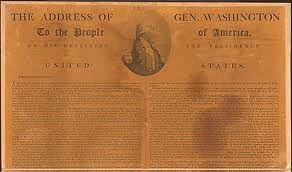 Originally published in David Claypoole’s American Daily Advertiser on September 19, 1796 under the title “The Address of General Washington To The People of The United States on his declining of the Presidency of the
 The building would take nearly a century to complete, as architects came and went, the British set fire to it and it was called into use during the Civil War. Today, the Capitol building, with its famous cast-iron dome and important collection of American art, is part of the Capitol Complex, which includes six Congressional office buildings and three Library of Congress buildings, all developed in the 19th and 20th centuries.
 On September 25, 1789, the first Congress of the United States adopted 12 amendments to the U.S. Constitution–the Bill of Rights–and sent them to the states for ratification. Ten of these amendments were ratified in 1791. In November 1789, North Carolina became the 12th state to ratify the U.S. Constitution. Rhode Island, which opposed federal control of currency and was critical of compromise on the issue of slavery, resisted ratifying the Constitution until the U.S. government threatened to sever commercial relations with the state. On May 29, 1790, Rhode Island voted by two votes to ratify the document, and the last of the original 13 colonies joined the United States. Today, the U.S. Constitution is the oldest written constitution in operation in the world.