
(9 am. – promoted by ek hornbeck)
If you DON’T Study, DON’T play by the Rules, and DON’T CARE who is hurt by your careless actions — would you expect an “all expenses paid” Scholarship? … or record Bonuses? … or more free Mad Money than you know what to do with?
Hardly!
Yet that is exactly what the reckless Wall Street Bankers got — HUGE Rewards — FOR BEHAVING BADLY!
In some circles, this is call Co-dependency and “Enabling” …
In America we call it “Too Big to Fail”.
Well Alan Grayson and Ron Paul, are about expose this Trillion Dollar “reward for failure” system, for what it is …
Rep. Alan Grayson on the Fed Bailing Out Big Banks:
“You Don’t Give Scholarships to Kids Who Fail”
http://www.youtube.com/watch?v…
MSNBC
SHOW: THE ED SHOW with ED SCHULTZ 6:00 PM EST
November 20, 2009 Friday
Some members of Congress are demanding more transparency from the Federal Reserve. It’s about time.
Yesterday, the House Financial Services Committee approved an amendment that would allow the Government Accountability Office to conduct independent audits of the Fed.
One of the authors of the amendment, Congressman Alan Grayson, from Florida, joins us here tonight on THE ED SHOW.
Congressman, good to have you with us.
REP. ALAN GRAYSON (D), FLORIDA: Thanks. Thanks very much.
SCHULTZ: What is — you bet. What is the Fed doing wrong, in your opinion? Why do we have to have an audit of the Fed?
GRAYSON: Secret bailouts. It’s that simple.
They have been taking hundreds of billions of dollars of our money and handing it over to failed Wall Street firms to try to keep them afloat, and doing it secretly. So now we’re going to have an audit and find out exactly what’s happened.
SCHULTZ: All right. Now, the secret money that you’re talking about, give us some examples for people who are just in on this stuff.
What do you think?
GRAYSON: Well, Ed, they are secret, OK? But we did find out about one of them.
It’s $230 billion they took off of Citibank’s books and accepted the liability while Citibank kept all the upside, all the income from the $230 billion in assets, and they just made it disappear. They didn’t even put it on the Fed’s own balance sheet.
And they did that in exchange for nothing. They got no stock from Citibank, no warrants, no nothing. So they just gave the taxpayer the $230 billion hit in exchange for nothing.
SCHULTZ: OK. So, number one, we need a law on the books so that can’t be done again, because if you and I were to do that with our taxes, we’d be behind bars where we belong on that.
But there is an amazing amount of pushback on this.
This is Fed Chairman Ben Bernanke giving his thoughts on the whole thing of an audit. Here it is.
(BEGIN VIDEO CLIP)
BEN BERNANKE, CHAIRMAN, FEDERAL RESERVE: If the GAO is auditing not only the operational aspects of programs and the details of the programs, but is making judgments about our policy decisions, that would effectively be a takeover of monetary policy by the Congress, a repudiation of the independence of the Federal Reserve, which would be highly destructive to the stability of the financial system, the dollar, and our national economic situation.
(END VIDEO CLIP)
SCHULTZ: He’s worried about the dollar. Hell, I didn’t know the dollar could get any lower against the Chinese currency.
What do you make of this?
GRAYSON: Well, Ed, you know, Chicken Little said the sky is falling too. It’s interesting that somebody who tries so hard to keep confidence up concerning the American economy is so desperate to destroy confidence when it comes to showing exactly what he’s been up to.
SCHULTZ: Where is the roadblock to this going through? You’ve got a lot of votes. You’ve got a lot of people — 300 people on board in the House.
Where is the big roadblock here?
GRAYSON: Well, we have to worry about what the Senate is going to do. But honestly, if out of the 435 members of the House, we’ve got 311 cosponsors — and by the way, I spent weeks going around the floor of the House when we were voting on other things, signing people up for this bill, and I spoke to every Democrat who voted for this yesterday personally. I explained the bill to them.
If we’ve got that kind of support, it shows that Bernanke has got nothing, and it’s time we looked behind the curtain and saw what was there. It’s that simple.
SCHULTZ: Congressman Grayson, you were a very successful businessman before you went into the Congress. What do we have to do to turn this economy around, in your opinion? What has to be done? What fundamentals have to be put in place? And how fast do we have to do it?
GRAYSON: Well, it goes back to you what were saying today. I heard you on the radio at 3:00 today, and you’re absolutely right. We have to stop giving money to the bad banks. They just eat it. They don’t actually hand it out to people or do anything useful with it.
We have to give money to the good banks. The fundamental strategy that’s been followed since the Bush administration to try to recover from this is flawed.
You know, you don’t give scholarships only to the students who fail, who flunk out. So why are we giving all this money, this government money and taxpayer money to all these failed banks? We have to give them to the good banks, because the good banks will go and make good loans to people, to businesses, to small businesses in particular, and the economy will recover.
SCHULTZ: It seems now that the Democrats are going to have to engage in a war of words to get the opinion of the American people straightened out, because a CNN/Research poll right now says responsibility for the recession is starting to shift. There are the numbers from the Republicans over to the Democrats.
Your thoughts on this?
GRAYSON: Look, even a dog knows when it’s being kicked. The American people can remember very much what it was like under the Bush administration — $4 a gallon gasoline, an economy where we lost 20 percent of our entire national wealth in 18 months.
Does anybody seriously think the Republicans are capable of doing any sort of economic management that’s other than mismanagement at this point?
SCHULTZ: Let me get back to the economics of the whole thing again.
Congressman DeFazio, on this program earlier this week, said he thought that Tim Geithner should step down, should leave that post, and Barack Obama, the president, should get somebody else there.
Do you agree with that or is that a bridge too far?
GRAYSON: Listen, what’s not important is people, it’s policies. We have to pick the right policies.
And that means the president, who is actually making these decisions, has to assert himself. He has to make sure that ordinary people get their bailouts.
I’ve heard from so many people, “Where’s my bailout? Wall Street’s getting all this money. Where’s my bailout?”
And the answer is the president has to focus on what’s good for the people. It doesn’t matter if Geithner is in there or anybody else. The decisions have to be the right ones.
SCHULTZ: Congressman Grayson, good to have you with us tonight. Thanks so much.
GRAYSON: Thank you, Ed. And by the way, you were smoking on the radio today. You were smoking.
SCHULTZ: Well, look, I am passionate. And I appreciate that. I’m glad you’re listening, by the way.
I’m passionate about the fact because I know I’m correct. There is a different set of rules for small community banks, as opposed to the big boys on Wall Street.
This is not brain surgery. You don’t have to go to the highest institution of academic prowess in this country to make sure that we get the economy going.
You get money to people that want to spend it, and you loosen the credit markets, and you’re going to be able to create jobs in this country. And I don’t see Geithner doing any of that.
Congressman Grayson, great to have you on. Appreciate it so much.
GRAYSON: Thank you, Ed.
http://www6.lexisnexis.com/pub…
$230 Billion wiped off the books of Citibank – Free and Clear!
No Fuss, No Muss, … AND No One needs to Knows!
What’s a few Billion Hundred Dollar between old College Buddies, anyways?
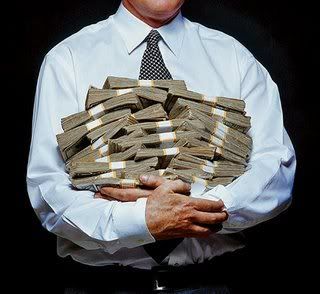
That’s “Chump Change”!
Reminds me of a few other well-kept Secrets from those Citi-Group wizards, who know a thing or two about treating Working Americans like Mushrooms — keeping us in the dark and feeding us endless piles of BS:
Citigroup’s Shocking ‘Plutonomy’ Reports — h/t Michael Moore
It’s easy to stay in the dark. It’s easier, NOT to make waves.
It’s easier NOT to ask about “Secret Bailouts” — it’s easier to just Trust the Experts — that’s “WHY they make the Big Bucks!”
Why not, leave well enough alone? Why not just blame the Original Enablers, (W and crew) and not expect miracles from the current bunch of financial Wizards — WHO are JUST doing the best they can “to clean up ‘somebody elses’ Mess”? … (LEAVE Timmy and Larry — ALONE!!!!)
Afterall if we pull back that Wall Street curtain TOO far, we really may not like what we see …
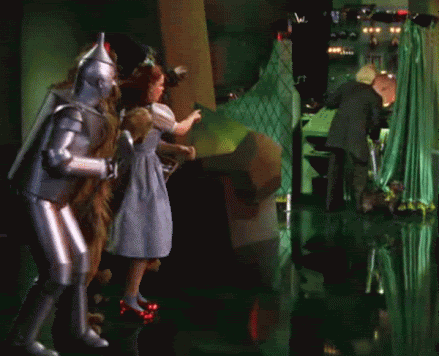
What if the Wizards are really “still playing by the old set of Rules”?
What it it turns out, that all the High-stakes “Shell Games” of the last Decade, are STILL going on?

What if the High-Rollers are still calling the shots?
What if the “Enablers” are still enabling? … the Cheaters, still cheating ???
What then?
Nov 20, 2009
House Financial Services Committee Passes Paul-Grayson Amendment to Audit the Fed
The House Financial Services Committee voted 43-26 yesterday afternoon in favor of an amendment introduced by Reps. Ron Paul (R-TX) and Alan Grayson (D-FL) that would remove restrictions preventing the GAO from auditing the Federal Reserve.
The amendment was modeled after Rep. Paul’s long-standing bill to audit the Fed, which was co-sponsored by over 300 Members in the House and supported by POGO and many other groups.
The vote on the final passage of the financial regulatory package to which the Paul-Grayson amendment is attached has been delayed until after Thanksgiving.
http://pogoblog.typepad.com/po…
Shouldn’t Accountability and Transparency … be MORE than Campaign Slogans?
Shouldn’t they really become the bedrock principles, upon which, REAL Change it built?
Shouldn’t those promising Reform, actually be held Accountable for Delivering it?
Shouldn’t OUR Bailout Money, be subject to “checks and balances” too? … Shouldn’t we expect it to “be an investment in” Future Economic Stability?
Damn Straight, it Should!
Well … IF we keep Rewarding the “Bad Actors” in this “Haves vs Have-Nots” play — WHY on Earth, would we EVER Expect them to Change?
Can a Leopard, change its spots?

Can a thousand Billionaire Gamblers, learn to earn an honest day-to-day living?
Not without the “light of day” shining like a Spotlight on their every Million Dollar Move … Not without SOME sort of Penalty for their “bad debts” and very risky investments …
In short — NOT without REAL Accountability and Transparency ….
without that … simply expect ‘more of the same’ … BEHAVING BADLY — it’s WHAT, made them Billionaires, in the first place. … Isn’t it?
14 comments
Skip to comment form
Author
and Billionaire-Enablers.
Author
More blunt honesty …
Alan Grayson: “Which Foreigners Got the Fed’s $500,000,000,000?” Bernanke: “I Don’t Know.”
http://www.youtube.com/watch?v…
Too bad we don’t get “blunt” answers
piss me off. The money could have been funneled through people on the way to banks. It would have paid off homes (stopped the housing crash) and credit cards (fees and interest extorted). Instead, they bailed out the banks and hung Americans out to dry. It was a deliberate choice they made. Second is the “fortuitous coincidence” of bankruptcy reform laws that they passed. Nobody will ever convince me that they didn’t see it coming and deliberately set out to further screw over Americans in trouble. This was done by Democrats, not Bush. Obama could have done something, but he didn’t. Edger’s seal speaks volumes about who Obama is.
to make secret loans of taxpayer money, because if the information were to become public, the stability of our financial system, which is based upon secrecy, would be compromised? And as long as everything is secret, the system can make the necessary adjustments to continue to function as it was designed to do.
And they sit there laughing their asses off.
to hire some good security people.
I’m not joking.
write a new script, to banish the ghosts and to build a new government in harmony with the Declaration of Independence and in pursuit of an authentic Democracy.
But the foundation of our house was built on quicksand and blood, the sirens of greed and lust too overwhelming for even our most ardent scholar and revolutionary, Thomas Jefferson, for whom only the ” Red Man” was but just a temporary inconvenience and the yoke of slavery an uncomforatable, but nevertheless personally beneficial souce of wealth and pleasure.
Our history has been a struggle ever since; first the fight for control over the great western lands and then the cheap labor to exploit the resources and manufacture the products for sale. The Civil War proved to be a slight interruption, and ironically (as wars always do) instead gave birth to the corporation, as profits from the conflict created quite a few wealthy people, and the drama of Reconstruction proved but a nuisance in the growth of commerce and the accumulation of private wealth.
And if we dispassionately observe the 20th Century, we see
the birth of advertising and mass production, bloody insane wars, fights for labor and civil rights and the blind, exponential growth of “civilization ending” weapons. Though this might have made Jefferson uncomfortable if he were alive today, he would probably be quite content as long as he had his role to play. (As far as the skybox is concerned, our Greek ancestors knew that we mortals in terra firma copied the folly of the players in the Skybox/Pantheon anyhow).
America is/was a dream, an idea, a screenplay so to speak, revealing nothing but dialogue and events as they flow from chapter to chapter. Yes, the Ghosts have their parts and have never left the pages, and they interact with the players reminding them of their fears and obligations, like Hamlet struggling with God and Death and the duty of a Christian in the face of unacceptable political disorder.
And no matter how strong the currents of history sweep away the folly of nations, new nations are reconstituted with the same type of actors, dredging up the same scripts.
I think we need to shed those mind forged manacles that prevent us from creating other alternatives, and relegate the oligarchs to irrelevant, bit players. Maybe we all need to get our of our seats and walk out of the theatre, build a new one and change the script.
The restlessness is palpable, the weather is threatening.
I’m at the edge of my seat and watching carefully. I wish I were younger, but in my nervous anticipation I’m overjoyed to be alive and witnessing a turning point, not only in American History, but World History. Let’s continue to fight and pray for all people having the rights to secure happiness, no matter what it takes.
I intended to respond to you Bush, Ken Lay/Enron references, but I got carried away as usual.
Have a good one!