
Author's posts
May 17 2013
Keeping the Government Transparent, Anonymously
Cross posted from The Stars Hollow Gazette
“Our liberty depends on the freedom of the press, and that cannot be limited without being lost.”
Since the news broke that the Department of Justice had secretly seized two months of phone records of the Associated Press reporters and editors, it has had chilling effect on the future ability of reporters to gather information from anonymous sources. On May 15, The New Yorker launched Strongbox “an online place where people can send documents and messages to the magazine,” affording a reasonable amount of anonymity:
It was put together by Aaron Swartz, who died in January, and Kevin Poulsen. Kevin explains some of the background in his own post, including Swartz’s role and his survivors’ feelings about the project. (They approve, something that was important for us here to know.) The underlying code, given the name DeadDrop, will be open-source, and we are very glad to be the first to bring it out into the world, fully implemented.

Click on image to enlarge
To get to Strongbox and begin using it to contact writers and editors at The New Yorker, just follow these two steps:
(1) Download and install software to access the Tor Project: https://www.torproject.org/ This should only take a few minutes.
(2)Once you have access to the Tor network, go to Strongbox at http://tnysbtbxsf356hiy.onion, where you will find further instructions on how to submit files and messages to The New Yorker.
Strongbox and Aaron Swartz
by Kevin Poulson
Aaron Swartz was not yet a legend when, almost two years ago, I asked him to build an open-source, anonymous in-box. His achievements were real and varied, but the events that would come to define him to the public were still in his future: his federal criminal indictment; his leadership organizing against the censorious Stop Online Piracy Act; his suicide in a Brooklyn apartment. I knew him as a programmer and an activist, a member of a fairly small tribe with the skills to turn ideas into code-another word for action-and the sensibility to understand instantly what I was looking for: a slightly safer way for journalists and their anonymous sources to communicate.
There’s a growing technology gap: phone records, e-mail, computer forensics, and outright hacking are valuable weapons for anyone looking to identify a journalist’s source. With some exceptions, the press has done little to keep pace: our information-security efforts tend to gravitate toward the parts of our infrastructure that accept credit cards.
Rachel Maddow interviewed the editor of The New Yorker magazine’s web site, Nicholas Thompson, about their “Strongbox” submission tool that allows sources to remain anonymous and untraceable when they submit a story tip.
This is how far we have come to protect the press and our constitutional right to know what the government is doing in our name. Thank you, Aaron and Kevin.
May 17 2013
Around the Blogosphere
Cross posted from The Stars Hollow Gazette
The main purpose our blogging is to communicate our ideas, opinions, and stories both fact and fiction. The best part about the the blogs is information that we might not find in our local news, even if we read it online. Sharing that information is important, especially if it educates, sparks conversation and new ideas. We have all found places that are our favorites that we read everyday, not everyone’s are the same. The Internet is a vast place. Unlike “Punting the Pundits which focuses on opinion pieces mostly from the mainstream media and the larger news web sites, “Around the Blogosphere” will focus more on the medium to smaller blogs and articles written by some of the anonymous and not so anonymous writers and links to some of the smaller pieces that don’t make it to “Pundits” by Krugman, Baker, etc.
We encourage you to share your finds with us. It is important that we all stay as well informed as we can.
Follow us on Twitter @StarsHollowGzt
This is an Open Thread.
Today at Corrente, we have lambert with a question about his garden and an interesting chart from Bonddad:
- Gardendote of the Day 2013-05-16
- Political risk increased when conditions improve, not when they are at their worst
and from libbyliberal:
Dean Baker is going on vacation but for he left he gave us something to chew on:
Gaius Publius on the climate at Americablog:
From the Electronic Frontier Foundation, news on the next round of talks on the Trans-Pacific Partnership agreement (TPP):
- Secretive TPP Talks Re-Commence in Lima, Peru: They Can Shut Us Out, But They Can’t Shut Us Up
by Maira Sutton - We Beat Them to Lima: Opening a New Front Against Secret IP Treaties
by Danny O’Brien
At emptywheel:
- The Internet Didn’t Kill the Middle Class; Laxity and Apathy Did
by Rayne - hat Is the Attrition Rate for Afghan Special Operations Forces?
by Jim White
At FDL’s The Dissenter, Kevin Gosztola:
and Jon Walker at FDL Action:
- More Signs Obama Will Likely Approve Keystone XL
- We Just Have to Take Holder’s Word That He Recused Himself From AP Case
- At Least Washington Isn’t Talking About the Grand Bargain Anymore
At RH Reality Check:
- Why Is El Salvador Letting a Woman Die?
by Marianne Møllmann, Amnesty International - Yes, Abortion Is a Women’s Issue, and Yes, More Male Allies Are Welcome
by Erin Matson, Editor at Large, RH Reality Check
Contributor Jaye Raye at Voices on the Square has a on going series on unions and human rights:
Charles P. Pierce on grifter Michelle Rhee, climate change and Missouri at Esquire’s Politics Blog:
Atrios named Michael Kinsley his Wanker of the day and Charles Pierce thinks he needs to shut up. Take a hint, Mike.
And the last words from Atrios: Deficit Panic
The real deficit panic is about the possibility that it might go away, making it slightly more difficult to engage in a program of poors kicking.
May 17 2013
IRS Gate: Just Ineffective Management?
Cross posted from The Stars Hollow Gazette
President Obama is definitely having a bad week with two screw ups by the IRS and the Department of Justice and the Republicans obsession with Benghazi. The media has latched on to these “crises” like pit bulls with a juicy ankle. While Benghazi-gate is purely political with its eye on tainting the possible 2016 presidential campaign of Hillary Clinton, the secret subpoena of AP’s phone records and the IRS targeting of right wing 501(c)4’s financing have more relevance.
The news that the IRS was focusing on conservative groups with words such as “tea party” or “patriot” in their names broke when the director of the IRS’s exempt-organizations division, Lois G. Lerner, confirmed complaints by tea party groups that their applications for tax-exempt status were being unfairly scrutinized and delayed. Oops.
Naturally, the right wing came was furious and rejected the IRS apology demanding an full investigation:
“I call on the White House to conduct a transparent, government-wide review aimed at assuring the American people that these thuggish practices are not underway at the IRS or elsewhere in the administration against anyone, regardless of their political views,” Senate Minority Leader Mitch McConnell (R-Ky.) said. “An apology won’t put this issue to rest.”
“The IRS has demonstrated the most disturbing, illegal and outrageous abuse of government power,” said Jenny Beth Martin, national coordinator of Tea Party Patriots. “This deliberate targeting and harassment of tea party groups reaches a new low in illegal government activity and overreach.”
The IRS has a notoriously bad history of being used by presidents to harass and intimidate their political enemies, most infamously by Richard M. Nixon. Since Watergate the IRS was reformed making it more independent supposedly to insulate from politics.
In a government oversight report (pdf) by the Treasury Inspector General for Tax Administration, the IRS was found to have acted “inappropriately” and was poorly managed allowing “inappropriate criteria to be developed and stay in place for more than 18 months.”
All In host, Chris Hayes discussed the report and how the IRS handled this internally with New York Times reporter Nicholas Confessor.
Andy Kroll at Mother Jones recounts the five things you need to know in the Inspector General’s IRS Tea Party Scandal Report:
Treasury’s Inspector General for Tax Administration conducted the probe from June 2012 to February 2013 in response to pressure from Congress, and the 54-page report sheds light on the whole debacle.
Here are five key takeaways from the report.
1) Incompetence appears to have caused this scandal, not wrongdoing. [..]
2) Even the IRS doesn’t understand how political is too political in the murky world of 501(c)(4) groups. [..]
3) All the confusion at the IRS led to a huge backlog and a lot of unnecessary headaches. [..]
4) The IRS didn’t feel outside pressure to single out tea partiers. [..]
5) The report gives as much fodder to transparency advocates as it does to IRS critics.
May 16 2013
Today on The Stars Hollow Gazette

Our regular featured content-
- On This Day In History May 16 by TheMomCat
- Punting the Pundit by TheMomCat
These featured articles-
- Are We Really the Reality Based Community? We Don’t Act Like It. by priceman
- IRS Gate: Just Ineffective Management? by TheMomCat
- Whole lot of walkin’ by ek hornbeck
Follow us on Twitter @StarsHollowGzt
Write more and often. This is an Open Thread.
May 16 2013
On This Day In History May 16
Cross posted from The Stars Hollow Gazette
This is your morning Open Thread. Pour your favorite beverage and review the past and comment on the future.
Find the past “On This Day in History” here.
Click on image to enlarge
May 16 is the 136th day of the year (137th in leap years) in the Gregorian calendar. There are 229 days remaining until the end of the year.
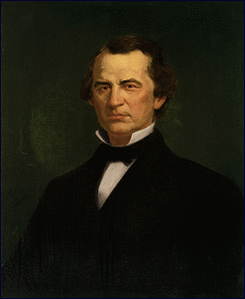
On this day in 1868, the U.S. Senate votes against impeaching President Andrew Johnson and acquits him of committing “high crimes and misdemeanors.”
In February 1868, the House of Representatives charged Johnson with 11 articles of impeachment for vague “high crimes and misdemeanors.” (For comparison, in 1998, President Bill Clinton was charged with two articles of impeachment for obstruction of justice during an investigation into his inappropriate sexual behavior in the White House Oval Office. In 1974, Nixon faced three charges for his involvement in the Watergate scandal.) The main issue in Johnson’s trial was his staunch resistance to implementing Congress’ Civil War Reconstruction policies. The War Department was the federal agency responsible for carrying out Reconstruction programs in the war-ravaged southern states and when Johnson fired the agency’s head, Edwin Stanton, Congress retaliated with calls for his impeachment.
Of the 11 counts, several went to the core of the conflict between Johnson and Congress. The House charged Johnson with illegally removing the secretary of war from office and for violating several Reconstruction Acts. The House also accused the president of hurling slanderous “inflammatory and scandalous harangues” against Congressional members. On February 24, the House passed all 11 articles of impeachment and the process moved into a Senate trial.
May 15 2013
Today on The Stars Hollow Gazette
Our regular featured content-
- On This Day In History May 15 by TheMomCat
- Punting the Pundit by TheMomCat
These featured articles-
- Chronic Tonic-Mother’s Day by triv 33
- Trashing Freedom of the Press by the Obama DOJ by TheMomCat
- I used to think I was brave. by
Follow us on Twitter @StarsHollowGzt
Write more and often. This is an Open Thread.
May 15 2013
Around the Blogosphere
Cross posted from The Stars Hollow Gazette
The main purpose our blogging is to communicate our ideas, opinions, and stories both fact and fiction. The best part about the the blogs is information that we might not find in our local news, even if we read it online. Sharing that information is important, especially if it educates, sparks conversation and new ideas. We have all found places that are our favorites that we read everyday, not everyone’s are the same. The Internet is a vast place. Unlike “Punting the Pundits which focuses on opinion pieces mostly from the mainstream media and the larger news web sites, “Around the Blogosphere” will focus more on the medium to smaller blogs and articles written by some of the anonymous and not so anonymous writers and links to some of the smaller pieces that don’t make it to “Pundits” by Krugman, Baker, etc.
We encourage you to share your finds with us. It is important that we all stay as well informed as we can.
Follow us on Twitter @StarsHollowGzt
This is an Open Thread.
There is something going on other that the “Three Gates.”
From our friends at Corrente, economics contributor, letsgetitdone:
and a note from lambert about the outage at FDL that has been off line since yesterday. We are keeping out fingers crossed that Jane gets her server issues resolved soon. You can follow Jane’s tweets here for the latest on the site.
At AMERICAblog, from John Aravosis:
- Minnesota to become 12th state to legalize gay marriage
- Benghazi bombshell: Email supporting GOP “conspiracy” theory is fake
(I know I said no “gates” but it’s John)
and from Gaius Publius:
David Dayen writing at New Republic, tells us how smarter shareholders are becoming activists and are about to claim their biggest “scalp”:
At his blog, Beat the Press, Dean Baker:
- Credit Rating Agencies Likely to Evade Dodd-Frank Provision to End Conflict of Interest
- Trade Deficits and the Dollar
From CounterPunch:
- The End of QE?
by Mike Whitney - The Elusive Minimum Wage
by David Macaray - The Real Gatsby
by David Rosen
From the gang at Crooks and Liars:
- RNC Hispanic Outreach Chief Quits, Registers as Democrat
By Susie Madrak - Sen. Franken to Speak at SEC Roundtable on Credit Rating Industry Reform
By Heather - The 182 Percent Loan: How Installment Lenders Put Borrowers in a World of Hurt
by Paul Kiel, ProPublica
From the contributors at Grist:
- Vermont House passes GMO-labeling law by John Upton
- Occupy the Farm movement rises again, hours after being raided
by John Upton - London may soon be drinking recycled sewage
by Sarah Laskow
Mike Konszal at The Next New Deal:
At New Economic Perspectives, Dan Kervick:
The last words from Charles P. Pierce on The Clan of the Red Beanie and Responsible Gun Ownership.
May 15 2013
Obama DOJ: What First Amendment
Cross posted from The Stars Hollow Gazette
I’m proud to be here as you host World Press Freedom Day. So everybody from the American press corps, you should thank the people of Costa Rica for celebrating free speech and an independent press as essential pillars of our democracy.
~President ObamaRemarks by President Obama and President Chinchilla of Costa Rica in a Joint Press Conference, in National Center for Art and Culture San Jose, Costa Rica, 10 days ago.
That was so ten days ago. The news broke that Obama Department of Justice had secretly seized two months of phone records of the Associated Press reporters and editors.
The government would not say why it sought the records. Officials have previously said in public testimony that the U.S. attorney in Washington is conducting a criminal investigation into who may have provided information contained in a May 7, 2012, AP story about a foiled terror plot. The story disclosed details of a CIA operation in Yemen that stopped an al-Qaida plot in the spring of 2012 to detonate a bomb on an airplane bound for the United States.
In testimony in February, CIA Director John Brennan noted that the FBI had questioned him about whether he was AP’s source, which he denied. He called the release of the information to the media about the terror plot an “unauthorized and dangerous disclosure of classified information.”
Prosecutors have sought phone records from reporters before, but the seizure of records from such a wide array of AP offices, including general AP switchboards numbers and an office-wide shared fax line, is unusual.
The president and CEO of AP, Gary Pruitt sent a letter protesting the “massive and unprecedented intrusion” (pdf):
Last Friday afternoon, AP General Counsel Laura Malone received a letter from the office of United States Attorney Ronald C. Machen Jr. advising that, at some unidentified time earlier this year, the Department obtained telephone toll records for more than 20 separate telephone lines assigned to the AP and its journalists. The records that were secretly obtained cover a full two-month period in early 2012 and, at least as described in Mr. Machen’s letter, include all such records for, among other phone lines, an AP general phone number in New York City as well as AP bureaus in New York City, Washington, D.C., Hartford, Connecticut, and at the House of Representatives. This action was taken without advance notice to AP or to any of the affected journalists, and even after the fact no notice has been sent to individual journalists whose home phones and cell phone records were seized by the Department.
There can be no possible justification for such an overbroad collection of the telephone communications of The Associated Press and its reporters. These records potentially reveal communications with confidential sources across all of the newsgathering activities undertaken by the AP during a two month period, provide a road map to AP’s newsgathering operations, and disclose information about AP’s activities and operations that the government has no conceivable right to know.(my emphasis)
h/t to Marcy Wheeler who points out the two months, April to May of 2012, that were of interest covered the period that, now CIA Director, John Brennan had rolled out his drone propaganda campaign:
That would mean they’d get the sources for this Kimberly Dozier story published May 21 [..]
Within 10 days of the time Dozier published that story, John Brennan had rolled out an enormous propaganda campaign – based on descriptions of the drone targeting process that Brennan’s power grab had replaced, not the new drone targeting process – that suckered almost everyone commenting on drones that drone targeting retained its previous, more deliberative, targeting process, the one Brennan had just changed.
And that propaganda campaign, in turn, hid another apparent detail: that UndieBomb 2.0, a Saudi sting had actually occurred earlier in April, and that UndieBomb 2.0 preceded and perhaps justified the signature strikes done at the behest of the Yemenis (or more likely the Saudis).
Marcy listed the timeline of the AP stories that were focused on Brennan and the undie bomber. However, it was after the Dozier story that Brennan began his propaganda campaign to cover up how illegal and uncontrollable the drone program is.
Comparing this to Nixon and Watergate, Charles P. Pierce goes full throttle on why Eric Holder should be fired:
This isn’t hard. This is what made Egil (Bud) Krogh famous. This is what got people sent to jail in the mid-1970’s. This is the Plumbers, all over again, except slightly more formal this time, and laundered, disgracefully, even more directly through the Department Of Justice. And of course, this is not nearly good enough. And even if you point out, as you should, that the AP is hyping this story a little — The government “secretly” obtained the records? Doesn’t that imply that nobody knew the records had been seized? Wasn’t there a subpoena? The phone companies knew. — the ignoble clumsiness of this more than obviates those particular quibbles.
The White House on Monday said that other than press reports it had no knowledge of Justice Department attempts to seek AP phone records. “We are not involved in decisions made in connection with criminal investigations, as those matters are handled independently by the Justice Department,” spokesman Jay Carney said.
That is all my arse. At the least, this was a counter-terrorism operation. (Why else would Brennan have been questioned already?). Which puts the whole business inside the White House. And you’d have to be a toddler or a fool to believe that Eric Holder could go off on his own and take as politically volatile a step as this. But, let us take the White House at its word. Eric Holder did this by himself. He should be gone. This moment. Not only is this constitutionally abhorrent, it is politically moronic. Nobody likes the press, I will grant you that, but the administration is soft if it thinks the public distrusts the press that much. And to have this genuinely chilling revelation emerge simultaneously with the Benghazi, Benghazi!, BENGHAZI! mummery and the IRS dumbassery is pretty much a full broadside below the water line of this administration’s credibility. Good god, this is going to be one long-ass summer.
Pres. Obama needs to do damage control starting with throwing Holder to the wolves. I suspect this will be the next congressional investigation in an effort to not just derail Hillary Clinton’s 2016 campaign but to build a case for impeachment of Obama for abuse of his executive powers. A long hot summer, indeed.
May 15 2013
On This Day In History May 15
Cross posted from The Stars Hollow Gazette
This is your morning Open Thread. Pour your favorite beverage and review the past and comment on the future.
Find the past “On This Day in History” here.
Click on image to enlarge
May 15 is the 135th day of the year (136th in leap years) in the Gregorian calendar. There are 230 days remaining until the end of the year.
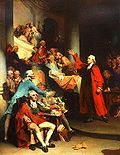
On this day in 1776, the Virginia Convention instructs its Continental Congress delegation to propose a resolution of independence from Great Britain, paving the way for the United States Declaration of Independence.
The Virginia Conventions were a series of five political meetings in the Colony of Virginiaduring the American Revolution. Because the House of Burgesses had been dissolved in 1774 by Royal Governor Lord Dunmore, the conventions served as a revolutionary provisional government until the establishment of the independent Commonwealth of Virginia in 1776.
The fifth convention began May 6, 1776 and met in Williamsburg. On May 15, the convention declared independence from Britain and adopted a set of three momentous resolutions: one calling for a declaration of rights for Virginia, one calling for establishment of a republican constitution, and a third calling for federal relations with whichever other colonies would have them and alliance with whichever foreign countries would have them. It also instructed its delegates to the Continental Congress in Philadelphia to declare independence. Virginia’s congressional delegation was thus the only one under unconditional positive instructions to declare independence; Virginia was already independent, and so its convention did not want their state, in the words of Benjamin Franklin, to “hang separately.” According to James Madison’s correspondence for that day, Williamsburg residents marked the occasion by taking down the Union Jack from over the colonial capitol and running up a continental union flag.
On June 7, Richard Henry Lee, one of Virginia’s delegates to Congress, carried out these instructions and proposed independence in the language the convention had commanded him to use: that “these colonies are, and of right ought to be, free and independent states.” This paved the way for the American Declaration of Independence, which also reflected the idea that not one nation, but thirteen free and independent states were aborning on the east coast of North America.
The convention amended, and on June 12 adopted, George Mason‘s Declaration of Rights, a precursor to the United States Bill of Rights. On June 29, the convention approved the first Constitution of Virginia, which was also the first written constitution adopted by the people’s representatives in the history of the world. The convention chose Patrick Henry as the first governor of the new Commonwealth of Virginia, and he was inaugurated on June 29, 1776. Thus, Virginia had a functioning, permanent, republican constitution before July 4, 1776 — uniquely among the thirteen American colonies.
May 14 2013
Today on The Stars Hollow Gazette
Our regular featured content-
- On This Day In History May 14 by TheMomCat
- Punting the Pundit by TheMomCat
These featured articles-
- Obama DOJ: What First Amendment by TheMomCat
- Un-American by ek hornbeck
- John N. Mitchell by ek hornbeck
Follow us on Twitter @StarsHollowGzt
Write more and often. This is an Open Thread.
May 14 2013
On This Day In History May 14
Cross posted from The Stars Hollow Gazette
This is your morning Open Thread. Pour your favorite beverage and review the past and comment on the future.
Find the past “On This Day in History” here.
May 14 is the 134th day of the year (135th in leap years) in the Gregorian calendar. There are 231 days remaining until the end of the year.
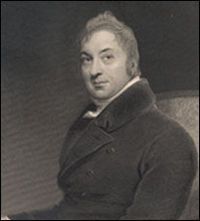
On this day in 1796, Edward Jenner, an English country doctor from Gloucestershire, administers the world’s first vaccination as a preventive treatment for smallpox, a disease that had killed millions of people over the centuries.
Edward Anthony Jenner (17 May 1749 – 26 January 1823) was an English scientist who studied his natural surroundings in Berkeley, Gloucestershire. Jenner is widely credited as the pioneer of smallpox vaccine, and is sometimes referred to as the “Father of Immunology”; his works have been said to have “saved more lives than the work of any other man”.
Lady Mary Wortley Montagu witnessed the Ottoman Empire practice of variolation during her 1716-1718 sojourn in Istanbul, where her husband was the British ambassador. She brought the idea back to Britain. Voltaire, a few years later, recorded that 60% of people caught smallpox, with 20% of the population dying of it. In the years following 1770 there were at least six people in England and Germany (Sevel, Jensen, Jesty 1774, Rendell, Plett 1791) who had successfully tested the possibility of using the cowpox vaccine as an immunization for smallpox in humans. For example, Dorset farmer Benjamin Jesty had successfully vaccinated and presumably induced immunity in his wife and two children with cowpox during a smallpox epidemic in 1774, but it was not until Jenner’s work some twenty years later that the procedure became widely understood. Indeed, Jenner may have been aware of Jesty’s procedures and success.
Jenner’s Initial Theory:
The initial source of infection was a disease of horses, called “the grease”, and that this was transferred to cows by farm workers, transformed, and then manifested as cowpox.Noting the common observation that milkmaids did not generally get smallpox, Jenner theorized that the pus in the blisters which milkmaids received from cowpox (a disease similar to smallpox, but much less virulent) protected the milkmaids from smallpox. He may have had the advantage of hearing stories of Benjamin Jesty and others who deliberately arranged cowpox infection of their families, and then noticed a reduced smallpox risk in those families.
On 14 May 1796, Jenner tested his hypothesis by inoculating James Phipps, a young boy of 8 years (the son of Jenner’s gardener), with material from the cowpox blisters of the hand of Sarah Nelmes, a milkmaid who had caught cowpox from a cow called Blossom, whose hide hangs on the wall of the library at St George’s medical school (now in Tooting). Blossom’s hide commemorates one of the school’s most renowned alumni. Phipps was the 17th case described in Jenner’s first paper on vaccination.
Jenner inoculated Phipps with cowpox pus in both arms on the same day. The inoculation was accomplished by scraping the pus from Nelmes’ blisters onto a piece of wood then transferring this to Phipps’ arms. This produced a fever and some uneasiness but no great illness. Later, he injected Phipps with variolous material, which would have been the routine attempt to produce immunity at that time. No disease had followed. Jenner reported that later the boy was again challenged with variolous material and again showed no sign of infection.
Known:
Smallpox is more dangerous than variolation and cowpox less dangerous than variolation.
Hypothesis:
Infection with cowpox gives immunity to smallpox.
Test:
If variolation after infection with cowpox fails to produce a smallpox infection, immunity to smallpox has been achieved.
Consequence:
Immunity to smallpox can be induced much more safely than by variolation.Ronald Hopkins states: “Jenner’s unique contribution was not that he inoculated a few persons with cowpox, but that he then proved they were immune to smallpox. Moreover, he demonstrated that the protective cowpox could be effectively inoculated from person to person, not just directly from cattle. In addition he tested his theory on a series of 23 subjects. This aspect of his research method increased the validity of his evidence.
He continued his research and reported it to the Royal Society, who did not publish the initial report. After improvement and further work, he published a report of twenty-three cases. Some of his conclusions were correct, and some erroneous – modern microbiological and microscopic methods would make this easier to repeat. The medical establishment, as cautious then as now, considered his findings for some time before accepting them. Eventually vaccination was accepted, and in 1840 the British government banned variolation – the use of smallpox itself – and provided vaccination – using cowpox – free of charge. (See Vaccination acts). The success of his discovery soon began to spread around Europe and as an example was used en masse in the Spanish Balmis Expedition a three year mission to the Americas led by Dr Francisco Javier de Balmis with the aim of giving thousands the smallpox vaccine. The expedtition was successful and Jenner wrote, “I don’t imagine the annals of history furnish an example of philanthropy so noble, so extensive as this.”
Jenner’s continuing work on vaccination prevented his continuing his ordinary medical practice. He was supported by his colleagues and the King in petitioning Parliament and was granted £10,000 for his work on vaccination. In 1806 he was granted another £20,000 for his continuing work.
In 1979, the World Health Organization declared smallpox an eradicated disease. This was the result of coordinated public health efforts by many people, but vaccination was an essential component. And although it was declared eradicated, some samples still remain in laboratories in Centers for Disease Control and Prevention (CDC) in Atlanta, Georgia in the United States, and State Research Center of Virology and Biotechnology VECTOR in Koltsovo, Novosibirsk Oblast, Russia.
The importance of his work does not stop there. His vaccine also laid the groundwork for modern-day discoveries in immunology, and the field he began may someday lead to cures for arthritis, AIDS, and many other diseases of the time.
May 14 2013
Austerity Still An Issue. Why?
Cross posted from The Stars Hollow Gazette
Austerity was thoroughly trounced by a couple of university grad students who discovered major omissions in the much touted study by a couple of Pete Peterson’s paid cronies. So why are we still even talking about it? Good question that no one so far has asked our fearless leader in Washington.
Up host Steve Kornacki discussed whether the elite consensus on austerity has started to shift and if there is any effect on the opinions in Washington. His guests Josh Barro, Columnist, Bloomberg View; Jared Bernsein, former economic adviser to V.P. Joe biden; Lori Montgomery, Economic Policy Reporter, The Washington Post; and Heather McGhee, Vice President, Demos; examine the lessons that can be learned from Europe’s austerity experience and what the US economy will look like if it continues on the austerity path. The panel also discussed how conservative have backed away from cuts to Social Security shifting their focus to tax reform, controlling spending through cost efficient measures and the roadblocks to getting it done.